An osprey had a leisurely fly up and down the Strood Channel for about an hour late morning on Monday 17th. It passed over the Strood causeway a couple of times, no doubt passing drivers unaware this big bird of prey was flying over the traffic.
One of its flights was directly over my head whilst I walked along the Strood seawall and I managed to snap this one picture of it when it was at its closest.
The osprey appeared from the Pyefleet Channel about 11.20am and slowly flew down the Strood Channel before flying over Ray Island and the Ray Channel. It slowly drifted down towards the Hard and seemingly out of view.
A quick call to Andy Field in his High Street North house enabled him to see it in the distance and add it to his bird species list seen from his garden!
As the bird flew around the channels, it created panic amongst all the waders on the mudflats.
Glyn Evans was also fortunate to start his monthly wader count along the north side of the Island with a view of the osprey when it came back along the Strood Channel and crossed back over the Strood about 12.15pm. The bird circled over the Pyefleet side, made a couple of stoops before one successful plunge when it came back up with a fish. It flew low to the north-west where it was lost to view.
There has been an osprey for the last few days at Abberton reservoir and it was still reported early Monday morning. This Strood bird is probably a different bird. Another osprey was seen last Tuesday 11th by Alan Reynolds flying down the river Colne from Fingringhoe towards East Mersea.
Ian Black reported seeing a peregrine being mobbed by a little tern over the Mersea Quarters yesterday Sunday.
There was a varied selection of waders on the Strood mud before the osprey flushed them all off. Two greenshank were seen on the opposite side, one pictured above appearing much paler than the many redshank. Also 80 black-tailed godwits, 100 grey plover and 200 golden plovers were the other main flocks seen.
One whimbrel was seen flying off and four common terns were flying around the Hard.
A number of small birds were feeding in the Strood fields with this female yellowhammer being of interest as they don't often get seen in this area. The other flocks were 80+ linnets and 25+ house sparrows. There was no sign of the big number of 300 finches and buntings seen in the fields yesterday by Martin Cock.
Also seen were 2 whinchats but no wheatears, 5 yellow wagtails, swift, house martin and 50+ swallows. Later two swifts flew over Firs Chase in the early evening.
It was nice to see a brown argus back this summer in the Firs Chase garden, here resting on a rose flower. A common blue was seen by the Firs Chase caravan site.
A couple of common darters were flying around the garden, this male perching on a post for a couple of minutes.
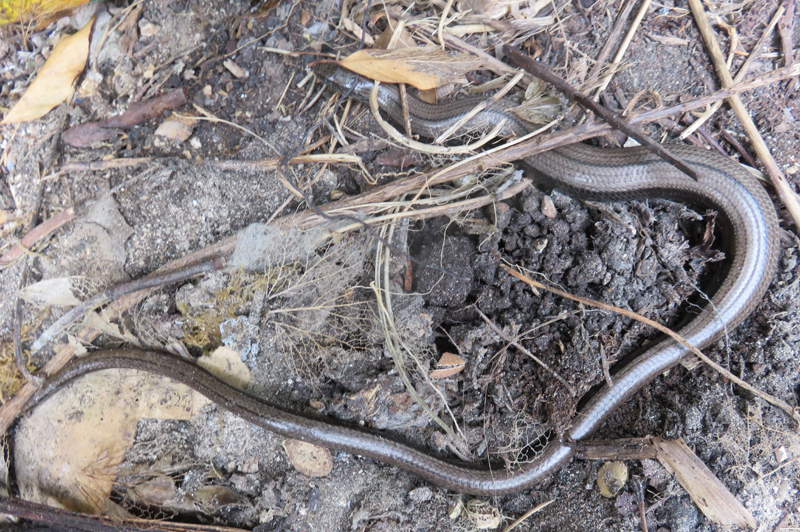
Peeked under the sheets on the garden compost heap and found this large slowworm resting in the warmth.
Dave Grundy sent me his photograph of this rare immigrant, the Ni moth that he caught at the country park on Thursday 13th. This is the first record for the site.
A red underwing moth was resting on the entrance gate early Sunday morning and later a hummingbird hawkmoth was seen on the buddleia in the car park. At the end of the day a hummingbird hawkmoth was also seen in the Firs Chase garden feeding on some verbena and some red campion flowers.
Tuesday, 18 August 2015
Monday, 17 August 2015
WHINCHAT AND WHEATEAR
The first whinchat to stop off on the Island this autumn was along the Strood seawall on Saturday 15th. The bird perched up on nearby bushes as well as on top of the Alexander plants on the seawall.
Also nearby on top of the seawall were two wheatears, while five yellow wagtails were also noted on the morning walk. On the fields were 25 linnets and a couple of small flocks of 30+ house sparrows.
A kingfisher was seen briefly a couple of times near the seawall, whistling each time it was in flight.
The tide was coming in slowly along the Strood Channel with a number of waders seen on the mud such as 300 golden plover, some pictured above. Also 100 black-tailed godwits, 30 grey plover, 300+ redshank and ten dunlin. A couple of greenshank feeding on the mud was the main wader of interest.
Two swifts flew over Firs Chase in the early evening on Saturday and one was also over the Broomhills area too.
At East Mersea five spoonbills were seen again on Sunday afternoon roosting on Rat Island with three of them then landing on Langenhoe Point, as seen by Andy Field.
A common sandpiper was seen feeding on the pools in the park's grazing fields with 60 little egrets noted on and around the pond area. A willow warbler was seen at the park on Sunday too.
I spoke with Mark Farrant on the seawall who warned me to watch out for this wild honey bee "nest" as it was close to the path, hiding under a thin wooden board amongst the old Alexanders plants.
On the buddleia in the Firs Chase garden on Saturday 15th was this large hornet hoverfly.
One of the most eyecatching moths of the night was this peach blossom, its pinkish blotches perfect for hiding in bramble bushes, its foodplant. Only one or two of these are seen at the park each year.
Also lured to the moth lamp was this female long-winged conehead, a species not often seen at the park since it was first seen here about 12 years ago following a rapid expansion in the county.
Also nearby on top of the seawall were two wheatears, while five yellow wagtails were also noted on the morning walk. On the fields were 25 linnets and a couple of small flocks of 30+ house sparrows.
A kingfisher was seen briefly a couple of times near the seawall, whistling each time it was in flight.
The tide was coming in slowly along the Strood Channel with a number of waders seen on the mud such as 300 golden plover, some pictured above. Also 100 black-tailed godwits, 30 grey plover, 300+ redshank and ten dunlin. A couple of greenshank feeding on the mud was the main wader of interest.
Two swifts flew over Firs Chase in the early evening on Saturday and one was also over the Broomhills area too.
At East Mersea five spoonbills were seen again on Sunday afternoon roosting on Rat Island with three of them then landing on Langenhoe Point, as seen by Andy Field.
A common sandpiper was seen feeding on the pools in the park's grazing fields with 60 little egrets noted on and around the pond area. A willow warbler was seen at the park on Sunday too.
I spoke with Mark Farrant on the seawall who warned me to watch out for this wild honey bee "nest" as it was close to the path, hiding under a thin wooden board amongst the old Alexanders plants.
On the buddleia in the Firs Chase garden on Saturday 15th was this large hornet hoverfly.
Four holly blue butterflies have been flying around the Firs Chase garden as have comma, speckled wood, hedge brown, meadow brown, small white and large white.
This small delicate rest harrow moth was the highlight of a mothing session at the country park on Saturday night / Sunday morning. This is a scarce moth found locally along the coast in the south-east and south of England. It's not been seen at the park before and it's only been seen a handful of times in Essex.
Dave Grundy returned to the park along with his participants from the Flatford Mill moth course and put out six traps for the night. Around 70 species were noted, slightly fewer than two nights previously because of the cold drop in night-time temperatures.
Another strikingly marked moth is this aptly named canary-shouldered thorn with the fluffy yellow head. There was also a September thorn trapped for the second time in a couple of nights.
A handful of migrant moths were noted such as this dark swordgrass, one of a couple seen, also white-point, 3 small mottled willow and a tiny diamond-back moth.
Other moths of interest included four poplar hawkmoths, 10 sandhill rustics, white-line dart, pebble hook-tip, drinker, orange sallow, iron prominent and saltmarsh plume.
Several nettle leaves on the park seawall have one or two of these small tortoiseshell caterpillars resting and feeding on them.
Saturday, 15 August 2015
MIGRANT MOTHING
Welcomed one of the country's most travelled moth enthusiasts Dave Grundy from Birmingham to Cudmore Grove on Thursday 13th, for his 71st mothing session this year which has taken him to a variety of different locations around the UK. He was hoping to see some migrant moths and some coastal specialities.
Dave is pictured above inside the park seawall just after dawn on Friday morning, examining the moth catch during a spell of light drizzle. The night's weather turned from a thunderstorm in the early evening into a perfect night with light easterly wind and a warm muggy temperature not lower than 18 degrees. Six traps were set up and by dawn over 100 species of micro and macro moths were noted.
The biggest and most spectacular moth was this convulvulus hawkmoth, which had steered away from all of Dave's traps and was found clinging to the underneath of the bright light fitting inside my Robinson trap at five in the morning.
It's been several years since convulvulus hawkmoth has been recorded at the park, a scarce late summer migrant from the continent. Nine years ago three were logged on the same night in mid September. This moth is one of the largest to occur in the UK and although plain to look at, it has bright pink bands on the sides of the abdomen.
The other notable moth found in one of Dave's traps was a Ni moth, a rare migrant not seen at the park before. A couple have been noted recently on the east side of the mouth of the Colne by Clive Atkins.
The first September thorn of the autumn was seen inside one of the traps. It's a fairly common moth, one or two seen each year, the caterpillars feeding here on the leaves of oak or lime.
One of the typical moths of the Essex coast in summer is the sandhill rustic pictured above. A saltmarsh moth, those traps nearest the seawall area had 42 counted in them by the morning.
Other interesting moths included dark swordgrass, 5 small mottled willow, 3 tree lichen beauty, garden tiger, Webb's wainscot, archers dart, starwort, cypress pug, coronet, crescent and 5 white-points.
Three saltmarsh plumes were seen standing in their distinctive posture with their wings pointing forward.
Other micro moths of note included sulphur pearl, rusty dot pearl and the nationally scarce hook-tipped grass veneer.
There was a mixed flock of waders roosting on the saltmarsh pools near the East Mersea Point on Friday 14th. Mainly 100 black-tailed godwits but also one bar-tailed godwit, 30 redshank, 50 dunlin, and a golden plover. Five sanderling flew over while 50 ringed plovers were seen on nearby mud.
Further along the seawall near Ivy Farm, the telescope was needed to scan the distant Rat Island further up the river. Two spoonbills were picked out through the heat haze, roosting on the saltmarsh with their beaks tucked over their backs. After a long wait, the two spoonbills eventually flew off with their long beaks stretched out, landing a short distance away in the south Geedon channel out of view.
Five birds had been reported here the day before and Andy Field had managed to see one in flight over Langenhoe during his walk along the Pyefleet on Wednesday.
Also seen in the Colne on Friday were 10 little terns, 4 common terns, greenshank and a sparrowhawk crossing the river.
Twenty four little egrets were seen on and around the copse behind the park pond. At one point all of them flew up and landed briefly on the old kestrel tree.
On the nearby pools in the fields, a common snipe, 20 black-tailed godwits, 10 lapwing and 5 teal were noted.
A green sandpiper was heard flying over the mudflats on Wednesday and a hobby flew past the pond upsetting the swallows on Tuesday early evening. A willow warbler was calling at the park on Wednesday and one or two yellow wagtails have been heard most days recently.
A handful of speckled woods have been seen in recent days along the shadier paths at the park.
The buddleia bushes in the car park have had comma, large white, red admiral and small white on them.
The first wasp spider of the summer was seen last Sunday 9th at the park by Mat Larkin.
As a red squirrel was providing good views in gardens on East Road, East Mersea, such as at the Haven for half an hour on Thursday, there was the unwelcome sighting from Julie Newman's mother of a grey squirrel near the beach at West Mersea on the same day.
Dave is pictured above inside the park seawall just after dawn on Friday morning, examining the moth catch during a spell of light drizzle. The night's weather turned from a thunderstorm in the early evening into a perfect night with light easterly wind and a warm muggy temperature not lower than 18 degrees. Six traps were set up and by dawn over 100 species of micro and macro moths were noted.
The biggest and most spectacular moth was this convulvulus hawkmoth, which had steered away from all of Dave's traps and was found clinging to the underneath of the bright light fitting inside my Robinson trap at five in the morning.
It's been several years since convulvulus hawkmoth has been recorded at the park, a scarce late summer migrant from the continent. Nine years ago three were logged on the same night in mid September. This moth is one of the largest to occur in the UK and although plain to look at, it has bright pink bands on the sides of the abdomen.
The other notable moth found in one of Dave's traps was a Ni moth, a rare migrant not seen at the park before. A couple have been noted recently on the east side of the mouth of the Colne by Clive Atkins.
The first September thorn of the autumn was seen inside one of the traps. It's a fairly common moth, one or two seen each year, the caterpillars feeding here on the leaves of oak or lime.
One of the typical moths of the Essex coast in summer is the sandhill rustic pictured above. A saltmarsh moth, those traps nearest the seawall area had 42 counted in them by the morning.
Other interesting moths included dark swordgrass, 5 small mottled willow, 3 tree lichen beauty, garden tiger, Webb's wainscot, archers dart, starwort, cypress pug, coronet, crescent and 5 white-points.
Three saltmarsh plumes were seen standing in their distinctive posture with their wings pointing forward.
Other micro moths of note included sulphur pearl, rusty dot pearl and the nationally scarce hook-tipped grass veneer.
There was a mixed flock of waders roosting on the saltmarsh pools near the East Mersea Point on Friday 14th. Mainly 100 black-tailed godwits but also one bar-tailed godwit, 30 redshank, 50 dunlin, and a golden plover. Five sanderling flew over while 50 ringed plovers were seen on nearby mud.
Further along the seawall near Ivy Farm, the telescope was needed to scan the distant Rat Island further up the river. Two spoonbills were picked out through the heat haze, roosting on the saltmarsh with their beaks tucked over their backs. After a long wait, the two spoonbills eventually flew off with their long beaks stretched out, landing a short distance away in the south Geedon channel out of view.
Five birds had been reported here the day before and Andy Field had managed to see one in flight over Langenhoe during his walk along the Pyefleet on Wednesday.
Also seen in the Colne on Friday were 10 little terns, 4 common terns, greenshank and a sparrowhawk crossing the river.
Twenty four little egrets were seen on and around the copse behind the park pond. At one point all of them flew up and landed briefly on the old kestrel tree.
On the nearby pools in the fields, a common snipe, 20 black-tailed godwits, 10 lapwing and 5 teal were noted.
A green sandpiper was heard flying over the mudflats on Wednesday and a hobby flew past the pond upsetting the swallows on Tuesday early evening. A willow warbler was calling at the park on Wednesday and one or two yellow wagtails have been heard most days recently.
A handful of speckled woods have been seen in recent days along the shadier paths at the park.
The buddleia bushes in the car park have had comma, large white, red admiral and small white on them.
The first wasp spider of the summer was seen last Sunday 9th at the park by Mat Larkin.
As a red squirrel was providing good views in gardens on East Road, East Mersea, such as at the Haven for half an hour on Thursday, there was the unwelcome sighting from Julie Newman's mother of a grey squirrel near the beach at West Mersea on the same day.
Monday, 10 August 2015
HUMMER-DINGERS
A couple of hummingbird hawkmoths were feeding on the two buddleia bushes beside the buildings at the country park on Friday 7th. It's the first time two have been seen together on the same bush, albeit very briefly.
One of them also fed at the buddleia on the day after and again on Monday 10th, but not as prolonged or obliging as on Friday.
The wings are beating so fast they're a blur, while the body is motionless as the proboscis is inserted into each small flower.
A most unexpected visitor to the moth trap at the park during the night of Sunday 9th was this nationally scarce white-spotted pinion - a national biodiversity action plan priority species. It has never been recorded on the Island before although it has occurred a mile to the north of Mersea on the mainland at Langenhoe.
It has declined nationally in recent years because its foodplant the elm has been affected by Dutch Elm disease. Here at the park, elm still survives in places but only as suckering bushes before they succumb to the disease again after a few years.
This individual was spotted lying outside the trap on the white sheet at about midnight. It was photographed the next morning pictured above, and then released.
Around 150 macro moths were caught overnight and by 5am on Monday there were five of these scarce immigrant moths, the small mottled willow in the trap.
The first pebble hook-tip of the year was found in the trap at dawn. There was also an oak hook-tip seen too.
The black arches has been noted in recent summers but just the occasional individual each time.
Other moths noted amongst the 40 species were lackey, drinker, maidens blush, least carpet, sharp-angled peacock, latticed heath, peppered, rosy rustic, ear sp, silver-Y, poplar hawkmoth, white-line dart, cabbage, straw underwing, and flounced rustic.
One of the distinctive micro-moths at the trap was this giant water veneer, an occasional visitor each summer.
Two old lady moths were discovered hiding in the gents toilets at the country park on Friday 7th! Both were hiding inside the litter bin and were only found when the bag was being changed. A few days earlier one of them was hiding in the toilet roll dispenser!
Up to ten mistle thrushes have continued to strip the rowan berries in the car park, this one reaching up to pluck another berry off.
Noted at the park today were 3 little terns and 2 common terns close to the beach in the morning. A dozen golden plover flew over the car park while on the fields a common snipe fed on the mud while ten sand martins flew around with 50+ swallows.
A marsh harrier flew west over the car park on Sunday 9th as did a Mediterranean gull and a yellow wagtail.
On the pools 200 redshank and 150 black-tailed godwit were roosting at high tide. A reed warbler was singing from the hedge alongside the car park in the morning.
A green sandpiper flew over the car park heading west on Saturday 8th, calling out loudly as it went.
A Mediterranean gull flew over the East Mersea road near Bocking Hall on Saturday.
Butterflies seen on the hot Sunday at the park included a common blue, red admiral, hedge brown, comma, speckled wood, large white, small white and gatekeeper.
An adder was reported at the park on Monday 10th.
The wings are beating so fast they're a blur, while the body is motionless as the proboscis is inserted into each small flower.
A most unexpected visitor to the moth trap at the park during the night of Sunday 9th was this nationally scarce white-spotted pinion - a national biodiversity action plan priority species. It has never been recorded on the Island before although it has occurred a mile to the north of Mersea on the mainland at Langenhoe.
It has declined nationally in recent years because its foodplant the elm has been affected by Dutch Elm disease. Here at the park, elm still survives in places but only as suckering bushes before they succumb to the disease again after a few years.
This individual was spotted lying outside the trap on the white sheet at about midnight. It was photographed the next morning pictured above, and then released.
Around 150 macro moths were caught overnight and by 5am on Monday there were five of these scarce immigrant moths, the small mottled willow in the trap.
The first pebble hook-tip of the year was found in the trap at dawn. There was also an oak hook-tip seen too.
The black arches has been noted in recent summers but just the occasional individual each time.
Other moths noted amongst the 40 species were lackey, drinker, maidens blush, least carpet, sharp-angled peacock, latticed heath, peppered, rosy rustic, ear sp, silver-Y, poplar hawkmoth, white-line dart, cabbage, straw underwing, and flounced rustic.
One of the distinctive micro-moths at the trap was this giant water veneer, an occasional visitor each summer.
Two old lady moths were discovered hiding in the gents toilets at the country park on Friday 7th! Both were hiding inside the litter bin and were only found when the bag was being changed. A few days earlier one of them was hiding in the toilet roll dispenser!
Up to ten mistle thrushes have continued to strip the rowan berries in the car park, this one reaching up to pluck another berry off.
Noted at the park today were 3 little terns and 2 common terns close to the beach in the morning. A dozen golden plover flew over the car park while on the fields a common snipe fed on the mud while ten sand martins flew around with 50+ swallows.
A marsh harrier flew west over the car park on Sunday 9th as did a Mediterranean gull and a yellow wagtail.
On the pools 200 redshank and 150 black-tailed godwit were roosting at high tide. A reed warbler was singing from the hedge alongside the car park in the morning.
A green sandpiper flew over the car park heading west on Saturday 8th, calling out loudly as it went.
A Mediterranean gull flew over the East Mersea road near Bocking Hall on Saturday.
Butterflies seen on the hot Sunday at the park included a common blue, red admiral, hedge brown, comma, speckled wood, large white, small white and gatekeeper.
An adder was reported at the park on Monday 10th.
Thursday, 6 August 2015
SUNSET RUSSET
The black-tailed godwit roost in the park's grazing fields was nearly 150 birds, along with 200+ redshank in the early evening on Thursday 6th. Many of these godwits still in their russet breeding plumage were catching the last of evening sunshine as it set.
The cows in the fields are pleased there's still plenty of water to drink in the godwit pools.
Increasing muddy edges have seen the first common snipe appear with two on Thursday, with just the one bird the day before, photographed above at the back. Ten lapwings in and around the pools too as were six teal.
Pleasantly surprised to find this kingfisher perched in this willow bush over the water at the back of the park pond, whilst counting the 30 little egrets in the trees on Wednesday early evening. After a while it took off, flew to another perch and then flew over the middle of the pond where it hovered a couple of metres over the water, plunging in unsuccessfully to catch anything. The first kingfisher back on the Island for the "winter."
The Cetti's warbler sang briefly from the back hedge behind the pools.
A passage nightingale was heard croaking from thick bramble bushes near the car park without being seen. One was also seen and heard this time last year in the car park. A willow warbler called from bushes by the park entrance early in the morning while later in the day a Mediterranean gull flew over the car park.
Up to ten mistle thrushes have been seen in the car park every day for the last three weeks, mainly because of the ripening rowan berries. This one was pictured feeding on the sparse grass on the overflow car park when the park was a bit quieter.
One or two song thrushes are also feeding on the rowan berries along with several blackbirds and starlings.
This song thrush pictured above was seen on the path by the hide.
At Maydays on Tuesday 4th a hobby, marsh harrier and two knot were seen by Martin Cock and Andrew Tilsley.
The previous day a common sandpiper was seen by the Strood causeway late afternoon just after high tide.
The moth trap had a quiet night on Tuesday 4th at the park with only about 20 moths noted, including this early thorn.
One latticed heath was seen the next morning, quickly fluttering up and away when the trap was opened.
The small Chinese character looks like a bit of bird poo at a first glance. Good to see more of them in this second generation as they were very scarce in the first generation earlier in the cold spring.
Other moths noted were drinker, riband wave, brimstone, clouded border, flounced rustic, common rustic, clay and scarce footman.
Two adders were reported at the country park on Thursday while a hummingbird hawk-moth was darting between the buddleia bushes in the car park on Wednesday afternoon.
The cows in the fields are pleased there's still plenty of water to drink in the godwit pools.
Increasing muddy edges have seen the first common snipe appear with two on Thursday, with just the one bird the day before, photographed above at the back. Ten lapwings in and around the pools too as were six teal.
Pleasantly surprised to find this kingfisher perched in this willow bush over the water at the back of the park pond, whilst counting the 30 little egrets in the trees on Wednesday early evening. After a while it took off, flew to another perch and then flew over the middle of the pond where it hovered a couple of metres over the water, plunging in unsuccessfully to catch anything. The first kingfisher back on the Island for the "winter."
The Cetti's warbler sang briefly from the back hedge behind the pools.
A passage nightingale was heard croaking from thick bramble bushes near the car park without being seen. One was also seen and heard this time last year in the car park. A willow warbler called from bushes by the park entrance early in the morning while later in the day a Mediterranean gull flew over the car park.
Up to ten mistle thrushes have been seen in the car park every day for the last three weeks, mainly because of the ripening rowan berries. This one was pictured feeding on the sparse grass on the overflow car park when the park was a bit quieter.
One or two song thrushes are also feeding on the rowan berries along with several blackbirds and starlings.
This song thrush pictured above was seen on the path by the hide.
At Maydays on Tuesday 4th a hobby, marsh harrier and two knot were seen by Martin Cock and Andrew Tilsley.
The previous day a common sandpiper was seen by the Strood causeway late afternoon just after high tide.
The moth trap had a quiet night on Tuesday 4th at the park with only about 20 moths noted, including this early thorn.
One latticed heath was seen the next morning, quickly fluttering up and away when the trap was opened.
The small Chinese character looks like a bit of bird poo at a first glance. Good to see more of them in this second generation as they were very scarce in the first generation earlier in the cold spring.
Other moths noted were drinker, riband wave, brimstone, clouded border, flounced rustic, common rustic, clay and scarce footman.
Two adders were reported at the country park on Thursday while a hummingbird hawk-moth was darting between the buddleia bushes in the car park on Wednesday afternoon.
Monday, 3 August 2015
BLUES IN THE NEWS
Pleased to see a common blue butterfly on the field edge of the Firs Chase caravan site, West Mersea on a sunny Friday 31st. The butterfly has been in the news recently because it has declined across the country, resulting in it not being as common a blue anymore. At least it is still to be seen in small numbers inside the seawalls on the Island.
Another pleasing sighting was this very tatty brown argus seen in the same area and same time as the common blue. Not sure why it's lost a couple of chunks out of its wings but maybe a bird tried to catch it.
This is the first sighting on the Island this summer.
A small copper was also of interest amongst the grassy edge to the field on the same Friday.
Birds noted in that area on Friday included a willow warbler calling, 110+ black-tailed godwits, 2 yellow wagtails and 16 little egrets on the Ray.
There was the notable sighting on Sunday at the beach at Seaview of a spoonbill, reported by Karl Kennedy.
The ringlet continues its very recent spread across the Island with this individual the first one seen in my Firs Chase garden on Saturday, feeding on some flowering oregano.
I believe the first West Mersea sighting was one I saw 200m to the north along a nearby footpath last summer.
Thanks to my wife Nolly who came inside to tell me there was a very brown butterfly flying around our little herb corner of the garden, I was able to dash out to see this ringlet. The ringlet stayed for an hour or so enjoying nectaring whenever the sun came out. Other butterflies in the garden have included peacock, gatekeeper, meadow brown, large white, small white, comma and holly blue.
The bird feeders have been attracting the usual selection of birds but also this hungry wood mouse, cheekily pulling nut fragments through the mesh and then scuttling back up the branch to eat them. A neighbours cat has sometimes been seen sitting patiently at the base of the tree, where the mouse lives.
The moth trap had a quiet night on a breezy Sunday 2nd with only about 15 moths noted by midnight. The most interesting one was this iron prominent with its iron coloured markings on the wings.
The cows were enjoying plenty of sunshine at the park's grazing fields over the weekend. The warm conditions saw many flying ants take to the skies over the fields on Saturday 1st with at least one Mediterranean gull amongst 100 black-headed gulls. A flock of 150 hirundines mainly swallows, saw a brief appearance amongst them of a hobby. Around the cattle were 200 starlings and 2 yellow wagtails.
The little egret roost by the pond reached 47 birds on Saturday with 36 noted early afternoon on Sunday. On the nearby pools the wader roost was roughly 80+ black-tailed godwits, 150 redshank and 8 lapwing.
At the Point at least one ringed plover chick was seen on the beach on Saturday with both parents watching over the same area the following day too. A pair of little terns flew past the Point, a couple of common terns were seen too, while a Sandwich tern flying in front of the park beach towards the Colne was more notable.
Another pleasing sighting was this very tatty brown argus seen in the same area and same time as the common blue. Not sure why it's lost a couple of chunks out of its wings but maybe a bird tried to catch it.
This is the first sighting on the Island this summer.
A small copper was also of interest amongst the grassy edge to the field on the same Friday.
Birds noted in that area on Friday included a willow warbler calling, 110+ black-tailed godwits, 2 yellow wagtails and 16 little egrets on the Ray.
There was the notable sighting on Sunday at the beach at Seaview of a spoonbill, reported by Karl Kennedy.
The ringlet continues its very recent spread across the Island with this individual the first one seen in my Firs Chase garden on Saturday, feeding on some flowering oregano.
I believe the first West Mersea sighting was one I saw 200m to the north along a nearby footpath last summer.
Thanks to my wife Nolly who came inside to tell me there was a very brown butterfly flying around our little herb corner of the garden, I was able to dash out to see this ringlet. The ringlet stayed for an hour or so enjoying nectaring whenever the sun came out. Other butterflies in the garden have included peacock, gatekeeper, meadow brown, large white, small white, comma and holly blue.
The bird feeders have been attracting the usual selection of birds but also this hungry wood mouse, cheekily pulling nut fragments through the mesh and then scuttling back up the branch to eat them. A neighbours cat has sometimes been seen sitting patiently at the base of the tree, where the mouse lives.
The moth trap had a quiet night on a breezy Sunday 2nd with only about 15 moths noted by midnight. The most interesting one was this iron prominent with its iron coloured markings on the wings.
The cows were enjoying plenty of sunshine at the park's grazing fields over the weekend. The warm conditions saw many flying ants take to the skies over the fields on Saturday 1st with at least one Mediterranean gull amongst 100 black-headed gulls. A flock of 150 hirundines mainly swallows, saw a brief appearance amongst them of a hobby. Around the cattle were 200 starlings and 2 yellow wagtails.
The little egret roost by the pond reached 47 birds on Saturday with 36 noted early afternoon on Sunday. On the nearby pools the wader roost was roughly 80+ black-tailed godwits, 150 redshank and 8 lapwing.
At the Point at least one ringed plover chick was seen on the beach on Saturday with both parents watching over the same area the following day too. A pair of little terns flew past the Point, a couple of common terns were seen too, while a Sandwich tern flying in front of the park beach towards the Colne was more notable.
Subscribe to:
Posts (Atom)