Sunday, 14 August 2016

GLOSSY IBIS ON NEARBY RANGES

Just to the north of the Island, this glossy ibis was found on the Langenhoe ranges on Wednesday 10th by Richard Hull and Andy Field, who took these two photos.

Also noted on the ranges were a spotted redshank, ruff, 8 green sandpipers, 200 black-tailed godwits, 230 avocets, 6 yellow wagtails and 5 stonechats - although no sign of the osprey there.

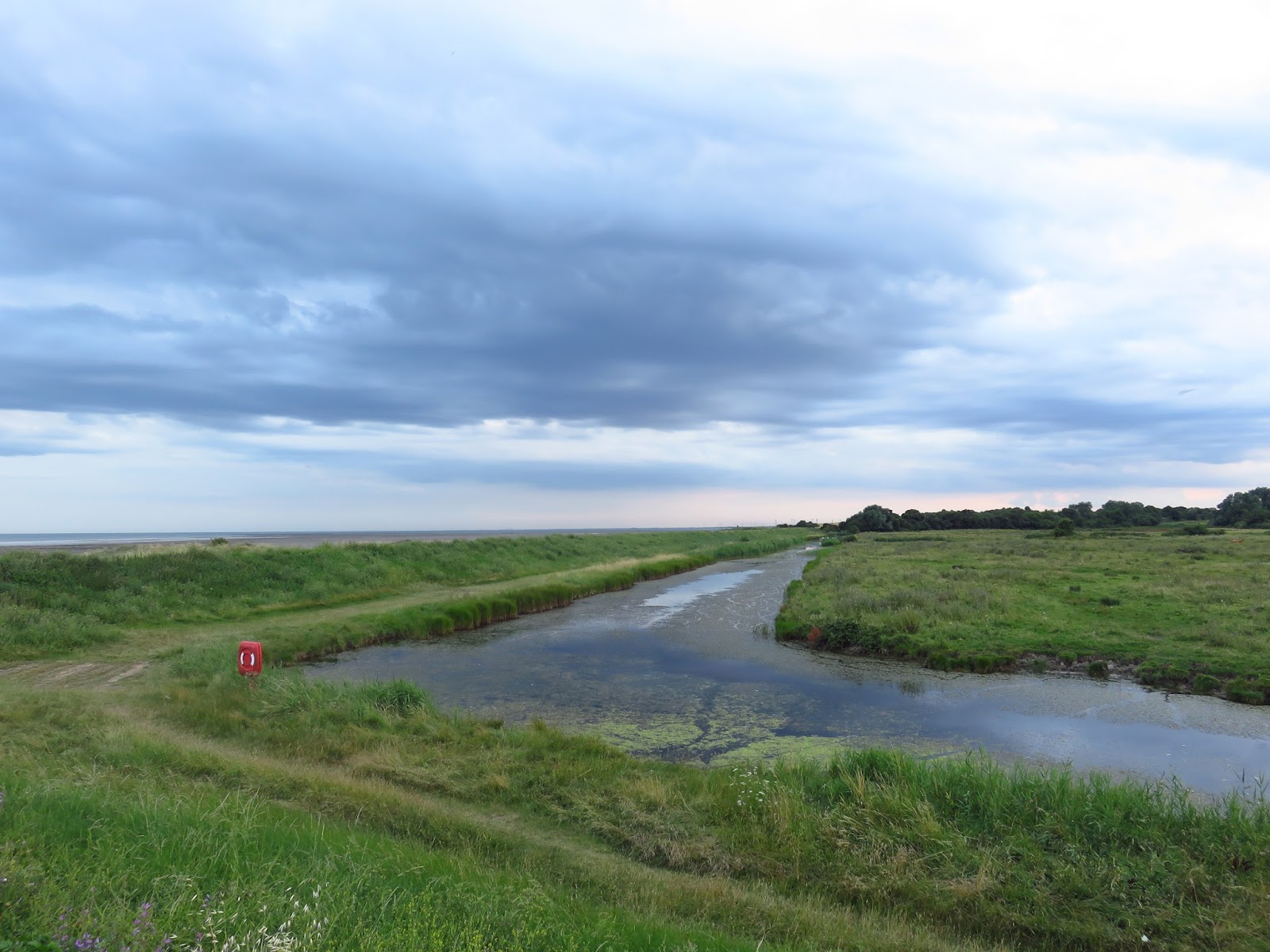
A walk along the Reeveshall seawall near Shop Lane on Wednesday evening provided views of 2 marsh harriers over Langenhoe, 250+ black-tailed godwits, 100+ avocets, 20 ringed plover, grey plover, 10 common terns and 3 little terns along the Pyefleet.

At the country park this reed warbler was carrying this male ruddy darter dragonfly whilst perched in the reeds along the borrowdyke.
Seen at the park on Wednesday were 3 willow warblers, 41 little egrets, common buzzard over the fields, two young sparrowhawks calling from behind the pond, 50 black-tailed godwits and 150 redshank on the fields with two green sandpipers flying over.

On Tuesday 9th five whimbrel flew south over the car park calling, a willow warbler was heard and a clouded yellow was reported by the seawall.
The osprey was seen from Maydays by Martin Cock as it perched on the Geedons post.

On Monday 8th at dusk in Firs Chase 5 swifts and 4 swallows spent several minutes flying low over the tree-tops hawking through the swarms of midges /gnats.

Enjoyed a colourful sunrise across the Colne on Friday 12th just after 5.30am whilst emptying some moth traps at the country park.
Flying past the park as day broke were 3 little terns and 4 common terns.

Common blue butterflies have been a bit uncommon this summer - this one hanging onto a blade of grass at the park on Thursday 11th

The annual monitoring of the hogs fennel plants took place at the park on Thursday 11th under the guidance of Dr Zoe Ringwood, on the right. Also visiting was Rebecca Perry, conservation director at Colchester zoo who is supervising the rearing and planned release at some point of the rare Fishers Estuarine moth to the country park.

A marsh harrier was seen flying over the grazing fields, a willow warbler was still present and 5 swifts flew west over the car park on Thursday evening.

Friday, 12 August 2016

COLNE OSPREY

The osprey that has spent the last few days in the Colne Estuary was photographed by Andrew Neal on Monday 8th. It's favourite perch has been this tall wooden post in the middle of the Geedon marsh, with Andrew managing this photo on a hazy day taken from South Green at Fingringhoe.
The bird has been seen a few times from Mersea but it appears as a distant speck on top of this post.

An attempt to see the osprey on Sunday 7th perched on the distant post proved futile although there was the compensation of seeing the sun setting down behind the Pyefleet Channel.

In the tranquil setting of the north side of the Island, 30 common terns, 4 little terns, 50 avocets, 300+ black-tailed godwits and a bar-tailed godwit were of note along the channel. Heading north over the Pyefleet as the sun set were 25+ little egrets heading to the Fingringhoe roost.
In bushes near the Oyster Fishery were a Cetti's warbler, willow warbler and a yellowhammer while overhead 20 swallows and 3 sand martins were noted.

The ringed plover was still sitting on the beach near the corner of the park seawall on Monday 8th. The bird can be seen sitting, from the nearby path on the seawall.

A green sandpiper was feeding on the main pool in the park fields on Monday 8th, where the water level is receding rapidly providing a nice muddy margin. A common sandpiper was feeding along the muddy margin on Saturday.

Also on the muddy pool on Saturday were 100 redshank, 50 black-tailed godwits while a good count of 56 little egrets roosting by the pond was an impressive sight. On the mudflats 10 golden plover, 12 turnstone and 200+ black-tailed godwits were feeding.
A little grebe seemed to be sitting on a nest on the park dyke while by the park clifftop bushes 12 long-tailed tits were counted on Saturday.

A painted lady, 3 peacocks, 2 commas, 4 red admirals were some of the butterflies of interest at the park on Saturday, along with lots of meadow browns and gatekeepers.

At Maydays farm a merlin was seen by Martin Cock to catch a house martin on Saturday.


A mothing session on the night of the 5th provided 50 species of macro moth with this canary-shouldered thorn always catching the eye with its bright yellow furry head.

This colourful micro-moth the rosy striped knot-horn was a new addition to the park's moth list. It seems to be slowly spreading in the county especially near the coast where it's foodplant is birds-foot trefoil and clover.

The dark swordgrass is regarded as an immigrant from the continent, the first one noted here this year.

Sunday, 7 August 2016

LATE NESTING PLOVER

A ringed plover was found nesting on the beach near the Point on Friday 5th. It was spotted sitting near the seawall corner and has chosen a very narrow strip of beach, very close to the high tide lines. The bird is well camouflaged in this picture - just above the green plant in the centre, facing left.


On the nearby mudflats 200 black-tailed godwits were feeding, as were 26 little egrets, 12 golden plover were also noted and a great crested grebe and two common terns were offshore. A sparrowhawk flapped lazily over the beach and across the mudflats.


The skies were grey on Friday evening but there was a big flock of about 300 swallows hawking back and forth over the fields and seawall, along with about ten sand martins. The flock was in the area till late in the evening although not sure where they eventually roosted for the night but somewhere nearby.
Six tufted ducklings were present in the dyke and the swans still have their seven cygnets.


A willow warbler was heard calling from bushes by the car park on Friday morning, the first returning one of the autumn. One was also heard first thing that same morning doing a brief sub-song in Firs Chase.


A young sparrowhawk was heard calling from the copse behind the pond, a water rail and Cetti's warbler were calling from the edges of the pond on Friday.
To the north of the park five common buzzards were circling in the air during the morning.


Along the north side of the Island the osprey has been seen at times perched on a wooden post on the Geedons over the last few days. First seen by Martin Cock on Tuesday 2nd, it has been seen over the next four days at least and has also been watched at a distance from Brightlingsea and Fingringhoe.


On Thursday evening I joined Steve Entwistle on the seawall near Shop Lane who had seen the osprey early evening before it flew off. Also seen was a hobby over Langenhoe as well as a flock of about nine Egyptian geese flying over the Pyefleet onto the marsh at Langenhoe Point. Three marsh harriers were also over Langenhoe, while 200 avocets fed on the nearby mud.


Ten common terns and a great crested grebe were noted along the Pyefleet. Fifty sand martins and 5 swifts were flying about over Langenhoe. On Reeveshall 3 green sandpipers were on the pool and 40 greylag geese on the fields while the young sparrowhawk was calling from the nearby wood.

One of a couple of comma butterflies seen on the buddleia in the car park during Friday. Also noted here have been 3 red admirals and a couple of peacocks with a further four peacocks, comma and 2 red admirals on buddleia by the hide.


In the fading light on Friday evening this badger was seen from the hide.


The moth trap overnight on Thursday 4th at the park produced about 100 individuals of 36 species of macro moth. One of the coastal specialities at this time of year is the sandhill rustic, one of the two found, pictured above.

One interesting moth wasn't near the trap but found resting the next morning on the side of the building, the red underwing. Each year it seems to like resting on this east facing wall of the information room. The drab grey-brown wings hide a pair of bright red hindwings underneath.

The coronet moth used to be a scarce moth here but has become more regular in recent summers.


Also of interest from the trap were tree lichen beauty, fen wainscot, saltmarsh plume, poplar hawkmoth, ruby tiger, herald and a drinker.

Saturday, 6 August 2016

PAINTED LADIES

Two fresh painted ladies were seen along the Maydays seawall on Monday 1st. One of them paused long enough on a bristly ox-tongue flower for this picture to be taken. Painted ladies have been scarce this summer.
A couple of common blue butterflies were also seen inside the seawall.

Two common seals were basking on the saltmarsh at the top of the Pyefleet until disturbed by a passing windsurfer. A third seal was pictured when it briefly surfaced as it swam back down the Channel.

Only a small selection of birds noted during the high tide with three common sandpipers along the bottom of the seawall being the most interesting. A marsh harrier was flying along the Langehoehall seawall while four kestrels were hovering above there, with two common buzzards over the ranges and another two over Reeveshall. Three yellowhammers and 25 house martins were also noted.


This speckled wood was resting on a holly bush in the Firs Chase garden on Monday 1st. Also noted were meadow brown, gatekeeper and holly blue as well as a migrant hawker dragonfly.
A hummingbird hawkmoth was seen visiting some salvia flowers in the garden the previous day.


In the skies overhead ten swifts passed over the garden on Sunday 31st.


The regular female red squirrel was back in the cedar tree in Firs Chase having just raided the feeder on Monday.

The usual timings for her visits is early morning and early evening but this visit for a change was early afternoon. This one's dirty whiskers shows it has had it's head deep inside the nut feeder.

Friday, 5 August 2016

WADER ROOST


The wader roost on the main pool in the park's grazing fields on Sunday 31st comprised 150 redshank, 12 black-tailed godwits and 5 lapwing. In the trees by the pond 31 little egrets were counted at the morning high-tide roost.
Three whimbrel, 3 sand martins and 3 green woodpeckers were also noted at the park on Sunday.
A common seal was offshore from the park on Saturday 30th.

A passage of 200 swifts flew west over the car park on Wednesday 27th.

On the mudflats by the park in the evening of Tuesday 26th there were 200 black-tailed godwits, 3 whimbrel, 10 dunlin, 8 golden plover, 5 common terns and 16 little egrets.
From the hide at dusk a barn owl was hunting the grass field to the north and a little owl flew past the hide as it got dark on Tuesday.

In the recently cultivated arable fields near Waldegraves 1000 starlings were feeding, many of them lined up on the wires.

A red admiral basked on the door of the bird-hide at the park on Sunday 31st. Several have been seen on the wing in the last few days.

After a recent run of very good years for numbers of the six-spot burnet moth, this summer hardly any have been seen. This one pictured on Saturday 30th is only the third one noted here this year, compared with daily sightings last year of 25+.

A couple of moth traps were put out at the park on the 26th on a warm but breezy night. By dawn the next day 300 individuals of 55 species of macro were logged, including this pebble hook-tip.

One iron prominent was found pictured above, as were pale prominent, swallow prominent and coxcomb prominent.
Other moths of note were festoon, drinker, least carpet, peppered moth, ruby tiger, fen wainscot, lesser spotted pinion, sandhill rustic and a silver-Y.

The micro moth the sulphur pearl was of interest, the first one of the season here.

Monday, 1 August 2016

PASSAGE PLOVER


Two little ringed plovers were found by Martin Cock on the pool just inside the Reeveshall seawall on Wednesday 27th. One of the birds later flew off but the other stayed around for two more days. These two photos were taken by Andy Field. The little ringed plover is a scarce passage wader to the Island.

The little ringed plover spent time feeding around the muddy margins, sometimes disappearing in the nearby club-rush.  
The bird was probably hiding in the rushes when I visited the area late on Thursday 28th, as the only birds present were 3 green sandpipers and a grey heron. However the little ringed plover was still present on Friday morning.

The Pyefleet was graced on Wednesday by the unusual sight of nine Egyptian geese drifting in the channel, witnessed by Andy who snapped this image above. This is the first time a flock of these geese has ever been seen at the Island, with the handful of previous sightings only involving singles or of a pair of birds. This flock headed up the Pyefleet and have not been seen again.

This male ruddy darter was photographed by Andy as it rested on a thistle head.

Several meadow browns can be seen fluttering along the seawall at the moment, this one also photographed by Andy.

As dusk on Thursday approached a big flock of 500+ sand martins were flying around over the Langenhoe Point ready for the evening roost. Also at least 30 swallows flying about too.
There was high tide along the Pyefleet, pictured above, so not many waders noted except on the roost on Peewit Island where 100 avocet and 300 black-tailed godwits were seen. One whimbrel flew off the saltmarsh calling.

Several terns were seen, some initially on the beach at Langenhoe Point where 15 little terns were resting, while later 12 common terns were fishing with six little terns in the Pyefleet.

On Reeveshall two yellowhammers were heard singing, ten linnets were noted by the seawall and one young sparrowhawk was still calling in the Shop Lane wood.

Thursday, 28 July 2016

SUMMER MOTHS

Fourteen moth enthusiasts gathered at the country park for the annual summer mothing night. The get together was a joint Essex Moth Group and British Entomological & Natural History Society meeting. Eight moth traps / lamps were set up around the area of park close to the car park. Three traps continued till dawn and by that time the final tally of moths recorded for the night was about 95+ species of macro moth and at least 20 species of micro moth. A very rewarding night.

One of the target species was the spectacular garden tiger, the first individual arrived just after midnight with a second one being found in the trap at dawn.

It's great to see this colourful moth still present at the park as numbers have declined greatly nationally in recent years.

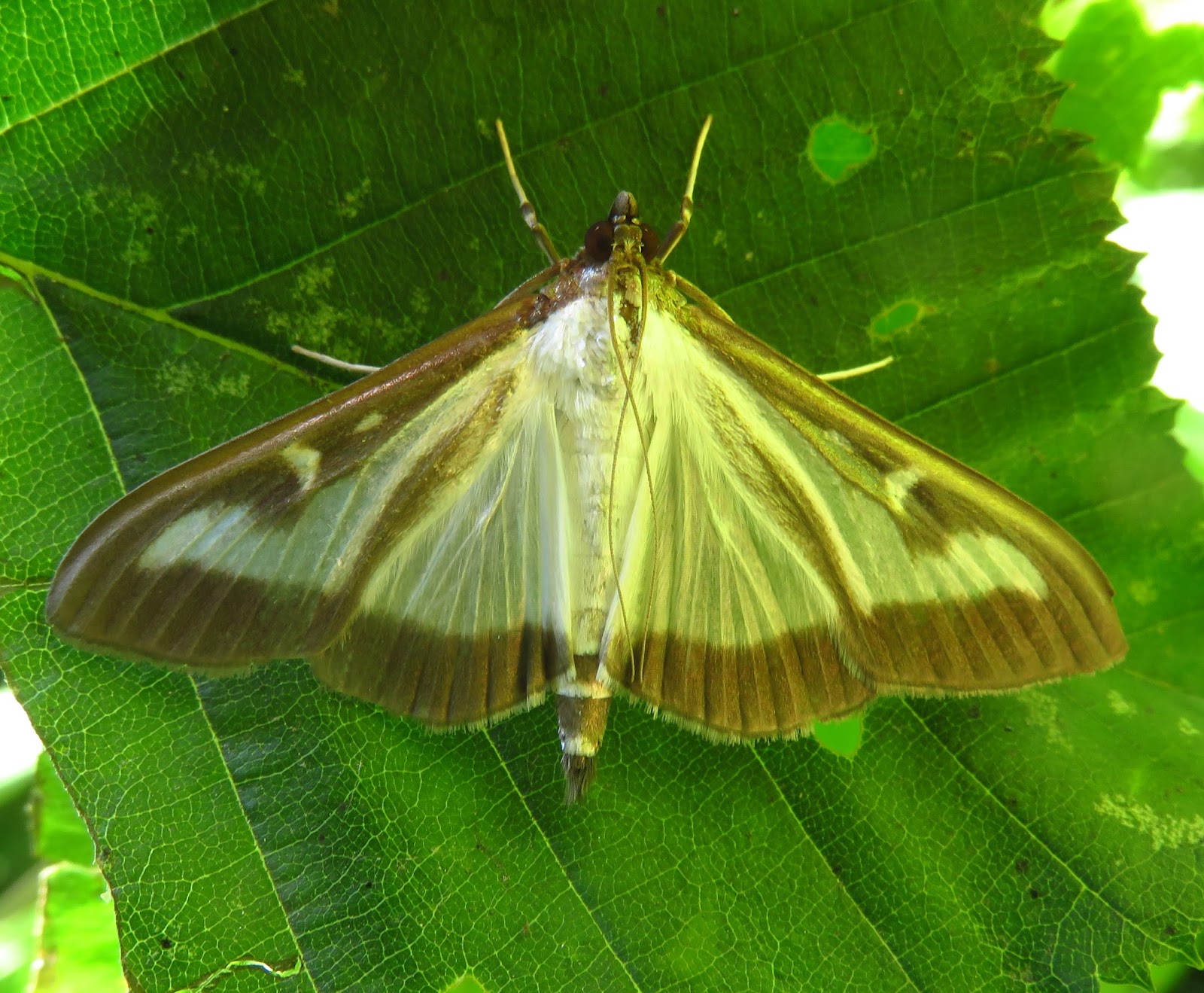
The most notable moth was this box-tree moth, a new record for the site and possibly the third record for north Essex. It is native to east Asia and has become recently established in southern England, the first individual in the UK being seen in Surrey in 2008. Since then the moth has been spreading across London and into the Home Counties. The caterpillars feed on box bushes and have become serious defoliators in parks and gardens. Luckily there's no box here at the country park.

The actual moth is quite an attractive one with slightly iridescent wings, and a large one too with a wingspan of 4 cms. Despite the large size, it's in the micro-moth group.


Several of the colourful ruby tigers were found in a number of the traps - a widespread and common moth.

The rosy footman was one of the attractive moths with its salmon pink colouration and the black squiggle marks on the wings. There must be a small population at the park as there's only one or two individuals get seen each summer.

One of the biggest moths of the night was this oak eggar, a regular species to the trap each mid-summer period.

The festoon seems to have become established at the park following its big spread through Essex three years ago.

Another familiar resident is the tree-lichen beauty, also well established here for the last few years.

The nicely patterned archers dart is a regular at the park during mid-July to early August. It's distribution in Essex is limited to the area around the north-east coast of the county.

A moth becoming more widespread in the last few years is the Kent black arches with several being recorded at the park each year now.

Other moths noted at the park on Friday evening were saltmarsh plume, leopard, poplar hawkmoth, fen wainscot, one silver-Y, scarce silver-lines, green silver-lines, drinker, early thorn, green pug, maple pug, lackey, least carpet, lesser-spotted pinion, maple prominent, marbled white-spot, oak hook-tip, pebble hook-tip, peppered, plain pug, slender pug, V-pug, poplar grey and white satin