Monday, 8 July 2019

DUCKLINGS ALONG DYKE

A mallard was being ultra cautious with her brood of seven very young ducklings as they swam along the dyke near Coopers Beach on Sunday 7th. As there was nowhere easy for the ducklings to hide, they all huddled motionless and silent close with mum, until I'd finished walking on by.
Another brood of seven young mallards was at the west end of the dyke as was another older brood of three.
Two little egrets and a grey heron roosted on a bush in the middle of the day during the high tide.
Offshore a Mediterranean gull, 4 common terns, 7 great crested grebes and 8 curlew were noted.

One of the last breeding pairs of meadow pipit on the Island is on the grass fields near Coopers Beach. This male spent some time hiding in the long grass, and at other times rising in the air to sing.

A male kestrel was hunting by the seawall, 4 linnets and 4 goldfinches were also noted. A juvenile carrion crow with striking white wing bars was seen near the caravan park.

Half a dozen swallows were hawking over the Coopers caravan park with this recently fledged youngster waiting to be fed by a parent.


Excavations on the Rewsalls marshes have already begun to create a new boating lake.

There's a good display of narrow-leaved birds foot trefoil on a track near the Coopers Beach football pitch.

Earlier in the day the coal tit was heard singing and showed again in Fishponds Wood, having first been found on Friday. It was also seen on Saturday by Martin Cock.

On Saturday 6th along the Strood a male marsh harrier was hunting low over the fields, the regular common buzzard was keeping an eye on a recently cut hay crop with a second buzzard seen over Peldon. A kestrel also hunted over the fields while a sparrowhawk was seen over Firs Chase.
In the Strood channel 70 redshank, common tern and a great crested grebe were noted, while 2 yellow wagtails were also seen by the seawall.

 
It was ideal warm weather for making hay on Friday 5th at Reeveshall.
Four marsh harriers including a couple of juveniles on Langenhoe were seen, a distant hobby and two common buzzards were also seen over the Ranges.
Along the channel during the low tide were 16 avocets, greenshank, 12 black-tailed godwits, 20 redshank, golden plover, ten lapwing including an apparent parent calling anxiously by the pool maybe with a chick nearby. Also in the Pyefleet were 20 shelduck and a brood of ten juveniles, 2 common terns and 6 great crested grebes

On Reeveshall a flock of 200+ jackdaws and rooks were feeding, a sand martin flew over the Pyefleet, a yellowhammer sang in Shop Lane and a coal tit was heard singing in Fishponds Wood - probably the first breeding bird for several decades on the Island.

There were good numbers of meadow brown butterflies along the Reeveshall seawall on Friday with 100+ seen along with several Essex / small skippers and one or two gatekeepers. Two purple hairstreaks were seen by Fishponds Wood in Shop Lane.

On Thursday 4th along the Strood seawall, 4 common buzzards were in the air together, singers included corn bunting, 2 reed buntings and 4 reed warblers while 2 yellow wagtails and 25 swifts were noted over the fields. In the channel were 2 common terns, 30 curlew, 20 redshank and 4 little egrets.

Five birds of prey were the highlight on Wednesday 3rd along the Strood seawall with a peregrine drifting high over the fields, a hobby caught a swallow/ house martin and carried it over to Ray Island, while a buzzard and kestrel hunted over the Strood fields and a marsh harrier hunted over Peldon fields. The corn bunting was singing, 3 yellow wagtails, 20 swifts, 10 curlew and 50 redshank were also noted.
A Mediterranean gull flew over Firs Chase later on Wednesday.

Friday, 5 July 2019

PLOVERS AT POINT

Two ringed plovers were on the beach by the muddy bay behind the East Mersea Point on Tuesday 2nd. There was no sign of any chicks or interest in any nest in this area of the beach.

The adult ringed plovers didn't seem to be showing any interest in this nest with eggs about fifty metres away. It was first spotted seemingly abandoned about two weeks previously. It is in a section of beach where a pair managed to raise three chicks three years ago. It's strange that these abandoned eggs haven't been predated yet.

A recently fledged pair of avocet chicks with a parent was also seen inside the bay at East Mersea Point on Tuesday. These youngsters have not bred on the Island and have come from elsewhere.

Three avocets were sitting on their nests on the island in the saltmarsh lagoon near the Point on Tuesday. The following day three chicks from this sitting adult were seen by Martin Cock recently hatched and feeding in the lagoon.  On Thursday two other new avocet chicks were also seen on the second lagoon by Martin.

Amongst the roosting flock of 50+ black-headed gulls on the saltmarsh lagoon on Tuesday, was a pair of Mediterranean gulls, one in the middle of this picture with the black head.
Also on lagoon were 2 black-tailed godwits, with 4 lapwing, 2 dunlin and a curlew noted nearby.
In the Colne were 2 common terns, great crested grebe and a common seal swimming out of the river.

Two pairs of tufted ducks were in the park dyke, while 2 reed warblers were singing from the reeds and a reed bunting singing from the saltmarsh.
A sand martin flew around the Golfhouse on Tuesday morning with 10 swallows, 4 house martins and 2 swifts.

Several large clumps of sea holly were in flower on the beach at East Mersea Point on Tuesday,

On Monday 1st a skylark was seen on the Strood seawall, several others in song over the fields.
A hobby flew over the Strood fields and crossed low over the channel towards Peldon. A yellow wagtail was also noted near the seawall.

The jangling song of this corn bunting was heard coming from bushes near the Maydays seawall on Sunday 30th. Two yellowhammers and two reed warblers were also heard singing along the dyke and three yellow wagtails by the seawall.

Three marsh harriers, 3 common buzzards were seen during the walk along the Maydays seawall while a hobby was seen distantly flying towards Bower Hall farm. The flock of 50 sand martins flying over the fields and Maydays marsh was probably the reason the hobby made an appearance.
Thirty house martins were seen around the Maydays farm buildings.

The tide was coming up along the Maydays creek during the middle of Sunday. In the Pyefleet 5 great crested grebes, common tern, 3 curlew, 5 redshank, 5 little egrets and 20 shelduck along with 3 young ducklings. A common seal stuck its head up briefly in the Pyefleet.
A painted lady was seen by the seawall.

Tuesday, 2 July 2019

SCARLET TIGER VISITOR

This striking scarlet tiger moth was discovered lying beside the moth trap in the Firs Chase garden on Sunday 30th. When it flicked its wings open it revealed the bright scarlet hindwings - very eye-catching. There was only one previous record of scarlet tiger in Essex prior to this year, although in the last couple of days it has been reported from Stebbing and also Shoeburyness. The species is mainly found in the south west of England and Wales with a small population in Kent. One of the main foodplants is common comfrey of which there is a lot in this Firs Chase garden which may've persuaded the moth to stop by here.

Five elephant hawkmoths were a colourful sight in the trap on Sunday evening.

The large privet hawkmoth was resting beside the trap, the first one noted here this summer.

A couple of common emeralds were also noted.

The first festoon sighting in the garden, a species that has increased across the county in recent years.

The white satin moth is aptly named with its pure white wings while the legs are a distinctive black and white.

The scarce micro moth Evergestis limbata seen in the garden on Sunday has been recorded previously at the country park a couple of times in recent years.

Thirty three species of macro moth were recorded on Sunday evening totalling just over 100 moths.

Sunday, 30 June 2019

PAINTED LADY INFLUX

A tatty painted lady was seen on Friday 28th in the West Mersea Feldy cemetery. Three painted ladies were seen at various locations near the Firs Chase caravan site and the Strood seawall. There have been several reported in West Mersea gardens over the last week following the recent influx in the second half of June from the continent. 

Three small tortoiseshells were also seen enjoying the sunshine in Feldy cemetery.

The first ringlet for the season in West Mersea was another butterfly seen at the Feldy field on Friday.

A check of some purple toadflax proved worthwhile as at least ten caterpillars of the nationally rare toadflax brocade moth were found feeding on one of the plants in Feldy.

The moth has been spreading across Essex and was first seen on the Island by the Potifars in Shop Lane last year. The toadflax brocade caterpillars should be easy to spot at the moment on any flowering purple toadflax in gardens.

A great crested grebe was feeding in the Strood Channel on both Friday 28th and Saturday 29th.
Also on Friday a marsh harrier quartering the fields, the regular buzzard perched on one of the field hedgerows with another common buzzard flying north-east over the Lane. A corn bunting, whitethroat, 2 reed warblers were heard singing, while 3 yellow wagtails and 50 house sparrows were by the seawall.
The first returning waders of the autumn were feeding on the Strood mud with ten curlew and ten redshank noted.

At East Mersea Point a ringed plover chick was seen on the beach by Martin Cock during the third week in June although by the 26th the adults were calling anxiously but the chick wasn't spotted, maybe it was hiding. Another ringed plover nest with three eggs was found seemingly abandoned with no sign of adults nearby.

The red squirrels have continued to visit the Firs Chase garden feeders throughout June such as this adult male without the ear tufts.

One of the regular young adult males still with the dark ear tufts, has also been making daily visits. There were at least half a dozen visits on Thursday 27th including two red squirrels present at the same time in the morning and again in the afternoon.

A muntjac deer was seen just after daybreak in the Firs Chase garden on Thursday 27th.

Saturday, 29 June 2019

NESTING SWIFTS

While I've been away for a break, Andy Field has taken a variety of photos in my absence.
A pair of swifts have taken up residence in a swift nestbox on Andy house in High Street North. The box-cam showed it laid its first egg on the 23rd June.

The camera shows the pair of swifts snuggled up together for the night. A second pair of swifts is also nesting elsewhere in the roof of Andy's house - a rare treat these days to still have swifts nesting in your house!

 A pair of Sandwich terns was seen in the Pyefleet perched on posts by the East Mersea Oyster Fishery on Monday 17th.

This pair of Sandwich tern is presumably the same pair that have stayed in the Colne over recent weeks.

At Cudmore Grove the pair of kestrels nesting in the box at the back of the grazing fields appeared to have four young showing in the box on 21st June.
In the Mersea Quarters, 3 eider were seen on the 13th June by Steve Hunting.

A ringlet was photographed by Andy at Cudmore Grove on 26th June.

Ringlets have become well established at the park since first being seen there in 2012.

A red squirrel photographed by Andy in my Firs Chase garden, whilst checking the nut level in the feeders during my absence.

Tuesday, 4 June 2019

STROOD YELLOW WAGS

The regular male yellow wagtail was singing beside the Strood seawall on Tuesday 4th. There appeared to be three different pairs at various intervals along the Strood seawall.
A male marsh harrier spent time quartering the fields, passing close by to a cuckoo perched on some overhead wires - the cuckoo had been calling repeatedly from the tree tops and telegraph poles up by the edge of West Mersea.

A corn bunting was singing as were 4 reed warblers and 3 reed buntings, while ten linnets were feeding in the rape field. A pair of Mediterranean gulls flew high over Ray Island and two common terns were seen along the channel.

At Cudmore Grove on Tuesday, Andy Field reported 5 pochard, the pair of kestrels in their tree at the back of the grazing fields, five sanderling in summer plumage, two common terns in the Colne and also a stoat seen carrying a small mammal near the bird hide.

A brood of six young mallard ducklings were in the park borrowdyke on Monday 3rd. Three pairs of tufted duck were also present while the pair of mute swans present has not nested at all this spring.

Also on Monday an adult Mediterranean gull was an unusual visitor to the park dyke in the company of a few black-headed gulls. Nearby three black-headed gulls appear to be nesting on an island on the saltmarsh lagoon. A redshank, one shelduck and an oystercatcher were also on the lagoon while on the nearby mudflat were four ringed plover and two dunlin.

Two male marsh harriers were flying over Langenhoe Point, while two great crested grebes and a common tern were in the Colne.

Three young song thrushes are being raised in the Firs Chase garden by their attentive adults.

The adult song thrushes have been busy feeding masses of snails to their young, leaving lots of shells lying on the patio.
A juvenile great spotted woodpecker with its red cap flew across the garden and perched high in a tree along with another great spotted woodpecker.

There are still several visits a day by several red squirrels to the feeders in the Firs Chase garden. Two of the youngsters pictured here were happy to feed alongside each other, now that two extra feeders have been installed on the tree. One of the squirrel coat's has turned quite dark-brown along the back. There have been some frantic chases around the tree trunk at breakneck speed recently, normally resulting in one backing off.

It was calm and sunny along the Strood Channel on Sunday 2nd with main highlights seen from the seawall being a common buzzard, common tern, 3 yellow wagtails and a cuckoo calling from the top of Strood Hill.
The cuckoo was also calling on Saturday 1st near the top of Strood Hill and a lesser whitethroat was singing by Firs Chase.

There's a nice display of ox-eye daisies in the Feldy View cemetery.

Sunday, 2 June 2019

MOTH MEDLEY

The moth trap was worth switching on in the Firs Chase garden during the last ten days of May with the warmer night temperatures. After the cold start to the spring nights during April and early May, the mothing has become more productive.
This lime hawkmoth was the main highlight on 25th May amongst 44 species of macro moth.

Two pale tussocks were resting outside the trap, in the their characteristic pose with front legs stretched out. A gentle blow of air over the body provoked the moth to stick its wings up in the air.

The coronet moth has become a common sight at the moth trap in recent years.

The distinctive black and white patterning of the pale form on the peppered moth.

The aptly named iron prominent showing the iron colouration on the wings.

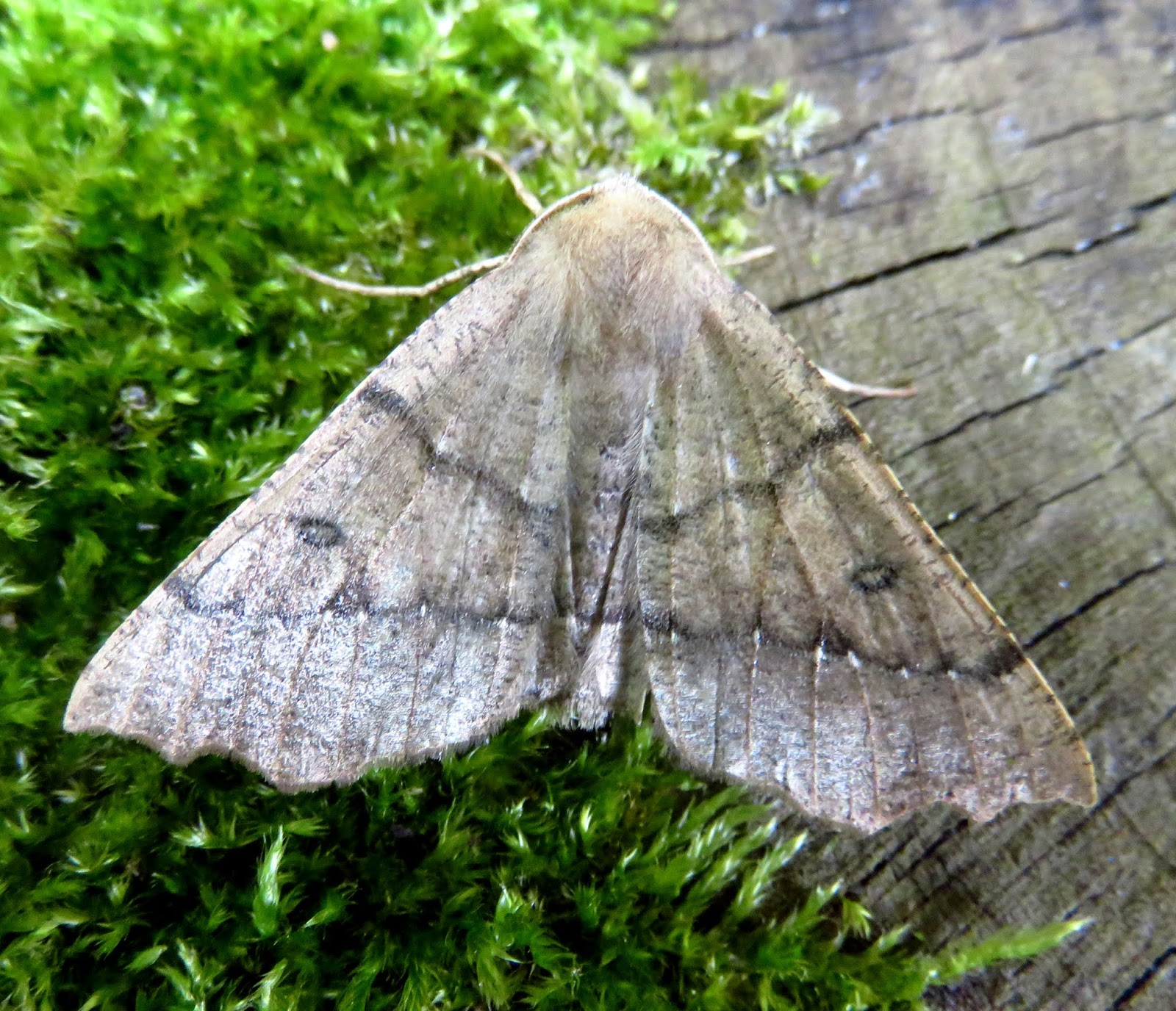
The scalloped hazel doesn't appear to be a common moth on the Island, with only 3 previous records at Cudmore Grove since 2006.

The poplar grey is a common moth with several individuals noted each summer.

A latticed heath dropped into the trap on a couple of recent nights.

The tawny-barred angle has been a surprisingly scarce moth on the Island with the only previous record being last year at Cudmore Grove.

The figure of eighty is a common moth and has been recorded most recent years.

A sign of possible moth immigration was on 23rd May with two white-points being seen.

Another migrant on the 23rd was this micro-moth, the diamond-backed moth.