Saturday, 10 August 2019

WILLOW EMERALD REAPPEARANCE

A Willow emerald damselfly made a surprise appearance in the Firs Chase garden on a blustery Friday 16th. It found a sheltered corner of the garden to spend a few minutes resting on some clematis stalks. This is the second sighting in the garden following an earlier one a month ago. The willow emerald has quickly colonised the south-east of England since it first arrived from the continent ten years ago.

Above the Firs Chase garden on Friday were five swifts in the early evening and a passing sparrowhawk.

A juvenile goldfinch was perched up over a path near the Firs Chase caravan site, the rest of the family nearby on Friday 9th. A willow warbler was seen feeding in bushes down the side of the caravan site and a swift flying over the field near the houses.
Along the Strood seawall were 160 golden plover, ten Mediterranean gulls, whimbrel were in the channel, also 200 black-tailed godwits near the Dabchicks sailing club. Also from the seawall were 20 linnets, 2 yellow wagtails, common buzzard and two grey herons.

A hornet rested on a bush near the Firs Chase caravan site on Thursday 8th.
Three common buzzards were circling high over the Ray Channel while on the mud near the Dabchicks were 100 black-tailed godwits. Two painted ladies were seen near the seawall.

Four willow warblers were feeding and calling from a silver birch tree in the Firs Chase garden on Thursday 8th, also a sparrowhawk passed overhead.

On Wednesday 7th three recently fledged avocets were on the Pyefleet mud near Reeveshall.
 Twenty Mediterranean gulls were resting on the mud with the black-headed gulls, five young shelducklings were with their two nanny adults and 100 black-tailed godwits were on the mud near the Oyster Fishery.

There is still water in the Reeveshall pool and the avocet family with four young were still present on Wednesday 7th. Also over Reeveshall were three circling common buzzards and 200+ swallows hawking over the fields.
A speckled wood butterfly was seen in Adrian Amos's East Road garden on Wednesday.

It was nice to see the big flock of 250+ house sparrows still feeding in the ripening wheat field along the Strood on Tuesday 6th. The sparrow flock has been here most days for the last month or so in varying numbers. Also in the wheat field a whinchat was flying about and perching on the stalk-heads, as were two reed buntings. Two willow warblers were feeding in the bushes down the side of the Firs Chase caravan site.

Five greenshank were feeding at low tide along the Strood channel on Tuesday 6th, also five little egrets, a Mediterranean gull and a common tern.
Two sand martins flew over the Firs Chase garden on Tuesday afternoon, also here were two painted ladies and a brown argus butterfly.

A Mediterranean gull perched on a post along the Strood channel on Monday 5th.
Also along the Strood channel were 5 greenshank, 3 grey plover, a golden plover, common tern while 100 black-tailed godwits near the Dabchicks.
In the fields were 100 linnets, 200 house sparrows with 8 yellow wagtails also noted nearby.

At Maydays farm, five common sandpipers were seen on Monday by Martin Cock.

Three painted ladies were seen in Adrian Amos's East Road garden on Friday 2nd with two the following day.

Wednesday, 7 August 2019

WALL BROWN

A Wall Brown butterfly made a surprise appearance along the Maydays farm seawall on Sunday 4th - the first sighting on the Island for just over 20 years. This individual decided to land briefly on my knee while I was sitting down on the seawall, before it flew off without any opportunity for any photo to be taken. After some searching and a couple of other sightings in the same area, eventually after about forty minutes, the butterfly was followed in flight and seen to land on a concrete block on the outer face of the seawall, where a few photos were snapped.
The wall brown has declined in Essex over the last ten years to just a scattering of breeding sites around the coast. Up until the late 1990's there was a small population on the Island at Cudmore Grove Country Park.

Five painted ladies were feeding on the golden samphire flowers below the Maydays seawall out of the wind. A brown argus was seen low down among the grass inside the seawall.

Birds noted at Maydays on Sunday included 2 common sandpipers, 3 greenshank, 2 marsh harriers, common buzzard, 50 grey plover, 30 dunlin, 5 shelducklings, 2 yellow wagtails, yellowhammer and ten house martins.

Along the Strood seawall on Saturday 3rd were seen lots of Mediterranean gulls with at least 40 seen amongst 1000 black-headed gulls and a couple of common gulls following a tractor cultivating a field. This Mediterranean gull pictured, seemed to have very muddy wings and was probably standing by the dyke hoping to wash its feathers.

A hobby passed over the stubble field a couple of times, a common buzzard also flew over too and a sparrowhawk was also seen gliding over the Strood fields late on Saturday morning. In the fields were also 25 golden plover, 25 linnets, while 6 yellow wagtails were seen along the seawall.

Two willow warblers were feeding and calling from trees alongside the Firs Chase caravan site on Saturday. Three whitethroats were also seen along the seawall walk and 5 swifts were flying over the field near the houses.

The first small copper of the mid summer generation was feeding on lavender in Feldy View on Saturday, also painted lady, common blue and brown argus of interest here. Ten painted ladies were feeding beside the Strood seawall.

On Saturday Andy Field noted between the Golfhouse and the Oyster Fishery a willow warbler with a small warbler flock of lesser whitethroats, whitethroats and reed warbler. Four knot, marsh harrier and a few yellow wagtails were also seen.

A flock of around 50 little egrets were roosting in trees behind the country park pond on Friday 2nd. A young sparrowhawk was heard calling from the copse behind the pond.
Four pochard were in the dyke, a common sandpiper flew along it calling, 2 sand martins passed overhead, 2 teal seen flying, 3 ringed plover chicks on the beach,while offshore the female eider and a common tern were seen.

A stonechat was reported by Andrew Tilsley near the Golfhouse on Tuesday 30th.

A gypsy moth was found in the Firs Chase garden moth trap on 2nd and the 4th, a species that is spreading quickly across southern England. The first sighting on the Island was two years ago at the country park.
Also of mothing interest 170 diamond-back moths in the trap on Thursday 1st was a high count for this tiny immigrant micro-moth.

Saturday, 3 August 2019

PLOVER CHICKS

The three young ringed plover chicks were seen feeding on some mud between the seawall and the beach near the old fort at East Mersea Point on Thursday 1st. The parents were calling to the chicks whenever a family walked too close along the beach. The birds were easily viewed and photographed from the path on the top of the seawall.

The chicks have done well to survive the last ten days since they were first spotted. Their little legs having to work fast to run away from any dangers.

The three ringed plover eggs remain still untouched having been abandoned about six weeks ago in mid / late June. Surprised that a gull, fox or crow has not taken them since they were left.
Also near the Point on Thursday were three other adult ringed plovers and also a fledged ringed plover too.

The pair of avocets with the two young were resting on the saltmarsh pools near the Point on Thursday. On the saltmarsh was a flock of 100 black-tailed godwit and one bar-tailed godwit, one whimbrel and 4 Mediterranean gulls. A common buzzard crossed west over the Colne heading onto the Island and two sand martins were noted too.

Along the park dyke was a family of pochard with four ducklings, while further along was a brood of five young tufted ducklings. At least 20 little egrets were roosting in the trees by the park pond at high tide. A painted lady flew along the seawall.

A female eider was preening and feeding about 50m offshore from near the East Mersea Point just before high tide on Thursday late morning. Also in the Colne were 2 great crested grebes and 3 common terns.

A pied wagtail was feeding alongside the Strood seawall on Wednesday 31st, as were three others and 2 yellow wagtails. Two sand martins flew west off the Island and 5 swifts were still in the air over West Mersea.

Three common buzzards circled over the Strood fields on Wednesday, a marsh harrier hunted low along the ditches and a kestrel hovered in the air with a second kestrel on Ray Island.
A big flock of 250 linnets was a big early autumnal flock, feeding in the rape stubble field by Strood Hill and 52 golden plover were resting there too. The flock of 100 house sparrows was still feeding on the wheat crop still to be harvested.

On Tuesday 30th at Reeveshall, 300 black-tailed godwits and the two broods of avocets were seen by Andy Field, who also saw a red squirrel by Fishponds Wood in Shop Lane.


On Monday 27th two painted ladies were seen in Feldy View, West Mersea feeding on the lavender, one individual fresh looking while the other very tatty. Five more were also seen along the Strood seawall.

A hobby provided a close fly-past along the Strood seawall on a sunny Monday, as it swooped down on a yellow wagtail which managed to evade being snatched. A wheatear on the seawall was the first returning one of the autumn to the Island. Three common buzzards circled in the air with a fourth bird passing over west high up. A Mediterranean gull, 2 grey herons, black-tailed godwit, 100 house sparrows were noted while a single brent goose flying along the Channel was unexpected.

On Sunday 28th an adult curlew sandpiper with blotchy red underparts was found in the Pyefleet near Shop Lane by Martin Cock. It was later found feeding on the mud near Ivy Dock along with 200 dunlin. Other waders were a common sandpiper, 50 black-tailed godwits and a whimbrel, while a Mediterranean gull, two marsh harriers and a yellow wagtail were noted too.
Steve Entwistle also reported from the Ivy Farm to Oyster Fishery seawall seeing a hobby flying from Langenhoe to Maydays, 2 yellow wagtails, 2 common terns, 5 turnstones, 30+ avocets, grey plover and a painted lady butterfly.

Several clumps of sea holly were admired near the beach between Cross Lane and Waldegraves on a dull Saturday 27th. On the mud were 8 whimbrel, 20 curlew, 10 Mediterranean gulls, two common terns fishing while a sparrowhawk flew along Cross Lane carrying some prey.

Wednesday, 31 July 2019

GARDEN WILDLIFE

There has been a nice variety of interesting wildlife in the Firs Chase garden during the month of July. A brown argus was seen on three dates at the end of July, seen here resting on the a stalk on the uncut back-lawn.

In recent years the brown argus has made an appearance each summer in the garden. It is usually seen in more grassy habitats such as along the seawall or at on the grassland site of Feldy View.

A handful of gatekeepers have been resident in the garden in the second half of July, here a pair mating.

One or two meadow browns have been regular too, this one feeding on some lavender.
The ringlet was seen on several dates but not seen to settle down to feed. Large whites, small whites and the green-veined white have all been regular visitors especially during the second half of the month. As the buddleia came into flower in the middle of July, several peacocks, red admiral, comma appeared while one painted lady was seen on the 29th.

The only large skipper seen in the garden was on the 1st July.

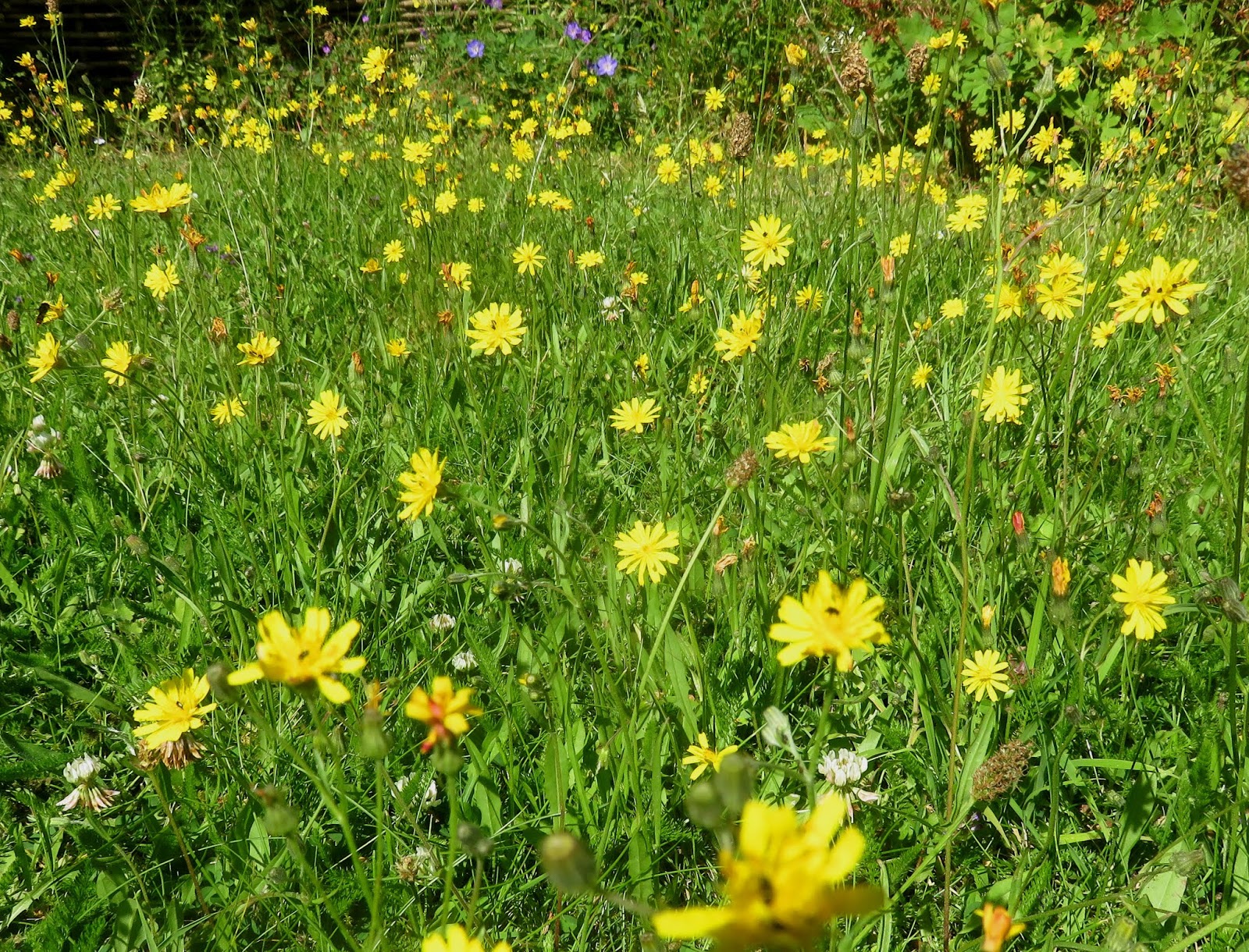
The lawn had three cuts in the spring before it was left to grow from early June onwards. This resulted in a nice growth of flowers such as catsear and smooth hawksbeard.

The bees enjoyed the large patches of flowering white clover, also some self-heal flowers to visit too.

The stock dove male has been singing from the tall cedar tree and seemed to have taken a fancy to the red squirrel box.

The stock dove was seen at the start of the month feeding under the bird feeders.

After a busy period building several nests, the wrens settled into a nestbox beside the house.

The wren parents were busy taking food back to feed the hungry chicks. Sadly the box was predated, maybe the noisy chicks gave the nest location away.

After a very busy spring with lots of red squirrel activity in the garden, visits dwindled through July. This male was photographed on 3rd July

Friday, 26 July 2019

RETURNING REDSHANK

Numbers of redshank have been gradually building up in the last few weeks around the Island, as birds return from their breeding grounds. This redshank still in breeding plumage was with another 100 along the Strood Channel on Friday 26th. Also on the mud were 2 greenshank,  one whimbrel and a grey plover along with 30+ curlew and several oystercatchers.

A common buzzard drifted slowly over Ray Island from Peldon, a Mediterranean gull circled above the Firs Chase caravan site, while along the seawall were 100 house sparrows, 8 linnets and 4 yellow wagtails.

At East Mersea Point on Friday, three ringed plover chicks were seen by Martin Cock, also another older chick was seen here from another brood, and also two avocet chicks feeding on the mud.

Four brown argus butterflies were enjoying the flowering bushes such as this lavender at the Feldy View field on Friday.

Four yellow wagtails were feeding on the saltmarsh near the Firs Chase caravan site on Thursday 25th, also a kestrel hunting over the nearby fields while a common tern was resting on a buoy in the Strood channel.
A common buzzard was mobbed by gulls as it flew over Firs Chase on Thursday.

Ten yellow wagtails were also seen along the Strood on Wednesday 24th, most perching on the telegraph wires late morning, as did a kestrel. Two little grebes and a common terns were of note along the channel. A peregrine was seen flying over Feldy Marsh, heading over to Old Hall where it swooped half-heartedly down on some birds on the saltings.

Along the Pyefleet Channel at East Mersea near the Oyster Fishery on Tuesday 23rd were a greenshank, 8 avocets, 5 common terns, shelduck with 11 young, 3 marsh harriers overhead, 5 little egrets with another ten in the Colne. A yellowhammer was singing near Fishponds Wood.

Earlier on Tuesday a great white egret was seen by Andy Field flying over Langenhoe marsh before dropping onto the lagoon by Langenhoe Point. Also seen at Reeveshall were the two avocet broods of 3 and 4 young, greenshank, 60 black-tailed godwits and a marsh harrier.

A male ruddy darter was seen by Fishponds Wood in Shop Lane on Tuesday 23rd.

A whimbrel was feeding along the Strood channel on Monday 22nd, as were ten black-tailed godwits and a greenshank. A marsh harrier flew over the Peldon fields and a kestrel was over the Strood fields.

A rather faded six-spot burnet moth was feeding on some ragwort flowers in the Feldy View field on Monday 22nd. A hummingbird hawkmoth was seen feeding on some lavender. Butterflies seen here included common blue, brown argus, meadow brown, gatekeeper, ringlet, small / Essex skippers, small white, large white, comma, peacock and red admiral.

Moths were flocking to the moth trap during the muggy night of Tuesday 23rd until a thunderstorm at 2.30am meant a hurried emptying and clearing away in the pouring rain. One strikingly marked moth to make the first appearance in the Firs Chase garden this summer was this black arches.
Over forty species of macro moth were noted including pine hawkmoth and elephant hawkmoth, magpie moth, iron prominent, ruby tiger, dot moth fen wainscot and the good count of 16 tree-lichen beauties.

Sunday, 21 July 2019

PYEFLEET SEALS

A common seal was resting on the pontoon in the Pyefleet Channel on Sunday 21st, with a second common seal resting on the saltmarsh further up channel. A grey seal was also watched checking out the Maydays creek just before high tide, looking for somewhere secluded to rest up.

A common sandpiper flew along the Maydays creek, while along the Pyefleet were 5 greenshank, whimbrel, 200+ redshank, 2 grey plover, 4 great crested grebes, 2 common terns and two shelduck broods of 3 and 5.

A corn bunting was singing beside the Maydays dyke with a second bird singing from a nearby field. Three yellowhammers were singing from bushes along the dyke too and five linnets also noted.

Two hobbies were watched from the seawall, one distant hobby trying to catch a small bird at the back of Reeveshall, while a second hobby a minute later flew along the Reeveshall seawall towards Maydays providing a nice close fly-past. Two marsh harriers were seen from the seawall on Langenhoe. A big mixed flock of 500+ rooks and jackdaws was feeding on the Reeveshall grass fields.

On Saturday 20th during a walk along the Strood seawall, 4 greenshank, 10 black-tailed godwits, a turnstone, 4 yellow wagtails, marsh harrier and common buzzard were noted along with 2 common terns, 2 little grebes in the Strood channel.
At East Mersea Point two ringed plover chicks were seen on the beach on Saturday by Helen Shore.

Two broods of avocet chicks were feeding on the pool by the Reeveshall seawall on Friday 19th. One brood of three chicks and a second brood nearby of four chicks were being closely watched over by their parents. On the nearby Pyefleet channel were 8 avocets on the mud.

Also along the Pyefleet were a common sandpiper on Pewit Island, 40 black-tailed godwits, whimbrel, 4 little egrets, common tern and a little tern fishing by Langenhoe Point. Two marsh harriers flew over Reeveshall and another three on Langenhoe while also seen over Reeveshall were two common buzzards, sparrowhawk and a kestrel.

During a cloudy end to Friday a flock of 100 swifts circled in the grey sky above Firs Chase.

Five sand martins were seen crossing the Strood Channel on Thursday 18th as they headed west off the Island. Also seen from the Strood seawall were 2 common terns, whimbrel, 5 ringed plover, 3 black-tailed godwit, yellow wagtail, 100 house sparrows and 14 linnets.

A siskin was heard calling as it flew west over Firs Chase on Tuesday 16th.
In East Mersea, Martin Cock noted the two broods of 2 and 3 avocet chicks at Reeveshall, also the coal tit in Fishponds Wood. A brood of 3 avocet young were also seen on the mud by East Mersea Point. A kingfisher seen near the Golfhouse is an early autumn sighting, also 6 sand martins seen too.

The large oak eggar moth was a nice visitor to the Firs Chase garden moth trap on Thursday 18th.

Only one ruby tiger has been noted in the last fortnight in the garden trap.

A single pebble hook-tip on 16th was the first one this year in the garden.
Up to four elephant hawkmoths are being noted in the trap most recent nights, while privet and pine hawkmoths were seen on 18th. A hummingbird hawkmoth was seen briefly in the garden near the end of Sunday 21st.