Monday, 7 October 2019

COOPERS STONECHATS

Three stonechats were very confiding at times near the Coopers Beach seawall on Saturday 5th. These birds could be the same ones that have been in this area since a family of four were first seen here on 17th August and then four again on 1st September.

Also with the stonechats was a wheatear feeding on the seawall by the clubhouse and sometimes on the newer counterwall nearby.

An eyecatching starling with cream-coloured wings and tail was seen feeding with a flock of 500 starlings at Coopers Beach, here feeding on the football pitch.

The seawall at Coopers Beach had been deliberately opened up in recent days to allow seawater off the land, after the sea breached the seawall on the high spring tides earlier in the week.

The old seawall between Coopers Beach and the Youth Camp has taken a real battering by the sea with the high tide on Monday 30th, flooding all of the fields. Some of the fields are still saturated. The only other birds noted on Saturday late morning were 20+ mallard, 2 grey herons and at least one snipe.

Andy Field later saw three red-breasted mergansers flying into the Colne on Saturday and then afterwards saw a curlew sandpiper with 200 dunlin on the mud near Ivy Dock, before it flew upriver.

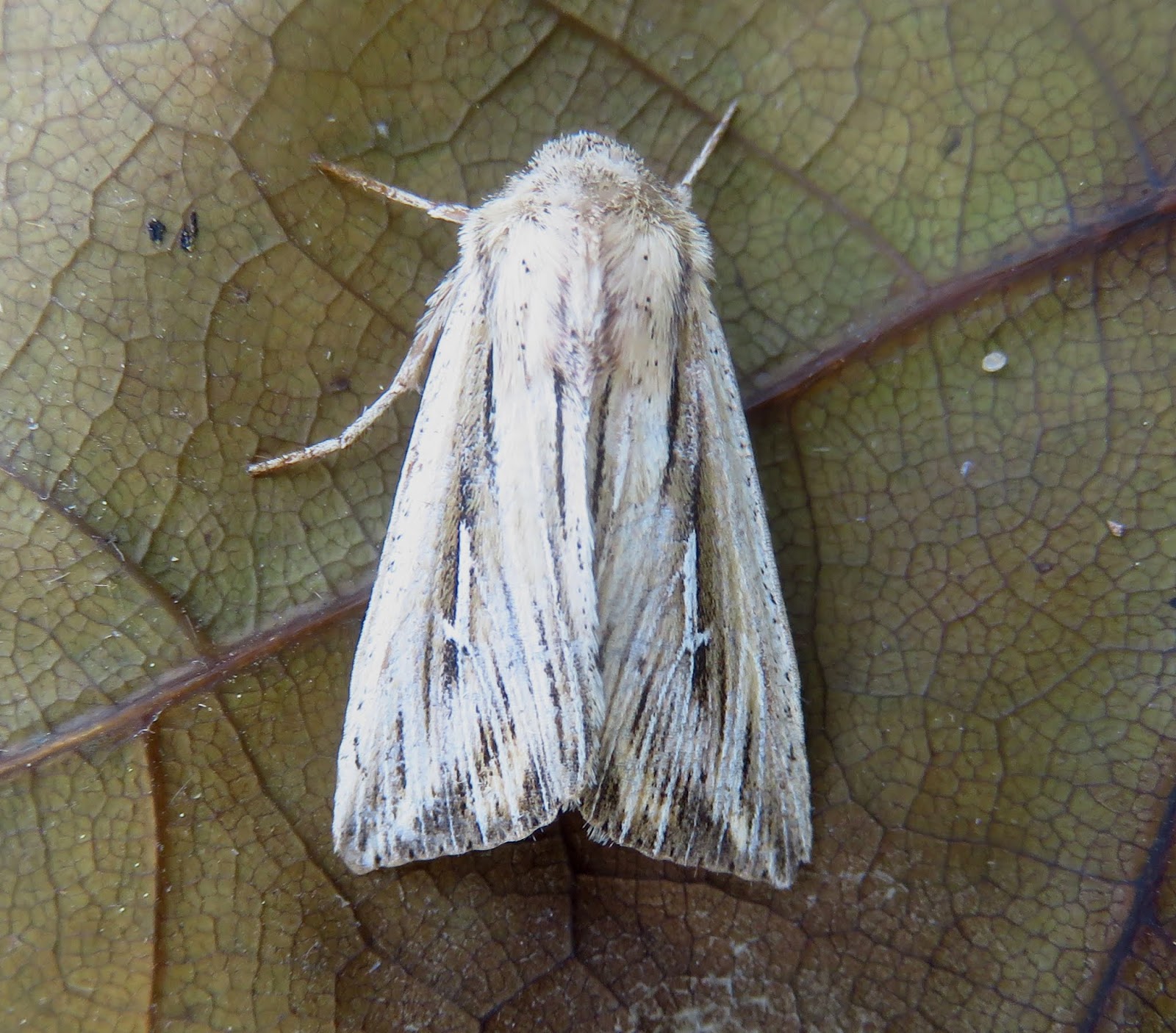
A Clancy's rustic was a nice surprise in the Firs Chase garden moth trap late on Friday 4th. More pleased to find three the next night on Saturday 5th. The first Island record was in this garden on 9th July. This moth has been gradually increasing in southern England since the first record in Kent in 2002. As well as being a migrant moth, it seems there are some resident populations too.

A faded moth, the delicate was another migrant noted on 4th.

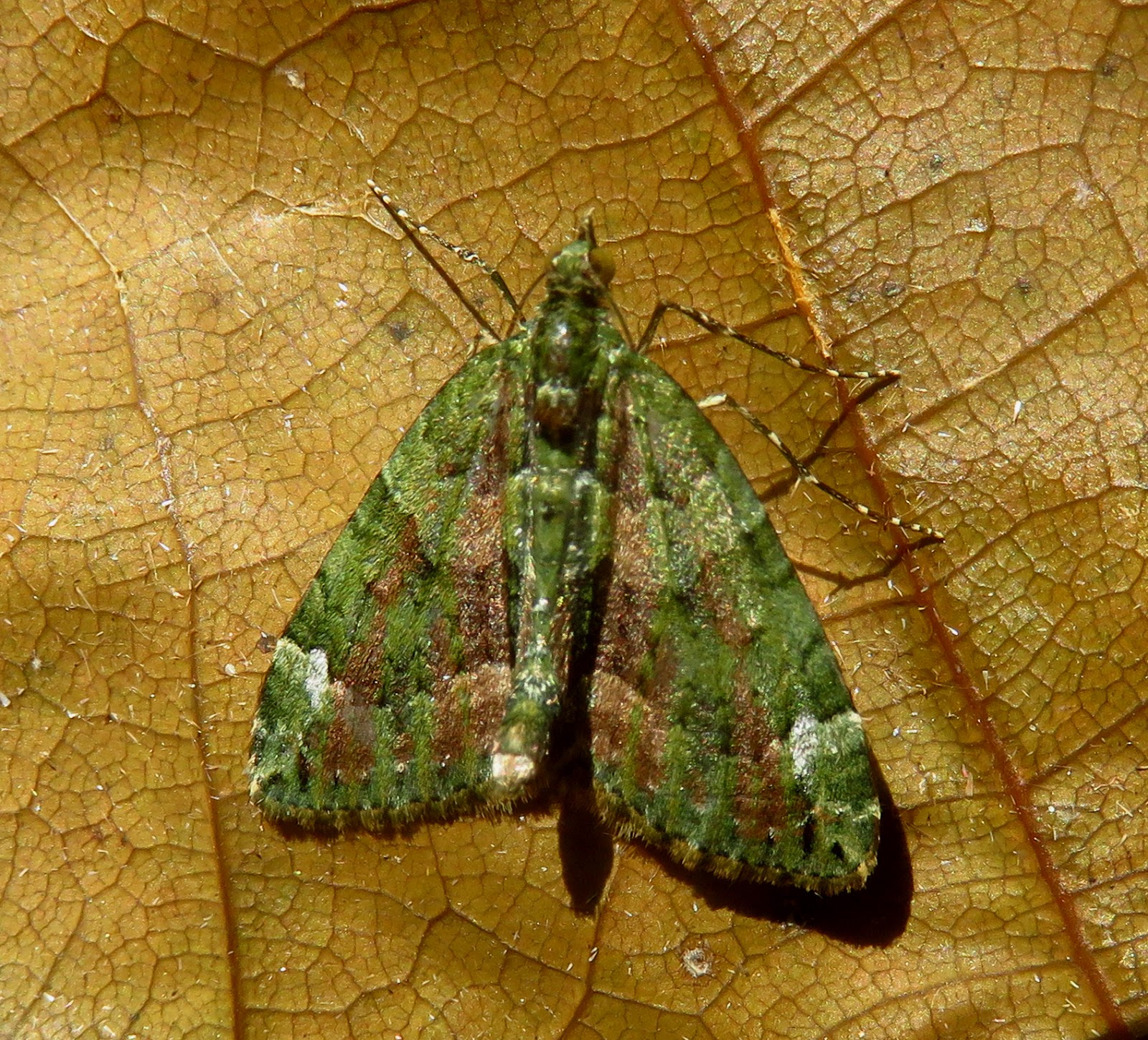
Two red and green carpets were noted on the 4th.

Two L-album wainscots were noted on the 4th with three the next night.
Twenty species were noted across the two nights.

Saturday, 5 October 2019

MERSEA HUMMER

A hummingbird hawkmoth was photographed by Andy Field as it visited his garden in High Street North on Friday 4th.

A short video clip is -    https://www.youtube.com/watch?v=7kfNRcGQU-Q&feature=youtu.be

On Friday 4th at Cudmore Grove a Sandwich tern was seen on a buoy in the Colne, also 200 brent geese beside the Brightlingsea outflow. Two Mediterranean gulls, ten wigeon, 2 great crested grebes and 25 golden plover were seen near the East Mersea Point. A kingfisher and a rock pipit were seen near the Golfhouse while 25 goldfinches and 20 linnets were also in the area and 50+ swallows passed through.
At the park pond the Cetti's warbler was showing well while it sang, four gadwall and 8 wigeon present, while in nearby trees were 2 blackcaps and 3 goldcrests calling.
A red squirrel crossed the path near the hide at the park.

A great spotted woodpecker was seen in trees alongside Cross Lane on Thursday 3rd. A green woodpecker was seen in flight near the Lane, while 3 goldcrests and 8 chiffchaffs were heard calling in various places towards Waldegraves. A little owl was seen and heard calling near the fishing lakes, a grey heron was standing in the small lake near the seawall and twenty goldfinches also seen.

A fox trotted down Cross Lane mid morning on Thursday.

A colour-ringed black-tailed godwit was watched along the Strood on Wednesday 2nd. Hopefully we can find out if this bird was ringed on its breeding grounds in Iceland or somewhere in this country. It was feeding with 200+ other black-tailed godwits during low tide. Also 8 avocets, 1000 golden plover, 12 shelduck and 15 little grebes in the channel.

A meadow pipit perched on a post in the mud along the Strood channel on Wednesday. In the fields were 20 skylark while 3 chiffchaffs were heard on the walk.

A spotted flycatcher was seen in the scrubby corner by the Firs Chase caravan site on Tuesday 1st. This area has been a favourite spot for them this autumn. Five chiffchaffs were also noted here and nearby too. A stonechat and a rock pipit were seen along the Strood seawall while there was a steady passage during the morning of 200+ swallows and house martins along with a sand martin.
A buzzard was over Ray Island, a sparrowhawk flew over the houses. Along the Channel were 1000 golden plover, 200 black-tailed godwits, 2 avocets, 12 shelduck, greenshank and 15 ringed plover.

At Maydays on Tuesday 1st, two wheatears and a rock pipit were seen by Martin Cock.

Nice to see this female red squirrel visiting the feeder in the Firs Chase garden on Wednesday 2nd and Friday 4th.

This migrant hawker was photographed at the country park by Andy Field on Wednesday 2nd.

Thursday, 3 October 2019

ROADSIDE OSPREY

An osprey perched on a telegraph post beside the East Mersea road near Bocking Hall on Wednesday 11th. It was found by Martin Cock and luckily the bird stayed around long enough for Andy Field to dash over from West to take this picture. Shortly after this picture was taken the bird flew off.
A short video clip by Andy can be seen here - https://www.youtube.com/watch?v=cbP1PL-ArBU

Also on Wednesday a peregrine and two Sandwich terns were seen from Ivy Dock in East Mersea, as well as a distant skua chasing a gull in the Colne.
Two days earlier on Monday 9th an Arctic tern, 30 common terns and 2 stonechats were seen by Martin at Coopers Beach. At Maydays on Monday two greenshank were seen and a spotted redshank was heard.

On Friday 13th two Sandwich terns were seen from the Oyster Fishery by Martin while on the 17th he was treated to the rare sight on the Island of a treecreeper in Cross Lane. On the 18th three Arctic skuas were seen by Martin from Coopers Beach while on the 19th there was a sight of 9 common buzzards in the air at Maydays.

Martin also reported seeing a little owl in Cross Lane on 20th, 3 stonechats and a brent goose at Coopers Beach on the 25th, while on the 30th there were a lot of chiffchaffs around Cudmore Grove with 20 seen, also 12+ blackcaps, wheatear, stonechat and a kingfisher.

On Monday 22nd Steve Swinney reported seeing 5 Sandwich tern, 4 Arctic terns and 20 sanderling from West Mersea. Andy Field had two greenshank at the Strood on Tuesday 24th.

At Cudmore Grove on Wednesday 25th, Steve Grimwade reported 5 Sandwich tern, female eider, 3 buzzards, stonechat, Cetti's warbler, 3 lesser whitethroats, 3 blackcap, 4 chiffchaff, 2 sanderling, 4 brent geese, 200 avocet, 4 Mediterranean gulls, 28 little egrets, 5 reed buntings, 2 green woodpeckers, 2 great spotted woodpeckers, marsh harrier and a kestrel, also a red squirrel seen.

On Friday 27th two Arctic tern and a swift were reported by Richard Allen at West Mersea.
At Cudmore Grove on Sunday 29th, Ashley Gooding reported 53 little egrets at the pond, 2 stock doves, 6 swallows while 14 Mediterranean gulls were seen by the Strood.
A Sandwich tern was seen off West Mersea on Monday 30th by Martin Cock.

Andy Field photographed this very large wasp spider near Waldegraves holiday park on Friday 20th. A link a video clip is here - https://www.youtube.com/watch?v=w6TYq3HuTXc&feature=youtu.be

The big beast was watched crossing a grass path.

Wasp spiders have become well established on the island since the first one was seen at the country park in 2003.

Sunday, 8 September 2019

GARDEN PIED FLY

Very surprised and very pleased to stumble across this pied flycatcher in my Firs Chase back garden, only about 7 metres from me in the bird bath about midday on Saturday 7th. I had been walking through the back garden and my eye was taken by a bird alighting onto the bird-bath. Flashing the white wing-bars I could see that it was a pied flycatcher. The first pied flycatcher garden record!

The pied flycatcher had a drink and a poke around the last bit of water in the bird-bath, not too concerned that I was standing quite close by watching it. After a couple of minutes, it flew up into a birch tree above and was watched for a few more minutes before flying off.

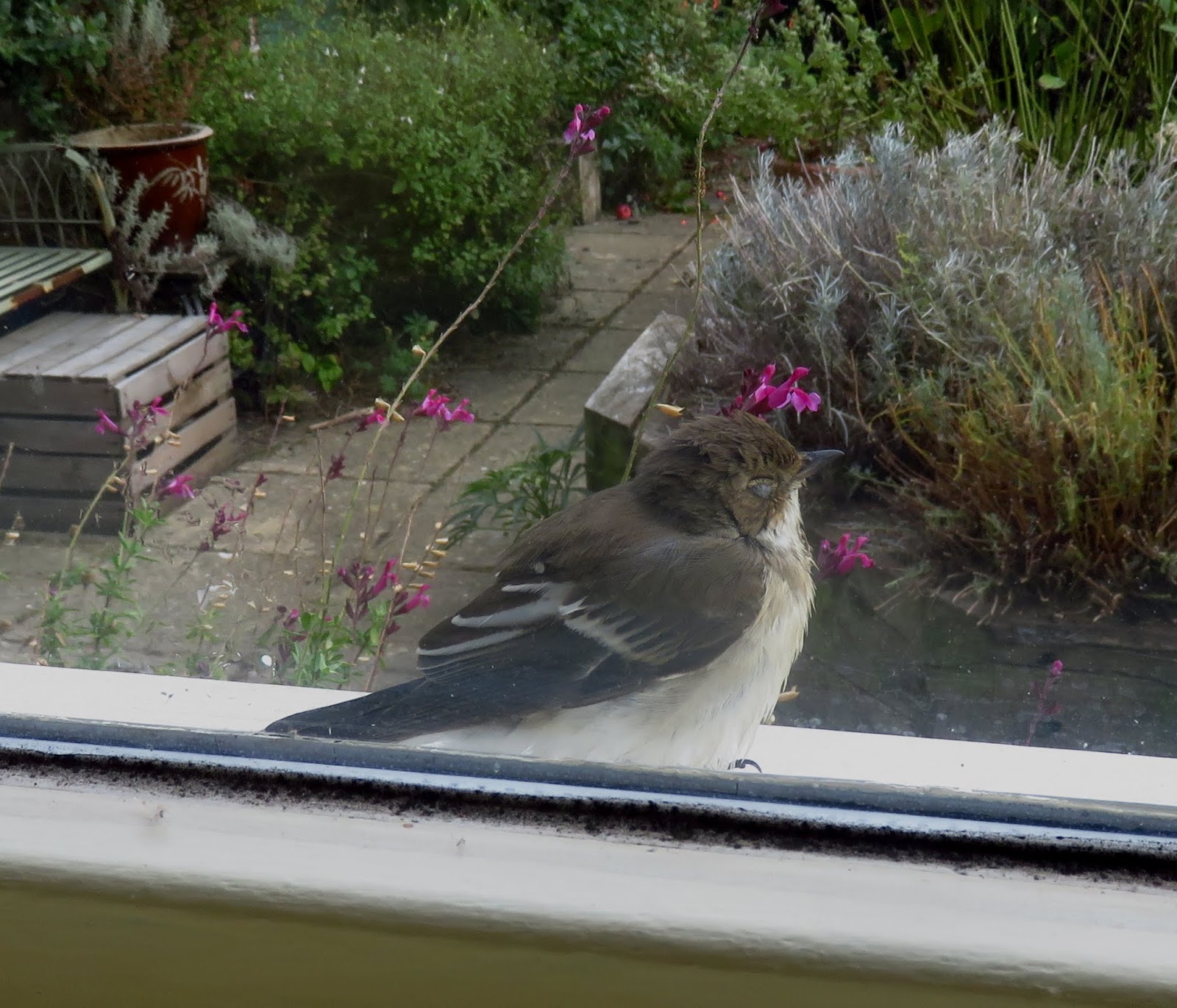
Later in the afternoon I heard a gentle thump on the office window and saw this pied flycatcher just a metre away on the windowsill! I'm not sure if it briefly dazed itself as it closed its eye for a moment. It then flew up onto an overhead wire to survey the garden.

A third appearance of the pied flycatcher was late afternoon when it was seen from the office window in the back garden as it perched on a bit of wood. It then flew up to the roof of the house for half a minute and disappeared and not seen again.
There were two previous pied flycatchers seen two weeks earlier beside the Firs Chase caravan site as well as one in Shop Lane in East Mersea. These have been the most pied flycatchers seen on the Island during their autumn passage.

Two spotted flycatchers were still down the side of the Firs Chase caravan site on Sunday 8th, one present on Saturday 7th and the two first seen on Friday 6th when this one pictured above was watched with Roy Bloomfield. It has been a good autumn for spotted flycatchers in this small scrubby corner behind the caravan site.

At East Mersea on Sunday a green sandpiper and a clouded yellow butterfly were seen by Martin Cock near the Oyster Fishery.

Also seen on Sunday 8th along the Strood were 2 chiffchaffs, 3 blackcaps with the flycatchers, swift overhead and five meadow pipits flying over calling. Eighty linnets were feeding in the fields, sparrowhawk passed west high off the Island, 200 black-tailed godwits, 70 golden plover, 5 ringed plover and a knot were along the Channel.

A walk along the Strood seawall on Saturday 7th provided views of a sparrowhawk, 2 sand martins heading off the Island with a handful of house martins, greenshank calling, 200 redshank, 3 knot, 200 golden plover, 9 little grebes in the channel with another one in the dyke. A common buzzard circled over the mud near the Dabchicks as it gained height to head west.

Over the Firs Chase garden on Saturday were a common buzzard and sparrowhawk together, two swifts passed over while in the trees was a goldcrest calling with a tit party.

During a Strood seawall walk on Friday late morning a common buzzard sat in a field, 20 chiffchaffs and a blackcap were with the spotted flycatchers by the caravan site. 2 kestrels and 100 linnets were flying about the fields. Along the channel were a greenshank, a knot, 10 grey plover and 30 golden plover.

A wheatear was the highlight of a walk along the Strood seawall on Wednesday 4th, also 250 black-tailed godwits near the Dabchicks, 20 grey plover and 30 golden plover were along the Strood channel.

At Maydays farm on Wednesday the osprey was seen by Martin still sitting on the post in the Geedons, also a kingfisher flew closeby along the seawall.

A red squirrel was seen in the Firs Chase garden on Friday 6th, Saturday 7th and again on Sunday 8th when one was watched close-by burying some cobnuts in the lawn.

A fully grown large fox moth caterpillar was crossing the footpath by the Feldy View field. After hibernating as a caterpillar, it pupates early spring next year and emerges later as an adult in late spring/ early summer.

Several ivy bees were buzzing around the flowering ivy clump along the Firs Chase folly to The Lane. The ivy bee has rapidly colonised southern England since the first sighting in Dorset in 2001.

A speckled wood was by the Firs Chase caravan site on Friday 6th, a painted lady was seen on the Strood seawall on both Saturday and Sunday.

Pleased to see a small copper visit the flowering oregano in the Firs Chase garden on Sunday 8th - the first sighting here this year.
A hummingbird hawkmoth was also in the Firs Chase garden feeding on salvias, and another one was seen in Andy Field's High St North garden on Sunday.

An Old lady moth was the highlight of a mothing session in the back garden on Monday 2nd. Just after midnight 120 moths of 25 species were logged on a clear and breezy night.

A common marbled carpet added a little colour to the evening. Other moths included garden carpet, latticed heath, light emerald, brimstone, single dotted wave, copper underwing, square-spot rustic, white-point, spectacle and turnip.


Wednesday, 4 September 2019

WHEATEARS ON FENCELINE

Five wheatears, one pictured above, along with a whinchat were perched on a fence near the Shop Lane seawall on Tuesday 3rd.

A high spring tide covered all the saltmarsh in the Pyefleet on Tuesday afternoon. In the distance through the haze, an osprey was seen perched on its regular post on the Geedons marsh. A male marsh harrier flew along the Langenhoe lagoon at the Point, while 30 little egrets were seen on the saltmarsh on Langenhoe Point during the high tide.
Eleven avocets most of them juveniles were on the Reeveshall pool, probably this group were the two families that fledged from here a month ago. Fifty lapwings were roosting inside the Reeveshall seawall. A kestrel was also hunting over the Reeveshall fields.

A red admiral was one of a handful feeding on ivy flowers on the folly near the Lane on Monday 2nd.

Three buzzards and three sparrowhawks were seen during a walk along the Strood seawall on Monday, also in the fields were a wheatear, 200 linnets, 100 house sparrow while a yellow wagtails flew over. Along the Strood channel were 50 grey plover, 50 golden plover, 3 knot and a ringed plover. Two swifts were seen over Firs Chase in the afternoon.
At Maydays on Monday, a greenshank and peregrine were seen by Martin Cock.

On Sunday at Coopers Beach four stonechat, whinchat and 2 wheatears were seen in the fields. A flock of 70 yellow wagtails flew west along the seawall on their autumn passage. Two sparrowhawks and a kestrel, grey heron were over the fields, while on the large pond near Coopers were 2 redshank, little grebe and 18 mallard. Offshore was a pair of great crested grebes, 5 Mediterranean gulls and a big flock of 80+ common terns resting on the shingle bar opposite Waldegraves.
Later on Sunday a flock of 50 goldfinches was circling over the Firs Chase gardens.

Two whinchats were seen on bushes near the Maydays farm seawall on Saturday 31st.
Also beside the seawall were a yellowhammer, reed warbler, clouded yellow and ten painted lady butterflies.
Two common buzzards and a marsh harrier were noted while along the Pyefleet were a common tern, 25 little egrets, 4 greenshank, 3 golden plover, 10 grey plover and 2 Mediterranean gulls.

Two harbour seals were resting on the floating pontoons in the Pyefleet Channel on Saturday while a third one was seen further up resting on the saltmarsh.

On Friday 30th a ringed plover was calling on the beach by the East Mersea Point with a large juvenile nearby. No sign of the other two juveniles that had been last seen in the area a fortnight ago.
A peregrine circled over the saltmarsh near the Point, a sparrowhawk was noted too while by the Golfhouse were 3 whinchats, 6 yellow wagtails, 50 goldfinches, 2 blackcaps and 50 house martins/ swallows circling above. Eight little terns were in the Colne, 200 redshank and 2 Mediterranean gulls were on the saltings at high tide.

Fifty-five little egrets were roosting on trees by the country park pond on Friday with another 8 on the saltmarsh by the Point. Also on the pond was a male gadwall while a willow warbler called from nearby trees.

Friday, 30 August 2019

WHINCHATS AND WHEATEAR

It was nice to see the six whinchats still beside the Strood seawall for their second day on Thursday 29th. Presumably this group are all the same birds seen the previous day, as two of the birds seen on Wednesday were 500m away in a different field. A wheatear was also with the whinchats on the top of the seawall for the second day, all hopping along the path ahead of me as I walked along.

Also noted from the seawall were 2 common buzzards, 100 linnets, 100 house sparrows, corn bunting, yellow wagtail, common sandpiper calling, 10 Mediterranean gulls, greenshank. Two whitethroats were on bushes by the dyke, while a willow warbler was by the Feldy View field.

A quick cursory glance at some long grass in the Feldy View cemetery field revealed five wasp spiders splayed out on their distinctive webs amongst the long grass. No doubt many others also in the grass elsewhere in the field. First time they've been seen in this field on the edge of West Mersea.

A hornet hoverfly buzzed along the path beside the Feldy View field, stopping for a moment on the hedge. Another one was seen feeding on the ivy flowers along the folly path between Firs Chase and the Lane, where there were also ten red admirals noted.
Twenty painted ladies were seen along the Strood seawall on Thursday.

Four whinchats were feeding by the Strood seawall near a flock of 100 house sparrows on Wednesday 28th. Another two whinchats were feeding further along beside a ditch between two of the fields. A wheatear was flying back and forth along the seawall dodging the many walkers on the path.
Three corn buntings flew away from the house sparrow flock, calling as they headed over the fields. Ten reed buntings were also perched on bushes near the house sparrow gathering. Two grey herons stood in the middle of a field and two kestrels flew over the back of the Strood Hill field.

At Cudmore Grove country park on Thursday morning, Andy Field heard the water rail calling at the park pond, also 34 little egrets in the trees, 3 pochard and the tufted duck brood in the park dyke, while in the Colne were 20 common terns, 2 little terns and 2 Sandwich terns.
Three whinchats and ten Mediterranean gulls were seen near the Golfhouse on Thursday by Simon Patient.

In the dull drizzly conditions on Wednesday, two spotted flycatchers were in the "flycatcher-corner" along the side of the Firs Chase caravan site. Two willow warblers, lesser whitethroat, 50 goldfinches and a sparrowhawk also seen here.
On Wednesday afternoon, 2 swifts, yellow wagtail, two Mediterranean gulls flew over the Firs Chase garden and a willow warbler was in the usual birch tree.

At the east end of the Pyefleet Channel near the Oyster Fishery on Tuesday 27th, a female eider was feeding near Langenhoe Point, also four little terns and a common sandpiper noted. Two green sandpipers flew over calling near the Oyster Fishery. Ten golden plover were on the mudflats near the Golfhouse and five yellow wagtails were in the horse paddock.
A red squirrel was seen by Fishponds Wood, crossing up and over the track back into the wood.

A sparrowhawk was seen hunting along the dyke near the Oyster Fishery before circling up and over the Pyefleet.

It was hot along the Strood seawall on the bank holiday Monday 26th, Ben had me carrying his water.
A spotted flycatcher was along the side of the caravan site, two common buzzards perched in bushes close-by to each other, four common snipe flew west down channel, 100 house sparrows at the ditch end by the seawall while a willow warbler called from a tree in the dyke. 
A willow warbler was also seen in the Firs Chase garden.

On Sunday 25th a walk along the Reeveshall seawall produced views of 2 greenshank and 3 wheatears by the pool, 400 swallows and two sand martins over the fields, yellow wagtail and muntjac deer also. A peregrine flew over the Pyefleet channel before heading back north again, a marsh harrier flew over Langenhoe and a common buzzard over Reeveshall.

At the country park on Sunday, Martin Cock noted 14 little terns sitting on the beach at the Point first thing in the morning, also seen 100 sand martins, 100 house martins, sedge warbler, 2 wheatears, four pochard and the water rail heard calling at the park pond. Later in the day a red squirrel and lesser whitethroat were seen by the park pond by Steve Entwistle.

A common buzzard stood in the field close to the East Mersea Road at Bocking Hall on Sunday.
A red squirrel was seen in Martin Cock's garden in The Coverts on Sunday, and a red squirrel was also seen in Meeting Lane by Martin on both the 21st and 23rd.

Daniel French found and photographed a large convolvulus hawkmoth in his Windsor Road garden on 22nd August. It's been a few years since one of these rare immigrant moths has been seen on the Island. There's currently a small influx into southern England of convolvulus hawkmoths during this latter part of August.

The moth trap in the Firs Chase garden has picked up one or two interesting moths such as this Webb's wainscot, a nationally scarce moth usually found near wetland and marshy areas.

There seems to be masses of latticed heath moths turning up at various traps in north Essex. On the night of the 27th, 250 latticed heaths were counted among a total moth catch of 500.

The second small ranunculus of the summer here turned up on the 27th, a species that is continuing its spread in southern England.
Also on the 27th the dainty migrant Palpita vitrealis was noted, another immigrant on the night along with a few silver Y's and white-points.

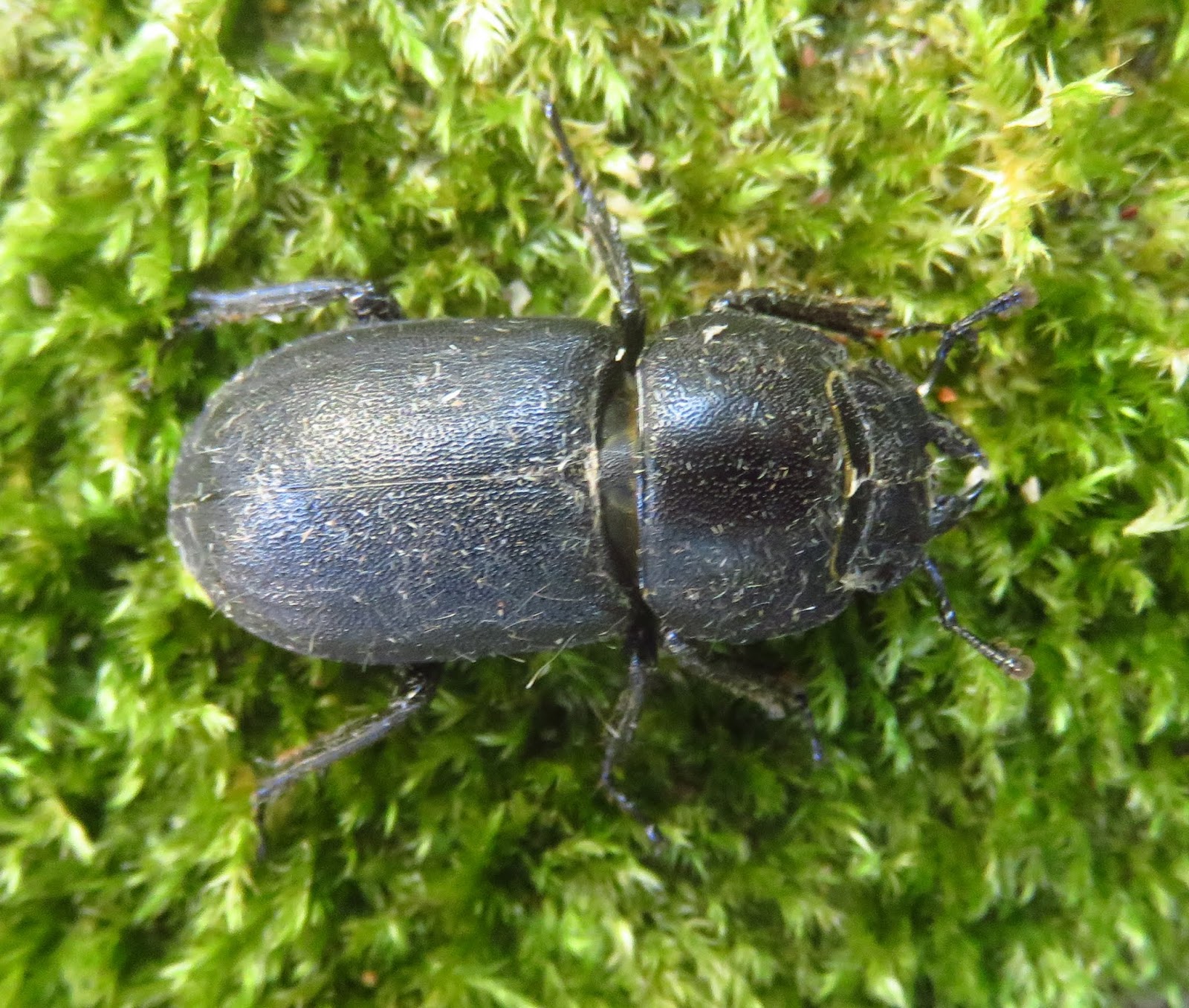
A lesser stag beetle was found beside the moth trap on the 27th - the first garden record.