Tuesday, 12 May 2020

LAKESIDE DUCKS

Amongst the wildfowl on the new boating lake at East Mersea on Saturday 9th were five shelduck, two mute swans, eight tufted ducks and fifteen mallard. A common sandpiper was feeding along the water's edge initially and then up along one of the banks. Thirty turnstone were gathered here for the high tide, two whimbrel and two Mediterranean gulls flew over. Also in the area were a vocal cuckoo, two singing reed warblers, reed bunting and two house martins.
The little owl was seen in front of the Youth Camp, seen flying up into one of the poplar trees.

Walking the footpath between the East Mersea church and Rewsalls on Saturday produced four buzzards in the air together, four yellow wagtails, one lesser whitethroat and two whitethroats.
A cuckoo was seen flying over the allotments on Saturday morning, while in the afternoon two common terns were seen from the Esplanade.

Also at the boating lake earlier on Saturday, Shaun Bater reported seeing five buzzards as well as two cuckoos.
Ian Black reported seeing three buzzards high over Mersea Avenue on Saturday, while at Maydays Farm five singing sedge warblers heard by Martin Cock is the best number there for many years.

A heads-up from Glyn Evans early on Saturday morning was for a black kite he'd seen heading down the Colne probably towards East Mersea, but was not seen anywhere again, let alone Mersea.


Along the Strood seawall on Friday 8th there were three buzzards, two cuckoos, singing sedge warbler, five reed warblers, two singing corn buntings, four yellow wagtails and two sparrowhawks. Along the channel were four common terns, two ringed plovers, two whimbrel and two Mediterranean gulls in flight.
A hairy dragonfly was flying beside the seawall while a green hairstreak was seen again in Feldy View.

The rusty-coloured swallow was seen by the Dabchicks on Friday afternoon by Steve Entwistle, while Ian Black reported two cuckoos over Victory Road and 34 brent geese on Cobmarsh Island. Cuckoos were also heard at Cross Lane by Steve, Dawes Lane by Shaun Bater and two cuckoos north from Rewsalls seen by Michael Thorley.
Michael also reported the common sandpiper at the boating lake on Friday morning, also 25 turnstone, few shelduck, oystercatchers, 3 mute swans, reed bunting and reed warbler.

On Thursday 7th a common sandpiper was found on the boating lake by Steve Entwistle in the morning, although at midday, a second common sandpiper was found by Martin Cock on the adjacent lake too. Behind the lake Steve reported a pair of cuckoos, buzzard, also kestrel, five tufted ducks, pair of mute swans, eleven shelduck, 17 turnstone, yellow wagtail and two reed warblers.

Shaun saw 35 turnstone on the boating lake, two little egrets nearby while house martin and swallows by the vineyard. Earlier on Thursday two swifts flew over Shaun's house in Estuary Park Road.
Ian Black watched a sparrowhawk devour a starling in his Mersea Avenue back garden while in the Firs Chase garden the great spotted woodpecker had to be chased off a blue tit nestbox

Along the Strood seawall on Thursday 7th were common buzzard, one singing sedge warbler, five singing reed warblers, singing corn bunting, three whitethroats, two yellow wagtails and two cuckoos. Two mistle thrushes and 12 swifts were near Strood Hill. Along the channel were four common terns, three whimbrel, grey plover, 20 brent geese and two Mediterranean gulls overhead.
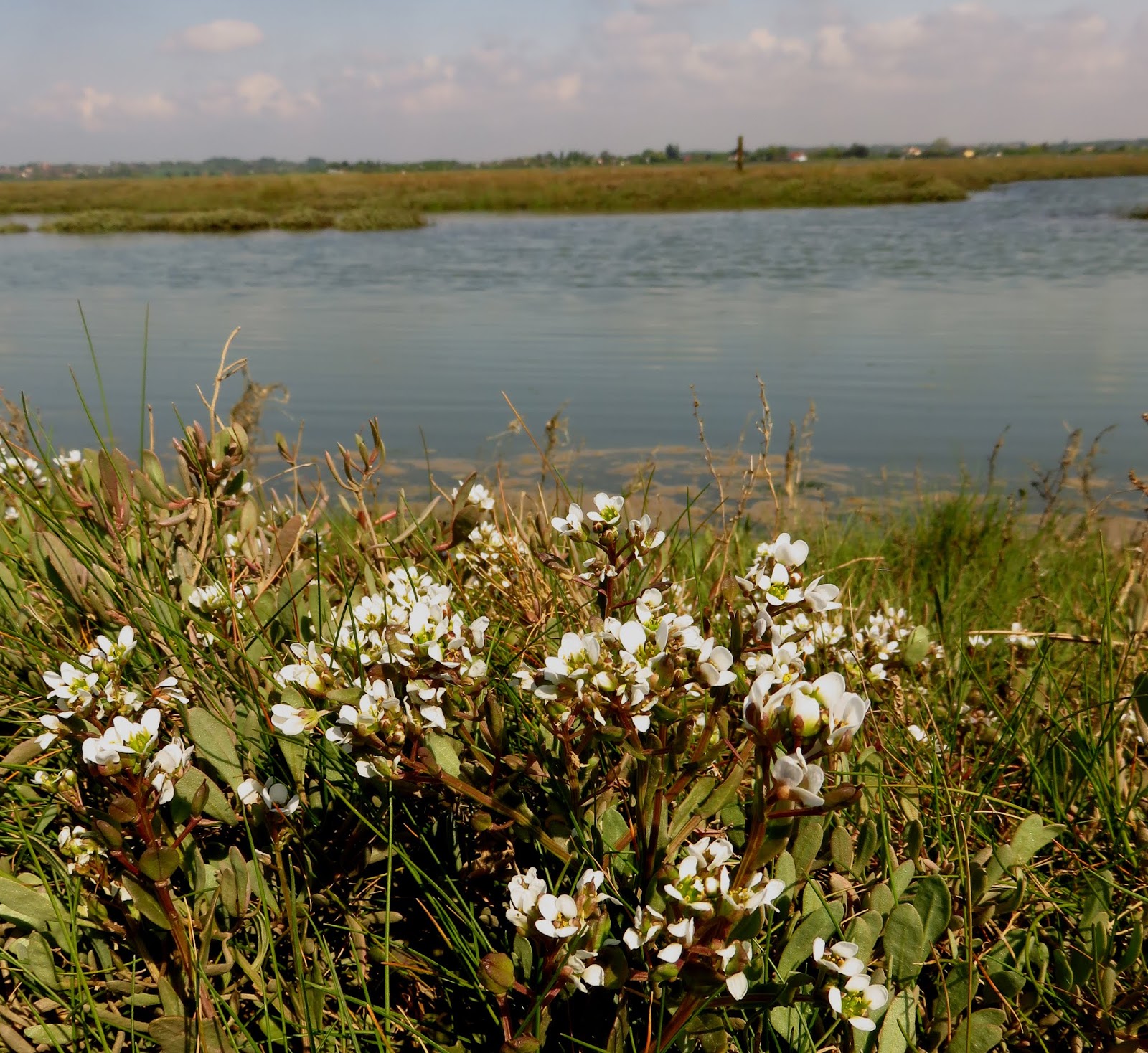
The saltmarsh by the Strood has been showing lots of white flowers of the scurvy grass.

A little owl was photographed in the back garden of Michael Thorley's house near Meeting Lane on Thursday.

A young blackbird was seen having a rest on a bench in the Firs Chase garden.

The moth trap operated in the evening of Saturday 9th in the Firs Chase garden, catching 17 moths up until one o'clock in the morning. Two cockchafers were a nice sight in the trap, an annual visitor to the garden trap here during May.

A pine beauty was the first one of the spring here.

The pale miller moth is an annual visitor in the springtime here too.

The least black arches seems to have become more widespread in recent years.

Another more widespread moths these days is the sharp-angled peacock.

Friday, 8 May 2020

DABCHICKS SWALLOW

The swallow with the rusty coloured underparts was perched on wires behind the Dabchicks sailing club on Wednesday 6th.

In bright conditions the underparts appear quite orangey while in duller light its more dusky grey in colour. The swallow appears to be nesting in the old wooden shed, a regular swallow nesting site used each year.

A common whitethroat was singing from the seablite bushes near the St Peters boardwalk on Wednesday. A male reed bunting was also seen beside the saltmarsh too.
A common sandpiper flew along the water's edge on the beach, landing for a few seconds before continuing eastwards. As the tide began to cover the saltmarshes, fifteen whimbrel could be seen in various locations around the Mersea Quarters, also one avocet in flight, 50 brent geese, four common terns, two shelduck and 20 turnstones resting on a boat. A distant peregrine circled high over Feldy marshes and the Ray Channel.
A brimstone butterfly flew over the mud near the Dabchicks on Wednesday.

Along the Strood Channel on Wednesday, Andy Field reported sedge warbler, lesser whitethroat, whitethroat, three common terns and 2 common buzzards.

A slow worm was seen crossing a path near Feldy View and filmed by Andy here -
https://www.youtube.com/watch?v=9_JQWS69biE&feature=youtu.be

At East Mersea on Wednesday, a hobby, sand martin, 25 dunlin, eight avocets and two whimbrel were seen by Martin Cock near the Oyster Fishery. Near Meeting Lane Michael Thorley reported a willow warbler in his garden, also lesser whitethroat and whitethroat on Wednesday.

On Tuesday 5th, a confiding whimbrel landed on the mud very close to the West Mersea Hard car park. It started to feed, pulling at some of the green algae on the edge of the water.

Amongst the green algae was a crab that the whimbrel then proceeded to eat.
Three other whimbrel were seen during a walk along the Strood seawall on Tuesday. Also noted along here were two wheatears in a field, five swifts, four yellow wagtails, three house martins, cuckoo, ringed plover, pochard and two buzzards.

Four swifts were seen flying over Ian Black's garden in Mersea Avenue on Tuesday 5th.
In Firs Chase a goldcrest, chiffchaff and blackcap were heard singing from nearby gardens.

The single green hairstreak was seen again in the Feldy View resting low down on a bush out of the morning breeze on Tuesday 5th.

At least five holly blue butterflies are being seen fluttering about the various corners of the Firs Chase garden. On Wednesday 6th a brimstone, 2 orange-tip, small white and large white were also seen in the garden.

Michael and Sarah Thorley photographed this honey buzzard flying west over the Strood channel on Monday afternoon. The bird passed overhead providing good views of dark barring on long narrow wings and with an unbarred tail except for a dark trailing edge.

The honey buzzard was seen gliding on very flat wings as it headed west.
Although honey buzzards are rarely seen on Mersea, this is the right time of the spring for birds to be seen in this country returning back from Africa.

Earlier along the Strood seawall on Monday 4th, two sedge warblers were seen singing from bushes along the dyke. Also five reed warblers, four yellow wagtails, cuckoo, sand martin and ten swifts were seen from the seawall. A marsh harrier hunted along the dyke while along the channel were five whimbrel, two common terns, shelduck and eleven brent geese.

In the Firs Chase garden the cuckoo was calling repeatedly from a tall tree nearby, also two swifts and three whimbrel flew over while a great spotted woodpecker was chased away from a blue tit nestbox.
Cuckoos were also reported on Monday over Shaun Bater's house in Estuary Park Drive, two over Martin Cock's house in the Coverts, while two were also heard by Andy Field over Mill Road.
A lesser whitethroat was seen in Blue Row by Shaun on Monday, while in Cross Lane Steve Entwistle reported blackcap, chiffchaff, swift and also 12 orange-tips and two holly blue butterflies.

A male yellow wagtail was feeding along a puddle by the Strood seawall on Sunday 3rd, three others also seen during the walk. A hobby flew from the Strood Hill across the Strood channel before it headed over to Peldon. A marsh harrier and four buzzards were also seen, while three cuckoos were noted. Twenty whimbrel and three common terns were seen along the channel and five swifts and four house martins were seen by Strood Hill.
A willow warbler was singing near the caravan site, three sedge warblers and five reed warblers were singing along the dyke.

Thirty-five whimbrel were seen and heard calling as they passed over Martin Cock's house in the Coverts on Sunday.

Some nocturnal wildlife has been captured on a trail camera by David Bullock in his East Mersea garden opposite Home Farm, here a badger seen.

A stag muntjac deer was also captured on David's garden trail camera.

The continuing run of clear nights this spring has led to much reduced moth activity with barely a handful of moths in the Firs Chase garden moth trap on some evenings. One moth to catch the eye on the 3rd May, was this dark melanic form of the pale tussock, a form not seen before on the Island.

The colourful brimstone moth has started to appear in the evenings at the moth trap.

The first of the often recorded peppered moths was seen on the evening of the 3rd.

Several of the small mint moths have been fluttering in the sunshine around the flowering thyme plants in the garden.

Monday, 4 May 2020

ORCHIDS IN BLOOM

Several green-winged orchids are in flower in the front garden of Dave Chadwick's house along the Esplanade, some pictured here on Saturday 2nd. A quick count revealed 25 plants from which 52 flowering spikes were growing which is an average show compared with recent years. No visit was made to the back garden where apparently there is the usual fine display of several hundred green-winged orchids. These are wild naturally occurring orchids, a remnant of the once large population on the Esplanade.

Some of the green-winged orchid spikes photographed by Steve Entwistle on Thursday.

A search of the Willoughby car park revealed a single green-winged orchid growing in the shortish grass on the eastern side. The last time it flowered was five years ago, hopefully it will continue to flourish in this area. There was no sign of any common spotted orchid plants, although they might be easier to find when they flower later this month.

The regular little owl was perched in the branches of a tree in front of the East Mersea Youth Camp on Saturday 2nd. The cuckoo was calling loudly from the Rewsalls marshes, while at the boating lake there were nine shelduck, eighteen mallard, two singing reed warblers and a meadow pipit. A whimbrel was on the nearby mudflats.

A willow warbler was singing in the copse at the bottom of Cross Lane on Saturday, two sand martins flew in off the sea by the beach huts flying northwards, offshore were eight common terns, pair of Mediterranean gulls while 15 brent geese were by Cobmarsh.
Three swifts were flying over the houses in Kingsland Road.

Four yellow wagtails were perching on wires beside the path to the east of the Rewsalls farm on Saturday.

At Maydays on Saturday six reed warblers, three sedge warblers, cuckoo, buzzard, marsh harrier, greenshank and eight whimbrel were seen by Martin Cock. Along the Strood seawall, three sedge warblers and a cuckoo by Feldy View were heard by Andy Field, while a peregrine was seen by Jonathan Bustard over the saltmarsh. In Mersea Avenue Ian Black reported a cuckoo, great spotted woodpecker and eleven goldfinch in his garden. David Nicholls reported his first swifts over his Queen Ann Road on Saturday with three overhead in the morning.

In Firs Chase a coal tit was singing in several gardens on Saturday morning, probably the only one holding territory on the Island this year. Also a buzzard flew north-west over the garden.

A female orange-tip butterfly rested on a dandelion flower near Waldegraves on Saturday.

A wheatear was on the Strood seawall on Friday 1st, presumably one of the two birds seen the previous day. Also four yellow wagtails, two singing sedge warblers, five reed warblers, five swifts, two buzzards  and a cuckoo heard on the Ray. Along the channel were five whimbrel, three common terns, two dunlin and a pair of shelduck.

From the Esplanade seven whimbrel, ten great crested grebes and a common tern were seen on Friday by Steve Entwistle. An Arctic tern was seen by Jonathan Bustard in the Mersea Quarters while two great crested grebes were seen from the Hard by Ian Black, who also reported a sparrowhawk in his garden. A swift was seen over Adrian Amos' garden at the top of Oakwood Avenue on Friday evening.

In Meeting Lane on Friday, Martin Cock reported three chiffchaffs, two blackcaps, two lesser whitethroats, ten whitethroats, two cuckoos and two Cetti's warblers.
At Cudmore Grove, David Bullock reported on Friday that five pairs of avocets appear to be nesting on the saltmarsh lagoon near the Point, also on the nearby fields were ten shelduck, six greylag geese and a lapwing.
Mark Dixon reported up to six sand martins flying around the Cudmore cliff, while a barn owl was seen by the park pond on Saturday.

Along the Strood seawall on Thursday 30th were three male wheatears, two of them keeping close company with each other, in between dodging the walkers, dogs, cyclists and joggers.

The third male wheatear was at the north-east end of the Strood seawall and appeared to the same bird seen in the same area by Andy Field the previous day.
Also along the seawall on Thursday were two singing sedge warblers, four reed warblers, three reed buntings, six yellow wagtails and a corn bunting. A pair of oystercatchers appear to be nesting in the bare patch of the wheat field and four swallows were seen
Along the channel were five whimbrel, pair of shelduck and pair of greylag geese flying past, also one curlew seen.

A peregrine was seen by Shaun Bater at Haycocks Lane on Thursday 30th.

Wednesday, 29 April 2020

SHOWY YELLOW WAGTAIL

The colourful male yellow wagtail was singing from the edge of the Feldy View cemetery field, with the female yellow wagtail nearby, on a sunny Monday 27th. Six other yellow wagtails were seen later on the nearby Strood seawall.

Two swifts were flying over the houses near the Glebe on Monday morning, while the cuckoo provided a nice close view as it flew overhead near the caravan site. Two sedge warblers, five reed warblers and a corn bunting were heard singing along the Strood seawall. A male marsh harrier hunted along the dyke, another one soared with a buzzard high over Ray Island and a third marsh harrier was hunting low over Feldy Marshes. Two other common buzzards were seen in the area.
Along the Strood channel were six whimbrel, 3 avocets and two black-tailed godwits.

Late afternoon a peregrine and a common buzzard flew west together over the Firs Chase garden, the buzzard drifting quickly over to Old Hall, while the peregrine circled a few times above the Hard.

From the Esplanade a great northern diver and 3 common terns were seen offshore on Monday by Steve Entwistle, who later saw a swift and sparrowhawk in Alexandra Drive.

At East Mersea near the Oyster Fishery, ten common terns, Cetti's warbler, lesser whitethroat and common whitethroat and blackcap were seen by Martin Cock, who also reported a pair of avocets, nine brent geese, cuckoo and a calling tawny owl near Reeveshall on Monday.
Near Meeting Lane Michael Thorley reported a yellow wagtail and two blackcaps on Monday.

 
A smart green hairstreak made its first appearance of the spring on Monday 27th in the Feldy View field. Also on the wing there were orange-tip, small white, holly blue and peacock butterflies.

A little egret photographed by Jonathan Bustard by the boardwalk at St Peters on Monday.

On Sunday 26th four swifts were flying over the Strood seawall during the morning walk. Two sedge warblers and seven reed warblers were singing from the dyke, four yellow wagtails were seen and a cuckoo was heard calling. The rusty coloured swallow was by the Dabchicks again.

Along the channel were 45+ whimbrel gathering as the tide covered the mud, also 3 avocets, 2 grey plover, 5 black-tailed godwits, two common terns and 3 calling pairs of Mediterranean gulls. In the skies above ten common buzzards were noted and a male marsh harrier displaying to a female high over Bonners Barn.

A common buzzard and common tern flew over the Firs Chase garden on Sunday, also a goldcrest singing here. Three swifts and two house martins were seen on Sunday flying over Ian Black's Mersea Avenue garden.

Ten whimbrel were seen along the Strood Channel on Tuesday 28th, also five avocets, common tern and four shelduck. A male marsh harrier crossed over from the Ray to hunt over the Strood fields, two pairs of pochard flew from the reservoirs to the pond at the back of the fields, pair of greylag and a cuckoo were seen in flight.

Eight yellow wagtails were seen near the seawall and Feldy View, while one sedge warbler and two reed warblers were singing while a corn bunting flew off the saltmarsh and onto the fields. A muntjac deer was seen strolling mid morning amongst the caravans at the Firs Chase site.

A red kite was seen flying west over Martin Cocks house in The Coverts on Tuesday afternoon.

This male wheatear was photographed by Andy Field on the seawall near the Strood Hill end, on Wednesday 29th, a female wheatear was seen earlier at the other end of the seawall.

The male yellow wagtail was photographed on the small tree in Feldy View by Andy Field on Wednesday - most of the eight yellow wagtails seen were feeding in the nearby field.
Along the seawall were two sedge warblers, six reed warblers, cuckoo, two common terns, avocet, whimbrel and four common buzzards.

A walk around St Peters on Wednesday produced 3 whimbrel, 10 common terns, four Mediterranean gulls, 60 brent geese on Cobmarsh and a pair of shelduck there too.
Two Mediterranean gulls were also seen by Ian Black at the Dabchicks on Wednesday.

A great northern diver, lesser whitethroat, whitethroat, blackcap, chiffchaff and a pair of shelduck were seen by Shaun Bater on a walk on Wednesday between Seaview and Waldegraves.
A whimbrel flew over Martin Cocks West Mersea house in the Coverts on Wednesday.

Recent woodpecker reports have come recently from Adrian Amos near the top of Oakwood Avenue with a green woodpecker seen and a great spotted woodpecker heard drumming. Also in Yorick Avenue a great spotted woodpecker might be nesting in the Passfield's garden.

Orange-tip and holly blue butterflies have been reported in Adrian Amos' garden as were bee flies.

Monday, 27 April 2020

DIVER CLOSE-IN

This great northern diver is almost in its summer plumage, showing the white spots on the back and a hint of a striped band on the neck, seen about fifty metres off the Monkey Beach on Saturday 25th.

The great northern diver was diving repeatedly and coming back up with a crab to eat.
A second great northern diver was seen off the Esplanade on Saturday, as was a common tern, two great crested grebes and a common seal. Earlier on Saturday 38 brent geese and a pair of common tern were seen at St Peters by Steve Entwistle.
A brood of at least five mallard ducklings were on a pond at Waldegraves caravan park. Two great northern divers were seen offshore from Waldegraves by Jonathan Bustard, also a lesser whitethroat and blackcap near here.

The little owl, a pair of mistle thrushes, 13 linnets and a pair of Mediterranean gulls were at the Youth Camp on Saturday. At the nearby boating lake there were ten redshank, ten turnstones, dunlin, two little egrets, six shelduck, two meadow pipits, reed warbler and two yellow wagtails. In fields to the west of the East Mersea church were two yellow wagtails, pair of reed buntings, yellowhammer, 3 singing whitethroats and a lesser whitethroat.

This rusty looking swallow was photographed by Jonathan Bustard along the dyke behind the Dabchicks sailing club on Saturday.

The underparts have a rusty/ orange tint to it, the male swallow perching nicely for Jonathan to photograph on wires near the Dabchicks. This orangey swallow also caught my eye at the far end of the Strood seawall about three days earlier.

Andy Field noted along the Strood seawall on Saturday lesser whitethroat, 5 reed warblers, sedge warbler, cuckoo, five yellow wagtails, male marsh harrier over the fields, 8 Mediterranean gulls, 6 whimbrel, 4 swallows and a greenshank heard calling. Four house martins were seen over the High St North garden that day.

Eight black-tailed godwits were feeding along the Strood Channel on Friday 24th, as were a bar-tailed godwit, grey plover, 12 whimbrel and two common terns. Alongside the seawall were a singing sedge warbler, four reed warblers, 8 yellow wagtails, calling cuckoo, 3 lesser whitethroats, two swallows while flying over were a marsh harrier, two common buzzards, kestrel and two Mediterranean gulls.

Two swifts seen to the north of Andy Field's High St North garden on Friday is the first swift sighting for the Island this spring. Three whimbrel were heard calling over Ian Black's Mersea Avenue garden in the evening.

A singing garden warbler was a nice discovery beside Feldy View on Thursday 23rd - the first garden warbler sighting at the west end of the Island for thirty years at least! It was quite showy whilst singing at the top of bushes during the morning but wasn't seen in the afternoon.

Along the Strood seawall on Thursday were sedge warbler, two reed warblers, two yellow wagtails, 2 calling cuckoos, four pochard flying down channel, four Mediterranean gulls, 3 common terns and 20 whimbrel. In the afternoon four yellow wagtails, lesser whitethroat and a swallow were noted along the Strood by Andy Field who later saw two Mediterranean gulls fly over his garden.
A buzzard and a pair of Mediterranean gulls flew over the Firs Chase garden on Thursday afternoon.

The male stock dove peers down from the squirrel nestbox where it's mate is nesting, high up in the cedar tree in the Firs Chase garden. Occasionally the stock dove comes down to the ground to feed under the bird feeders or to have a quick drink.

A brimstone butterfly flew quickly across the Firs Chase garden on Friday 24th, the second visit within the last three days. Other butterflies in recent days in the garden have been holly blue, small white, large white, orange-tip, peacock and comma.

David Bullock in East Mersea sent me this photograph of a pair of wren clutches six inches apart, nestled on a bed of moss under an upturned flower pot in his garden. Not sure what's going on here, whether it is two females with eggs or one female with two clutches!