Monday, 6 July 2020

GARDEN HAWK

A male sparrowhawk suddenly appeared in the Firs Chase back garden, landing on the bird bath by some bird feeders on Friday 3rd. Birds that had been quietly feeding a few seconds earlier, rapidly dived into cover.

Also visiting the garden feeders was a family of goldfinches with this youngster waiting to be fed some sunflower hearts.

Another recent garden visitor was this male great spotted woodpecker pictured at the squirrel feeder on the 25th June.

Phil Passfield managed to take this great picture of the male great spotted woodpecker feeding a youngster in his back garden in Yorick Road. The woodpeckers are still occasionally visiting the garden, a month after they finished nesting in the cherry tree there.

On Friday 3rd during a walk along the Strood seawall, two sand martins, 30 swifts, two yellow wagtails, 8 little egrets, two kestrels, corn bunting and a lapwing were noted.

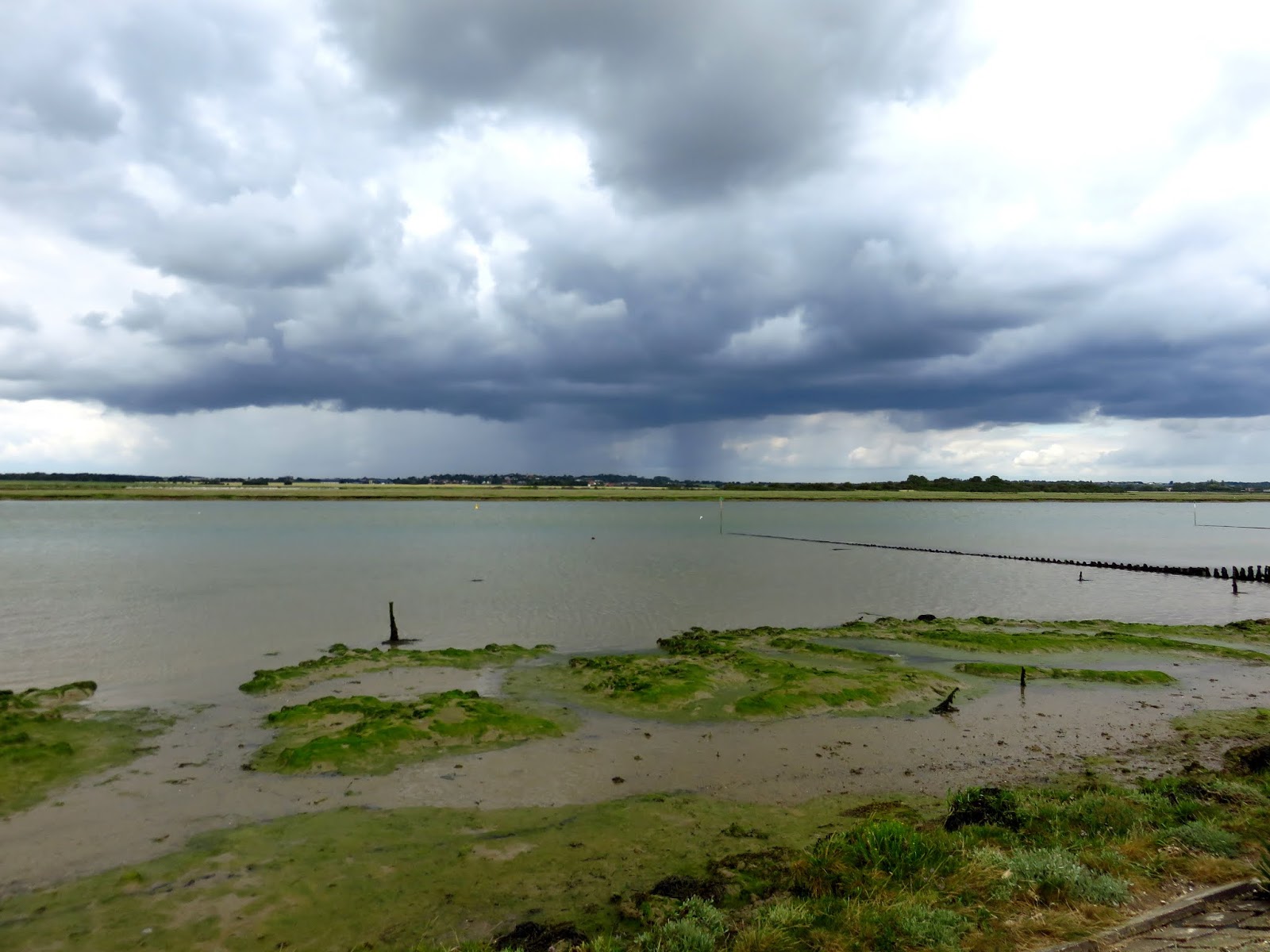
There were grey skies above the Strood channel on Thursday 2nd July during a late morning walk along the seawall. Birds noted included 70 swifts, four sand martins, six house martins and 15 swallows hawking over the fields. Also two singing corn buntings, two common terns, 45 carrion crows and 25 linnets.

At Coopers Beach two stonechats with their two juveniles were seen by Martin Cock on Thursday.

There were lots of butterflies such as this ringlet, enjoying the sunshine in East Mersea along the path between Shop Lane and Meeting Lane on Wednesday 1st. Half a dozen ringlets were fluttering through the grass and beside the hedges, also a fleeting glimpse of a purple hairstreak high up an oak by Gyants Marsh.

A small skipper posed on a bramble flower to show the orange-tips to the underside of the ends of the antennae. At least 30 skippers seen either small or Essex skippers noted. Other butterflies seen included large skipper, small copper, meadow brown, gatekeeper, comma, small heath, large white and small white.

Birds of interest on Wednesday in the Shop Lane area were the large numbers of sand martins with 200+ flying over the fields with more crossing over from Langenhoe. Also 70+ swallows and a passage of 50+ swifts heading west. Not surprisingly a hobby was seen over the field by the Shop Lane seawall a couple of times. An hour later either the same hobby or a different hobby was seen flying west with another hobby, heading in the same direction as the hirundines - so certainly two hobbies, maybe three.

Two common buzzards circled over, a male marsh harrier quartered Reeveshall and a sparrowhawk was seen near Fishponds Wood on a couple of occasions. Two yellowhammers were singing as was a lesser whitethroat.

Martin Cock had noted two fledged lapwing chicks and two oystercatcher chicks from the Shop Lane seawall on Wednesday morning.

The aptly-named Swollen-thighed beetle with its shiny green thighs was seen feeding on a bindweed flower along the Shop Lane footpath on Wednesday.

A red squirrel was trying to hide in Fishponds Wood as I walked along the nearby footpath on Wednesday. It tutted and flicked its tail for a moment having had its foraging interrupted.

Ian Black noted on Wednesday during a visit to the Strood, hobby, two corn buntings, four yellow wagtails and Mediterranean gull.

On Tuesday 30th June a little tern provided a nice view as it flew down the Strood channel. Two little terns were seen a little later near Packing Shed Island. Six common terns were also seen along the channel and in the moorings.
Other birds along the Strood were two great crested grebes, 15 redshank, five curlew, lapwing, four yellow wagtails and a singing corn bunting. Thirty swifts were seen near the houses with another thirty seemingly heading west, two house martins were near Strood Hill.

At Maydays on Tuesday Martin Cock noted the usual yellowhammers, corn bunting, reed buntings, meadow pipit, several yellow wagtails, reed warbler and sedge warbler, marsh harrier, 75 redshank, 25 curlew and a great crested grebe.

Three oystercatcher chicks could be seen on Monday 29th in the dinghy near the Dabchicks sailing club. They have been raised inside the boat and have their food brought to them, usually lugworms, by their parents.

A westwards passage of swifts was noticeable through the day with ten over Firs Chase garden early in the morning and another sixty still flying west in the early evening. Along the Strood 200+ swifts were seen streaming west from Strood Hill, over the fields and then onto the mainland. A sand martin was also seen heading west.
A sparrowhawk was seen a couple of times, five yellow wagtails, green woodpecker, 12 goldfinches and three curlew were the other birds of note seen near the Strood on Monday.

A cattle egret was seen on Monday just north of the Island on Langenhoe ranges by Richard Brown.

This toadflax brocade caterpillar was found by David Nicholls in his Queen Ann Road garden- once a rare moth, it has increased in recent years. This one was seen feeding on David's purple toadflax.

A crab spider was photographed by Andy Field in his High Street North garden on Monday 29th.

A hedgehog was seen in Peter Cock's garden in Seaview Avenue on Wednesday 24th - the first sighting for Peter here for many years.

Thursday, 2 July 2020

BACKGARDEN MOTHING

A good variety of moths were recorded in the back garden in Firs Chase during a warm spell over three nights between the 24th and 26th June. The Robinson moth trap with a 125w bulb was switched on at 10pm and kept operating until 4am, just before day-break and before the birds were up. Numbers of moths averaged about 50 species of macro moths involving up to 250 individuals on some nights, while over twenty micro moths were recorded too.
The magpie moth pictured was one of the strikingly marked moths found.

The haul of hawkmoths was impressive with ten privet hawkmoths on the 24th being a memorable sight, along with six elephant hawkmoths, small elephant hawkmoth and a pine hawkmoth. The eyed hawkmoth and poplar hawkmoths were added on the following nights.

The scarcest moth was this Clancy's rustic seen on 25th and 26th, a species first seen last year a few times in the garden.

The coastal sand dart is a speciality of the north-east coast of the county. This is the second individual of the season here.

A few swallow-tailed moths graced the trap over the three nights.

A couple of the strange looking buff-tip moths looking like a bit of twig, were seen on one of the nights.

The dainty bordered white never seems a common moth and not recorded every year..

A single marbled brown was the first one of the season.

Two or three common emerald moths were recorded over the three nights.

This small V-pug still had a good tinge of green markings on it.

The once scarce cypress carpet has become a regular in recent years.

The rapidly spreading box moth appeared over the three nights in small numbers including this dark form.

This micro-moth Dasycera oliviella was one of the more striking of the micros, a species on the increase in the county.

Monday, 29 June 2020

SHELTERING SKIPPERS

Several butterflies such as this large skipper were on the wing at Maydays farm on Sunday 28th, despite the strong wind. The only places where any butterflies were flying were behind bushes out of the wind.

This large skipper was very obliging as it nectared on some bramble fowers. Other butterflies included a few small / Essex skippers, pair of mating green-veined white, holly blue and several meadow browns.

Three comma butterflies were also seen at Maydays on Sunday, resting out of the westerly wind.
A ruddy darter was also resting on a sheltered clump of bramble.

Two male yellowhammers were heard singing on bushes along the Maydays dyke on Sunday. Also singing were four reed buntings, one corn bunting, two reed warblers and sedge warbler heard too. A cuckoo was chased by a couple of meadow pipits and three yellow wagtails were seen in the area too. A hobby passed low over the fields and appeared to catch a dragonfly near the farm and then feed on the wing, also twenty house martins flocked together for safety as the hobby passed by, later a sparrowhawk flashed by and buzzard noted over Reeveshall. A steady flow north-west took place of 75+ swifts heading off the island.

A common seal hauled out of the Pyefleet Channel and basked on the mud opposite Maydays on Sunday.
Birds other than gulls noted along the Pyefleet included 44 shelduck, ten curlew, two great crested grebes and a common tern.

On Saturday 27th along the Strood seawall, four sand martins were hawking over the fields with a few swallows, also thirty swifts seen nearer the houses. A cuckoo perched in an oak tree by the dyke before flying low over the fields, two corn buntings and two whitethroats were heard singing. Along the channel were two grey plover, 12 redshank and three curlew.

Four Mediterranean gulls flew over Ian Black's Mersea Avenue house on Saturday.
At East Mersea a green sandpiper was seen in the dyke between the Oyster Fishery and Shop Lane by Martin Cock on Saturday

This male black-tailed skimmer was one of two seen patrolling over the Strood borrowdyke on a sunny Friday 26th. Other dragonflies on the wing were 12+ four-spotted chasers, 8 emperor dragonflies and a few blue tailed damselflies.

The male marsh harrier was hunting the Strood fields on Friday morning as usual, also a common buzzard and two kestrels. Two corn buntings were singing as were two lesser whitethroats and three reed warblers, with five yellow wagtails flying about the area too.
Along the Strood channel were the first returning two grey plover, 32 redshank, four lapwing and a common tern.

At the country park on Friday, Steve Entwistle noted four purple hairstreak butterflies in the south-west corner of the park, while Essex skippers seemed to be everywhere at the park. Dragonflies noted near the dyke were black-tailed skimmer, emperor dragonfly and 10+ small red-eyed damselflies.

A skylark was one of the birds seen during a walk along the Strood seawall on Thursday 25th.
Also noted were the male marsh harrier, two kestrels, five yellow wagtails, corn bunting, lesser whitethroat, while in the channel were 32 redshank, curlew and a pair of shelduck.

At Coopers Beach on Wednesday 24th, the family of stonechats were still near the caravan site although only two fledged young were noted, the third fledged youngster possibly hidden from view. A reed warbler and two reed buntings were singing on the edge of the old marshes, a common tern hunted over the pond while on the mudflats were a brent goose, eight little egrets, curlew and a shelduck. A reed warbler was also heard at the eastern end of Coopers Beach.

A cuckoo was seen in flight over the fields beside Chapmans Lane on Wednesday 24th.
A marsh harrier, buzzard and sparrowhawk passed over Ian Black's garden in Mersea Avenue on Wednesday.

On Tuesday 23rd along the Strood seawall, a marsh harrier, four common buzzards and kestrel were noted over the fields, while 75+ swifts circled over the fields near the top of Strood Hill. A male corn bunting and a lesser whitethroat were heard singing, as was a meadow pipit over the saltmarsh by the caravan site, also six yellow wagtails flying about. In the channel were fifteen redshank, two lapwing and two curlew.
Ian Black spotted a marsh harrier flying into view on the Strood Cam, as the bird flew over the Strood fields on Tuesday. Adrian Amos reported a blackcap singing in his East Road garden on Tuesday.

Jon Clifton and his wife Ad visiting from north Norfolk, walked the back of the Island on Tuesday and were amazed at the sight of 1000+ meadow brown butterflies nectaring on a 150m patch of mallow on the Reeveshall seawall. He commented he hadn't seen a sight like this since his childhood days!

Wednesday, 24 June 2020

FLEDGED PLOVER CHICK

The single ringed plover chick raised on the beach at the East Mersea Point has managed to fledge in recent days. It was seen resting on the mud as the tide came in along with a parent nearby, on Monday 22nd. Despite the beach being very busy during the hot weather, the family have succeeded in getting at least the one chick to the stage of flying.

A roost of fifty gulls roosted on the island on the saltmarsh pools near the Golfhouse on Monday, with at least five Mediterranean gulls seen among the black-headed gulls. A single redshank was also by the pool, while in the Colne was a common tern flying by.

A pair of tufted duck was on the park dyke with another couple of pairs on the pond on Monday. There appeared to be at least one kestrel chick perched at the entrance of the nestbox at the back of the fields with the female kestrel perched on a nearby limb. Three reed warblers were singing from the dyke and another one at the pond where a Cetti's warbler was also heard. Thirty sand martins were flying over the park, many of them dropping down every so often to the nests in the cliff.
A sparrowhawk and two house martins were seen near the bus turning circle.

In East Mersea along the path east of Meeting Lane, Steve Entwistle noted on Monday morning, pair of buzzards hunting the back of the marsh, singing Cetti's warbler, male yellowhammer, as well as three ringlets, ten large skippers and forty meadow browns.

Another hot day on Sunday 21st for a walk along the less visited section of seawall near Bower Hall. The only waders seen at the top end of the Pyefleet Channel were six lapwing, ten curlew and six redshank, while three common terns hunted along the channel. Two pairs of yellow wagtail and two pairs of meadow pipit were of interest on the saltmarsh. A pair of common buzzards were seen together in a field corner below Bower Hall farm.
An adder was unexpectedly flushed off the seawall path just east from the Strood by the dog who had heard something rustling in the nearby grass!

Three yellowhammers were singing from hedgerows on the Bower Hall section near the seawall, with another two on the Maydays section. Also at Maydays a hobby circled over the farm with thirty of the local house martins keeping a close eye on it as it drifted east. A pair of marsh harriers hunted over the Maydays marsh.

At the country park on Sunday morning Steve Entwistle reported a male and four female pochard on the park pond as well as three male tufted ducks, pair of little grebes and the singing Cetti's warbler. Twenty-two sand martins were hunting along the borrowdyke and ten curlew were seen flying over the mudflats.

On Saturday 20th along the Strood seawall, the regular male marsh harrier was seen hunting over the usual fields, also a common buzzard and the regular kestrel. Over the houses were 25 swifts, while along the seawall were two singing reed warblers, three reed buntings, one corn bunting and four yellow wagtails. In the channel were six redshank and a common tern.

At Cudmore Grove country park on Saturday 20th, Steve Entwistle reported three whitethroats, ten sand martins, Cetti's warbler singing by the pond, four female / eclipse type pochard, two pairs tufted ducks and a pair of little grebes.
Insects of note at the park were the first ringlet of the year, all three skipper butterflies, male emperor dragonfly, four blue-tailed damselfly and two common blue damselflies.

Over West Mersea on Saturday, three common terns flew over Ian Black's house in Mersea Avenue and one also seen over Shaun Bater's house in Estuary Park Road.

Two male reed buntings are often singing close together along the Strood borrowyke - sometimes just ten metres apart, as on Friday 19th. One reed warbler was singing from the reeds, six yellow wagtails seen from the seawall while over the Strood Hill were 25 swifts and six house martins

The male marsh harrier and a buzzard were seen while the male kestrel was seen catching a vole in the field and then making the long journey to Feldy on the mainland back to its nest. A common tern was also making a long journey over the fields carrying a fish heading somewhere like Old Hall or Tollesbury Point. A redshank and singing meadow pipit were noted on Ray Island.

Two first summer Mediterranean gulls were on the mud near East Mersea Point on Friday, photographed by Steve Entwistle.
A little tern and common tern were seen off the Point on Friday evening by Steve, also lesser whitethroat and whitethroat near the Golfhouse.

At West Mersea three common terns flew over Ian Black's Mersea Avenue house while a common tern also flew over Shaun Bater's house in Estuary Park on Friday.

Along the Strood on Thursday 18th were a singing corn bunting, two yellow wagtails, kestrel, common tern while ten swifts were near Strood Hill. 

In East Mersea a juvenile little owl was seen in the Thorley's garden looking rather bedraggled in the Thursday morning drizzle. A Sandwich tern was seen on the Golfhouse saltmarsh pool on Thursday afternoon by Martin Cock.

A hobby was circling over a Strood field a few times near the caravan site on Wednesday 17th before climbing high and away. Four common buzzards were noted as were two kestrels, while two singing corn buntings jangled from the back of the fields and five yellow wagtails seen. Two common terns were in the channel and a flock of twenty dunlin flew up channel.
Ron and Jenny Harvey heard the cuckoo calling from Ray Island during their walk along the Strood seawall, as well as seeing the same hobby over the fields, referred to earlier.

Michael Thorley reported seeing a common tern flying over his East Mersea garden near Meeting Lane on Wednesday, also a cuckoo heard singing over towards Coopers Beach in the morning.
At Maydays a grey seal was seen in the Pyefleet by Martin Cock on Wednesday morning, also marsh harrier, buzzard, several sedge warblers and lesser whitethroat.

Sunday, 21 June 2020

LITTLE PADDOCK WILDLIFE

There has been a variety of interesting wildlife seen and photographed by Michael Thorley in his Little Paddock garden near Meeting Lane in East Mersea.
The main highlight has been the nesting pair of little owls, one perched out in the open. They have been seen most days recently.

The little owl just about to land on the shed.

Sarah Thorley was able to hear noises of the young little owls coming from the nest in the old shed.

These little owl photographs were taken by Michael on Tuesday 16th.

The first young little owl was seen on the Thursday 18th looking a bit bedraggled in the morning drizzle. Michael had seen an adult with a worm dangling from its beak but the owl hesitated to enter while being watched. There's thought a second owl chick was still inside the shed.

A moulting common buzzard flew over Little Paddock on Monday 15th, then drifted north towards the Pyefleet.

A male wren was photographed in full song by Michael in his garden.

The wren chicks fledged on Sunday 14th in Michael's garden.

Two wren chicks were seen, maybe others were hidden away.

Another wren youngster with the broader yellow bill. The parents were making lots of alarm calls during the day.

A male blue-bodied chaser was photographed in Michael's back garden at his pond.

The males broad-bodied chasers have the blue abdomens while the females have yellow/brown abdomens. They are present on the Island in small numbers.

A caterpillar of the mullein moth feeding on mullein leaves.

A caterpillar of an orange-tip butterfly was found on Jack by the Hedge / Hedge garlic in Michael's garden.