Tuesday, 13 November 2012

FOREIGN VISITORS


Stuart Read took these photos of the snow buntings on the beach at East Mersea Point on Monday 12th.


The number of snow buntings has been gradually increasing from a single bird ten days ago, to two birds a few days later, then three, then five on the 11th and then nine the next day on the 12th.


This group of snow buntings is currently the only flock in north Essex at the moment, although other beaches will soon have a few by mid winter.


There was no sign of any snow buntings at The Point in the morning of Tuesday 13th, although they're probably on the other side of the Colne.

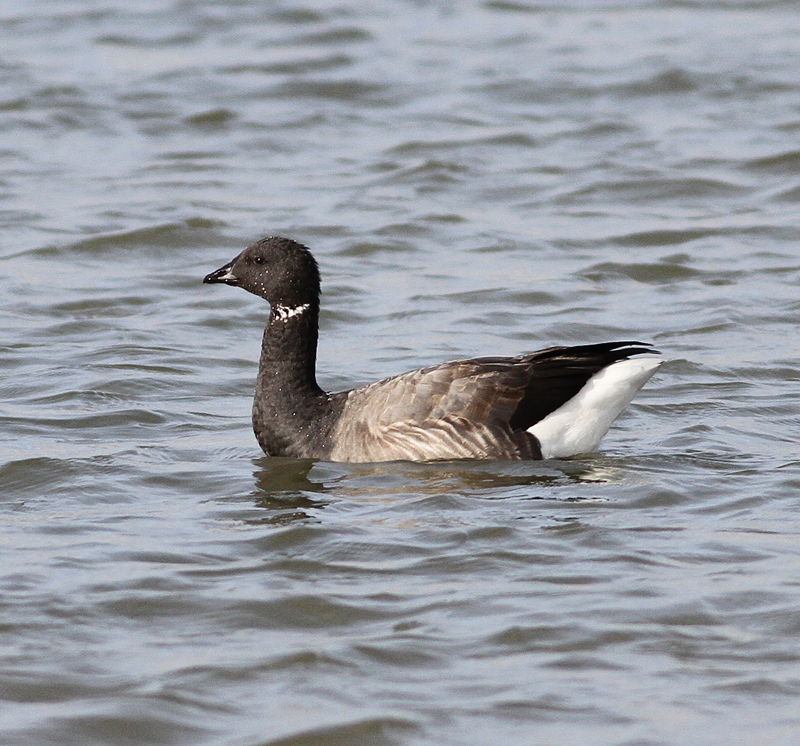
Stuart also took this picture of the single pale-bellied brent goose in the flock of dark-bellied brent at the country park on the 12th. The pale-bellied was still on the fields on the 13th alongside 400 dark-bellied brent. The two jack snipe were seen on the pools in the fields amongst the many waders and wildfowl. One jack was asleep while the other bird was seen bobbing whilst walking along feeding on the mud.


Glyn took this photo of one of the four female / immature scaup seen yesterday in the Pyefleet. Martin Cock found the same scaup in the same place today but six birds were present.


This is a picture taken in Germany two years ago of a common gull chick with a coloured ring on its leg.
It was then seen again in May 2011 on the north Dutch island of Texel but wasn't seen anywhere again until  it returned to its birthplace in the gull colony in the Wismar Bay on the German Baltic coast in June 2012.
Andrew Thompson then had the pleasure of seeing the bird on the West Mersea beach at Seaview Avenue on Saturday 10th November this year. It was amongst some black-headed gulls and a Mediterranean gull coming to some bread on the beach.

Andrew noted the ring number and tracked down the bird-ringing group in north Germany who in turn sent back the details including this original picture of the bird as a chick. Thanks Andrew for passing on the details - although I don't know what kind of approval this German gull gives to your sandwiches!

Monday, 12 November 2012

REDSTART REFUGE


This female common redstart was watched in the garden of Clive and Lyn Pickering on the seafront at the bottom of Lower Kingsland Road, on Monday 12th. Clive reports that the bird has been seeking refuge in his garden since Thursday, spending up to an hour in it at times. Martin Cock saw the bird first thing on the Monday morning, feeding both in the garden and also out along the back of the beach too.

The redstart was hard to find late morning despite several walks along the beach and scanning the gardens. It was only after knocking on the Pickerings door that the bird was discovered hiding in the back garden. The redstart was sitting on an old white polystyrene box amongst the garden pots as seen in my picture above. I couldn't really miss the orangey-red tail splayed out on the white box. After a couple of quick photos, the bird flew onto the roof and then disappeared back down into the front garden.
Andy Field eventually managed to see the redstart too in the early afternoon but only after knocking on the door, talking to Lyn, and finding the bird was in the back garden again. He managed to snap this photo before it flew across the bottom of Kingsland Road, disappearing into another garden.

The redstart is a summer migrant to northern Europe including the UK returning south in the autumn. Most redstart passage occurs through September and most of these birds should already be in West Africa for the winter by now. This Mersea one is very late and certainly the latest recorded on the Island. I believe the only other redstart seen on the Island this year was on the 5th September in a field hedge near East Mersea's Meeting Lane.


There wasn't much else to look at whilst walking the West Mersea beach near the bottom of Kingsland Road, despite the redstart having been seen previously feeding out on the beach at times.


Just offshore oysters were being dredged up close to the beach during the morning high tide. Close-by 23 turnstones rested on one of the swimming rafts while 27 sanderling flew past.
Three common scoter were found feeding offshore to the east of Seaview as was a distant red-throated diver and ten great crested grebes.

Andy Field and Glyn Evans noted on Monday morning during the monthly WeBS count, 9 snow buntings at the East Mersea Point, 6 common scoter in the Colne and more unusually, 4 scaup in the Pyefleet Channel.

Clive Pickering also reported seeing a badger cross Lower Kingsland road one night about three weeks previously and a late swallow on November 5th.

Sunday, 11 November 2012

LATE AUTUMN SUNSHINE

For once the weather was sunny and still during most of Sunday 11th, providing clear views during a brief walk from the Dabchicks onto the nearby Strood Channel seawall. The morning walk coincided with the high tide which meant no mud on show and not many waders to look at.

Along the edge of the saltings on both sides of the channel were small groups of brent geese, wigeon and redshank. Amongst the moorings were ten dabchicks and two cormorants. Rising over the fields on the Peldon side were 500 golden plover and 100 lapwings.

A sparrowhawk flew slowly over the weedy field halfway along the seawall which helped flush good numbers of linnets into the air with about 200+ noted. Five reed buntings perched up a nearby hedge, 12 skylarks had earlier been seen flying west off the Island while 3 rock pipits were also seen during the walk.

In Firs Chase the pied male blackbird was seen again in the garden with its bright white head and white rump.


The sun was still shining up until the end of the day, highlighting the autumnal tints at the park pond as the sun set. There was a report of a firecrest being found at the park but a quick search of bushes near the hide could only reveal 3 goldcrests. This is the first firecrest record for the Island this year.
On the pond were 20 gadwall, 2 tufted duck and 30+ mallard, and nearby 3 foxes were snoozing together at the back of the field.

At the Point 5 snow buntings were reported as was a short-eared owl crossing west over the Colne.

At dusk a little owl flew over the East Mersea road near the pub. Earlier in the day at West Mersea 3 common scoter were offshore from Seaview Avenue.

On Saturday 10th at the East Mersea Point, 3 snow buntings were on the beach, 250 avocets were feeding along the edge of the river, 11 red-breasted mergansers flew past the Point, 300 golden plovers flew over while in the fields 60 greylag geese and 50+ common snipe were noted amongst all the other waders and wildfowl.

A harbour porpoise was seen by Andy Field swimming offshore near the Nass beacon on Saturday.


Friday, 9 November 2012

BUNTING CHASE


Two snow buntings were seen on the West Mersea beach next to St Peters early on Friday 9th by Ray and Lyn Hempstead. However by the time I was able to have a look later in the morning, the birds had gone. Not sure if these birds are the ones from East Mersea Point.

Other birds of interest seen in the area were 3 rock pipits, 10 bar-tailed godwits, 400 golden plover, 50 brent geese and 10 great crested grebes.

Other bird news over recent days from the country park, include the jack snipe being seen on Thursday 8th amongst 70+ common snipe by Howard Joliffe. A lapland bunting flew west over the car park first thing in the morning and a redpoll sp, was heard later over the park. At dusk a pipistrelle bat flew over the car park.

Phil Carter reported seeing 3 snow buntings and 12 red-breasted mergansers at the Point on Wednesday 7th. Two common scoter were reported in the Colne near Langenhoe Point and there was also one seen off West Mersea too.

The kingfisher was back on its usual perch at the park pond posing in the bright sunshine on Tuesday 6th. A female sparrowhawk flew into the top of the willows behind the pond. Three lesser redpolls were feeding on nearby alder cones with a few goldfinches. A comma butterfly flew over the park late in the morning and late in the season too.

On Monday 5th the two jack snipe were showing in the grazing fields while at the Point Andy Field and Rob Burgess saw 2 snow buntings.


There was a single figure count of moths in the trap during overnight on Wednesday at the park. This December moth pictured above quite often turns up in November - as well as in the month it's named after. Four November moths were also in the trap, a lot less than the peak of a fortnight ago. A green-brindled crescent and a yellow-line quaker were the only other moths noted.

This angle shades moth was easy to spot as it rested on a nettle leaf at St Peters meadow on Friday 9th. It wouldn't have been spotted if it rested amongst some dead leaves.

Sunday, 4 November 2012

WADERS AND WILDFOWL


Heavy rain fell during the first half of Sunday 4th and although the rain stopped in the afternoon, it remained dull. Alan Reynolds took all these photographs of various waders and wildfowl when he visited the park on a nice and sunny day earlier in the week.

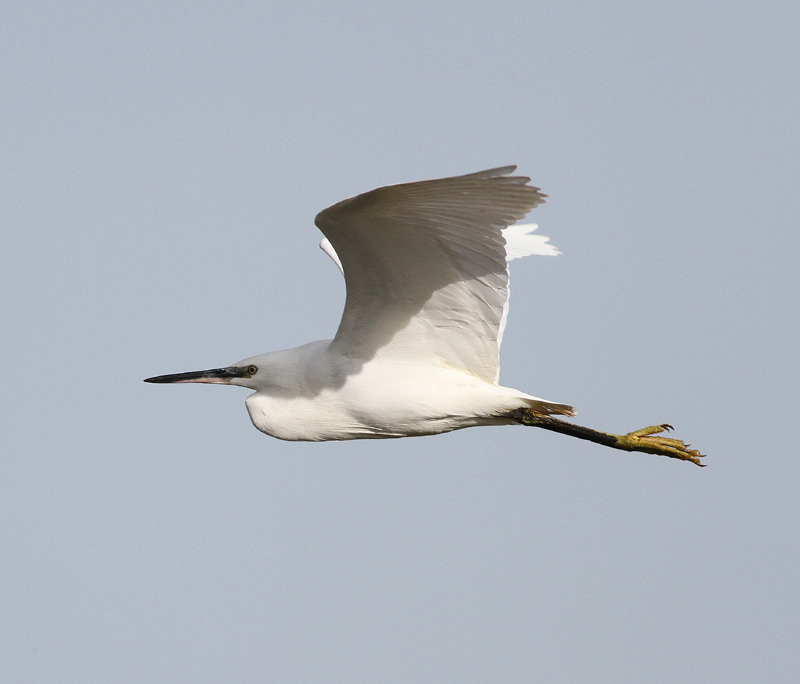
Several little egrets one pictured above, have been gathering in the fields or nearby trees at high tide with at least eight birds in recent days.


The brent geese weren't on the grazing fields early in the afternoon on Sunday although there was a big flock seen flying along the Pyefleet as if they'd been feeding on Reeveshall.


Most of the dark-bellied brent geese flock are adults like this one, following the poor breeding season. Recent counts suggest only about ten young out of 600 geese. The pale-bellied brent has been present all week.


Alan managed to photograph this white-fronted goose in the fields, from a distance he worked out was 320 metres away from him on the seawall. Three birds were seen on Friday but none of them have been seen since.


The wigeon pictured above and below, are enjoying the increasingly wet fields with at least 500 birds in the fields.


This pair of wigeon have been snapped napping on the edge of the borrowdyke.
Teal numbers are also matching wigeon with about 500 birds scattered amongst the pools, although numbers seem to fluctuate.


The black-tailed godwits on Sunday were probing the very wet grassland as well as the pools for food. Many of them happy to feed and roost in the fields even at low tide. Around 500 birds were noted on Sunday.

Amongst the 50+ common snipe around the pools, was one jack snipe seen feeding on a muddy margin.


Most of the mud was covered by early afternoon which brought waders like this turnstone above,  closer to the beach at the Point.


Amongst the 25 turnstones on the beach was the nice sight of 30 sanderlings running along the water's edge.
Fifty bar-tailed godwits was one of the other waders of interest near the Point. All of the waders gathered in the muddy bay near the Point all fleed when a male marsh harrier crossed low over the Point on its way to Colne Point.


The handful of skylarks like this one pictured, were all being checked on Sunday in case the shorelark returned, but no sign. The snow bunting was not seen either and may've still been at Colne Point. Two rock pipits, one meadow pipit and a pair of pied wagtails were feeding along the strandline at the Point.

A merlin crossed over the car park in the middle of the afternoon, heading towards the grazing fields. A few minutes later pigeons and plovers were seen flying away from the fields and the merlin was seen flying back over the car park heading westwards to the caravan site.

At West Mersea a brambling flew over Firs Chase calling first thing on Sunday morning and two moorhens crossing the same road was an unusual sight.

Saturday, 3 November 2012

SNOW BUNTING


The snow bunting stayed on the beach at the Point for most of the day on Saturday 3rd. It was seen flying over the river Colne towards Colne Point in mid afternoon and hadn't returned by the end of the day.

Andy Field took these photos on his second visit to the Point during the morning, having failed to locate the bird first thing.

The bird was found feeding in the same S.E. corner of beach at the Point where it had last been seen yesterday as the sun set. It seemed to prefer being very unobtrusive and easy to miss.
There was no sign today of the shorelark that had been seen yesterday morning or the 3 white-fronted geese in the fields.

Other birds noted during the day at or near the park were 2 jack snipe, 50+ common snipe, pale-bellied brent goose, 600 dark-bellied brent, 63 greylags and 2 swallows were seen on or over the fields, 6 red-breasted mergansers past the Point, kingfisher near Golfhouse, marsh harrier, sparrowhawk,100 greenfinches and 2 redwings near Oyster Fishery, 2 redwings, 6 siskins and chiffchaff near park pond.

The female muntjac deer walked across the pond-field at dusk, a common seal was just off the Point in the Colne and a weasel was hunting along the park's clifftop. A migrant hawker in the car park is the first ever November sighting.

Friday, 2 November 2012

NOCTURNAL VISITOR


At least one badger appears to have taken up residence in the middle of West Mersea as witnessed in these two photos taken by David Nicholls in his garden last night Thursday 2nd. A badger had been sighted in the same road last week, so maybe this is the same individual.


The badger was feeding on some spilt sunflower seeds that starlings had discarded from a feeder during the day. David's picture above was taken without the flash, whereas the top one had the flash on it.

Received a report of a red squirrel being seen on the East Mersea road near the Meeting Lane bus stop mid-morning on Wednesday 31st. The same spot where I'd seen one a month earlier.


A couple of surprises awaited on the park beach during Friday 3rd. A shorelark was discovered scuttling along the beach whilst walking along the seawall. It turned its head to show the distinctive pale yellow and black face pattern. Unfortunately it didn't stay around for long and within a minute it took off with a second unidentified bird that I hadn't noticed and flew high towards the back of the grazing fields. However fifteen minutes later at about 10am, the shorelark was found again back on the same bit of beach about halfway along the main seawall, where it was left feeding along the strandline.

There was no sign of the shorelark at the end of the afternoon, maybe too many walkers and dogs were on the beach. What did make the second walk of the day to the Point worthwhile was stumbling onto a snow bunting, which had managed to blend in well with the shingle and tufts of grass. The bird trotted away in behind some taller tufts of grass where it was left as the sun was watched setting. I've since gathered this bird was first discovered earlier in the afternoon by some visiting birdwatchers.

Also at the Point two marsh harriers passed nearby as they returned to the Langenhoe evening roost from Colne Point. Five red-breasted mergansers flew out of the river and a common seal was in the outer part of the Colne.

Found myself being treated to a fantastic close-up view of a barn owl from the hide at dusk, 5pm as it flew towards the hide and hovered briefly only five metres from the open window where I was sitting and looking at me for a couple of seconds. There was a good chance the owl might have come into the hide if I hadn't been sitting at the window. The binoculars could only just focus on the owl, before it flew off to the side. The first barn owl I've seen here for a couple of years. In the fading light a buck muntjac walked across the small field beside the pond.

A pair of swallows hawked around the main hedge next to the grazing fields just prior to dark - not sure where they were going to spend the night being so late in the day. A pair of little owls flew into the park at the south-west corner, duetting as they flew. Earlier in the day a chiffchaff called from the clifftop trees.

On the grazing fields the two white-fronted geese, pale-bellied brent goose, 45 greylag geese were present along with 1000 dark-bellied brent geese.

Reported from the park by a visiting birdwatcher were 3 white-fronted geese in the fields, 50 swallows coming in off the sea and a brambling in the car park


One or two showers passed over the park with this rainbow on show briefly in the afternoon.

The previous day on Thursday 2nd, the jack snipe was seen again on the pools in the grazing fields for its second day. As the day before, it was easy to recognise as it bobbed up and down whilst feeding. Also at the pools was a roost of 500 black-tailed godwits, 200+ redshank with a single knot noted too.
During a sunny spell a migrant hawker and red admiral were seen in the car park.

Andy Field and Pete Tristron saw the 2 white-fronted geese, the pale-bellied brent, 8 little egrets roosting, 4 swallows over the fields and a red-throated diver in the estuary.