Monday, 10 October 2016

WAGTAIL FAMILY

A family of pied wagtails has been a familiar sight around the car park at Cudmore Grove recently. Some of their feeding has taken the birds onto the roofs of the buildings which is where this male was seen calling from.

Also feeding close to the park buildings was this goldfinch, one of a dozen birds feeding on the buddleia seeds beside the information room.

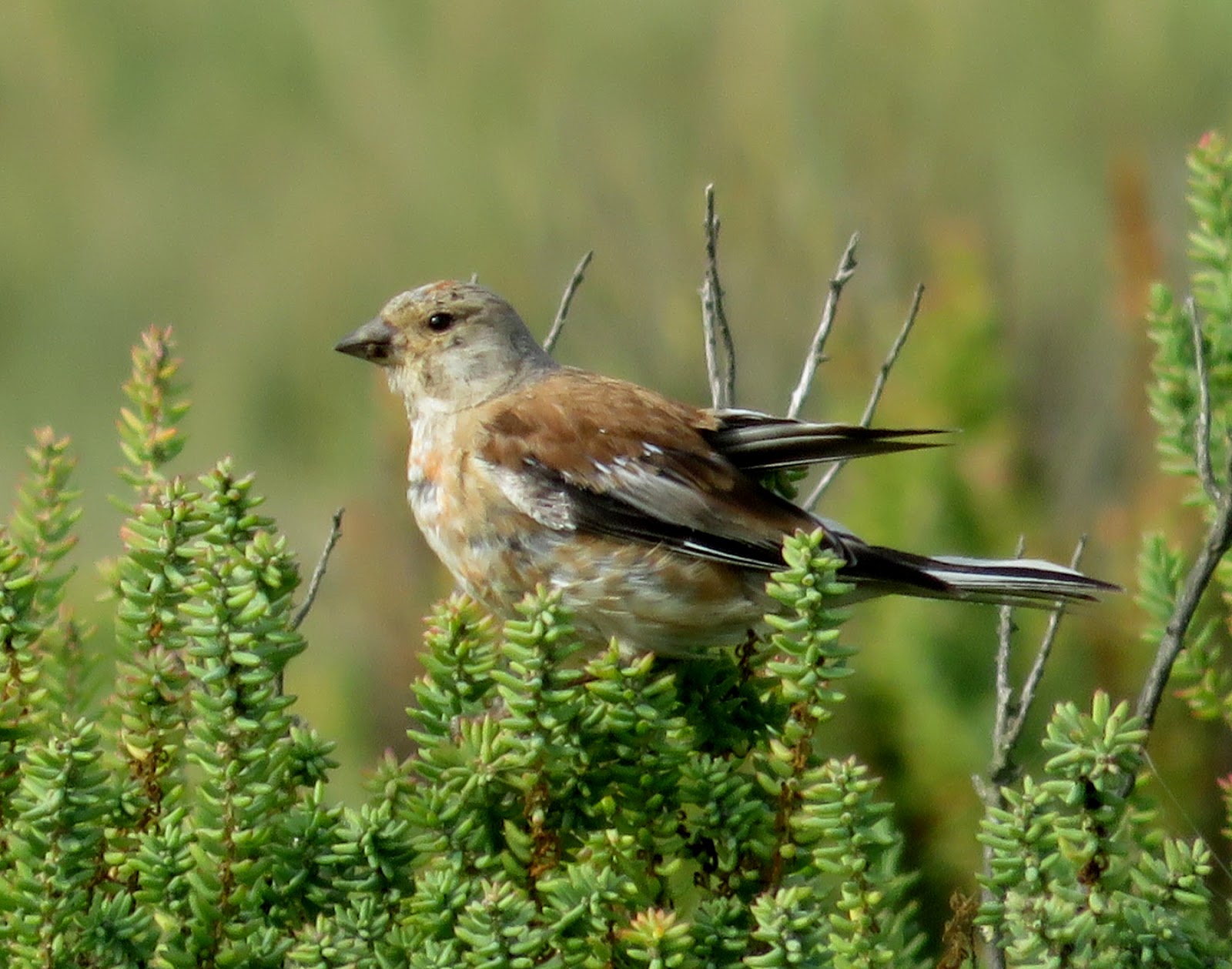
Birds noted at the park on Thursday 6th were 100 golden plover, 100 linnets, snipe and a marsh harrier - all seen on the grazing fields. Also 50 brent geese and 180 wigeon by the foreshore and 10 skylark flew over the car park.
Steve Hunting noted nine goldcrest in the conifer wood in Shop Lane on Thursday.

On Wednesday 5th three common scoter were dozing on the sea opposite the park, a red-breasted merganser flew into the Colne, yellow wagtail flew over, also one redwing heard calling, while 98 little egrets roosted at the pond.
At West Mersea Martin Cock noted 15 Mediterranean gulls were offshore from Waldegraves, also a merlin flew south over the Blackwater to Bradwell.

A peregrine flew fast over the park's grazing fields on Tuesday 4th heading east into the estuary, snipe, 2 redwings were seen near the pond and a yellow wagtail was feeding beside the cows.

Seventy little egrets roosted at the park pond on Monday 3rd, also 100 wigeon, 50 brent geese, 50 linnets, 3 common terns and 2 redwings were noted.

Catches of moths at the park since the end of September have been dominated by lots of lunar underwings. This autumn seems to have been a good year for them, with a peak of about 100 individuals on 29th September. The surrounding grassland of the park provides the foodplant nearby.
There is quite a variation in the colours of the lunar underwings as seen above.

Another grassland moth that has also had a good autumn has been the beaded chestnut with a peak of 20 individuals in the one trap. Last year's peak was only 8 individuals on the 4th October.

One or two mallows have been coming to the trap since the start of October.

Other moths in the first week of October have included angle shades, large yellow underwing, deep-brown dart, black rustic, barred sallow, L-album wainscot, square-spot rustic, shuttle-shaped dart, setaceous Hebrew character, autumnal rustic, yellow-line quaker, green-brindled crescent as well as rusty dot pearl and one or two rush veneers.

The first sighting of a rosemary beetle at the park was this individual in the moth trap on 3rd October.

Stephen and Josie Marshall have been enjoying views of a red squirrel in their garden in Firs Chase, these photos taken on Tuesday 4th. Feeding on walnuts was interspersed with drinks from the bird-bath.

The red squirrel visited twice during the morning about twenty minutes apart, feeding on the many walnuts on a tree in the garden.

It was seen to shuck and shell the walnuts before running off with each one in its mouth to bury it.

Some of the nuts have been buried in a raised vegetable bed down the garden and others in some herb pots by the back door.
The Daniel family next door to the Marshalls have also been watching the red squirrels recently in their garden too and noted how the ground is so hard the squirrel has struggled to dig a hole, and has reverted to burying walnuts in softer soil in plant pots.

These photos kindly passed to me by Stephen were taken through the glass window of their house.

Another report of a red squirrel sighting was in Haycocks Lane, seen running along the lane on Thursday 6th by Sheila Rayner.

Wednesday, 5 October 2016

CONFIDING WHEATEAR

The beach in front of the park beach was the warmest place for this male wheatear to be, sheltered from the northerly wind by the cliff on Sunday 2nd. It seemed quite confiding and posed nearby for some photos.

The wheatear continued to pose during the morning for photos, this one above and below taken by Andy Field.

This male bird seemed a bit scruffy, maybe it had a rough flight to reach Mersea the previous night.
An immature wheatear was along the seawall on Saturday morning.There was a whinchat over the weekend in the park's grazing fields.

At the park on Sunday were 4 blackcaps, 5 chiffchaffs, 150 swallows, 2 goldcrest while a white wagtail was seen by Andy. A marsh harrier was seen over the car park first thing by Andy and then a second bird flew over the Point later in the morning.

The kingfisher was hard to locate at the park pond early on Sunday morning but eventually it showed for Andy here. The Cetti's warbler was singing, the water rail called, 3 song thrushes perched up. The year's record little egret count so far, of 102 birds was made by Helen Mussett on Sunday.

On Saturday 5 yellow wagtails were with the cows in the fields, 50 linnets at the Point, 30 brent geese in the Colne, 86 little egrets roosting, 2 shoveler by the pond, 25 meadow pipits and 2 goldcrests noted.

On Friday 30th 24 goldfinches were feeding near the pond, whitethroat, 5 blackcaps, 20 swallows 2 house martins and 6 chiffchaffs were noted at the park.
At West Mersea on Friday a manx shearwater drifted out of the Blackwater passing from Old Hall towards West Mersea, the sighting relayed from Brian Churches at Old Hall Point to Andy.
A barn owl flew high over Blue Row as it got dark on Friday evening. A grey wagtail and 2 sandwich terns were seen at the Youth Camp by Martin Cock.

At the park on Thursday 29th a hobby flew over the Point and out across the mudflats south-west, a wheatear on the beach, 30 avocets in the Colne, 10 brent geese, 30 swallows passing over the park during the day, 8 chiffchaffs in a big tit flock, 55 little egrets at the roost and 6 mistle thrushes.
A spotted flycatcher was found in Cross Lane by Martin on Thursday, a sparrowhawk flew past a flock of 50 linnets at Bocking Hall and 5 red-legged partridge were near Manwood Grove near Shop Lane.

At Bocking Hall on Tuesday a large flock of 1000 starlings were perched on wires near the farm. On the park fields at high tide were 160 curlew.

In sheltered spots around the park several dragonflies were on the wing either migrant hawkers or common darters like this male pictured above by Andy on Sunday. Four red admirals were on the wing and a speckled wood too.

Sheila Rayner stopped her car in Bromans Lane early on Wednesday morning to watch a red squirrel in the middle of the road. She watched with amazement as it then scampered underneath her stationary car to carry on down the road. The Watkins family in the nearby Bromans Farm have been seeing the red squirrel scamper across their barns and also strip their walnut tree of nuts over recent days.

Moth trapping at the end of September into early October can be quite rewarding at the park and this splendid merveille du jour on the 28th has been the main highlight.

Several feathered ranunculus have been seen at the trap over the last week.
Around 180 moths of around 18 species were logged on both 28th and 29th at the park with the bulk of them being lunar underwings.

A couple of the sallow moths have been noted, as the name suggests, it feeds on the leaves of sallow trees. A few barred sallows also seen.

Some smart looking black rustics have been noted along with deep-brown darts too.

The autumnal rustic is a regular in the autumn in small numbers over several nights.

The flounced chestnut is an annual visitor to the trap in the autumn.
Also noted were beaded chestnut, square-spot rustic, mallow, large-yellow underwing, broad-bordered yellow underwing, L-album wainscot, snout, setaceous Hebrew character, shuttle-shaped dart, red-green carpet brindled green, green brindled crescent and rush veneer.
Tuesday, 27 September 2016

SEPTEMBER SHOWER

Having been away for a couple of weeks, Mersea has stayed very dry, although these wigeon at the park pond must have enjoyed this rare September shower. There was a brief downpour lasting a few minutes around the middle of the day on Monday 26th.


Numbers of duck at the park pond have increased noticeably over the last fortnight with nearly 150 ducks present on Monday with roughly a third each of mallard, teal and wigeon.

 Several of the wigeon were also commuting between the borrowdyke inside the seawall and the pond. The adjacent grazing fields are completely dry at the moment, so nothing suitable for wildfowl yet.


Ten little egrets had to endure the downpour of rain on Monday, this one holding on tight at the top of a dead tree as the rain pelted down.
A snipe was flushed off the edge of the pond by the cows when they walked past.

An osprey flew west past the park just offshore as the tide was receding just after midday on Monday. Flocks of waders and gulls scattered away as the osprey flew slowly along the outer edge of the mudflats.

A short while earlier two immature gannets were seen high over the outer part of the Colne, flying back out of the estuary past Colne Point. One common tern was feeding offshore with some gulls.

One swallow and a chiffchaff were the only other late summer migrants noted on Monday, although a whinchat was seen first thing Monday by Andy Field in the grazing fields.


Thursday, 8 September 2016

CLOUDED YELLOW

A clouded yellow was resting beside the shrubby seablite bushes at the East Mersea Point on a dull start to Tuesday 6th.
On the wing at the park the next day were small heath, small white, comma and speckled wood.

Up to 11 mistle thrushes have been feeding at times recently on the rowan berries on the trees in the car park. The birds have managed to get through about half of the berry crop so far.

A greenshank flew over the park calling on Wednesday as did up to ten yellow wagtails during the day. By the pond 42 little egrets roosted late afternoon while a sparrowhawk and 15 goldfinches were seen.

On Tuesday a wheatear was at the Point along with 70+ linnets while a reed warbler was seen in the dyke reeds. Five yellow wagtails flew over calling, 100+ swallows flew around while 2 wigeon were at the pond.

A kingfisher was seen along the park dyke on Sunday 4th by Martin Cock.

At Maydays farm a hobby, marsh harrier, 2 common buzzard, curlew sandpiper, greenshank, 6 whinchat, 5 wheatears were also seen by Martin.

Another appearance of red squirrel feeding in the trees behind the buildings at the park on both Tuesday and Wednesday mornings. Both times the squirrel has been feeding on the hornbeam nuts.


This is the tell-tale sign that a red squirrel has been in the hornbeam tree above because the ground is littered with these green nut clusters.
The red squirrel scampered along the car park hedgeline at the beginning of Thursday heading towards the cliff-top trees.


Five members of the Essex Moth Group joined me at the country park on Wednesday evening for a mothing session. Around sixty species of both micro and macro were noted from eight traps.


By 5am the main highlights had been 4 large thorns, hedge rustic, feathered gothic, cypress pug, orange sallow, with a small number of silver-Y, rusty dot pearl and rush veneer as migrants.

The colourful autumnal colour pattern of the centre-barred sallow came to the moth trap at the park.

Four L-album wainscots are a regular in small numbers each autumn, four came to the trap in the early hours of Thursday.


This interesting micro Dioryctria sylvestrella caught our eye with its neat markings and large size.


Two great silver diving beetles inside the traps was an unusual sight.

Monday, 5 September 2016

PARK SQUIRRELS

Two different red squirrels have been seen recently at the country park for the first time. This one pictured was crossing behind the park bungalow in the afternoon on Monday 5th. On Saturday one red squirrel was reported by a visitor in the car park early in the morning and after a little bit of searching, it was watched trotting up the entrance track towards me before turning back and heading back out through the park gates. This individual had a small worn patch on its snout.

A short while later in mid morning another visitor reported seeing a red squirrel in the trees above the horse-ride on the northern side of the main part of the park. This one was also relocated and was watched inspecting a number of acorns but leaving them on the branches.

I've had a number of red squirrel reports from various island locations over the last week such as Ivy Lane, top of Meeting Lane, Chapmans Lane, Fairhaven Avenue and Mill Road.

A family of pied wagtails has been feeding in the car park for the last week, including foraging on the roof of the buildings. Two yellow wagtails were with them on the ground on Monday and another six were heard passing over during the day.

A hobby flew over the car park towards the cliff on both Monday and Sunday upsetting the flock of 20 swallows. A hobby had also been seen flying rapidly west over the car park entrance on Friday 2nd. A sparrowhawk also upset the hirundines on Monday too as it drifted west.

There was a big feeding flock of 250+ herring gulls on the Chapmans Lane field early on Monday 5th.

The grey herons have been a bit outnumbered by little egrets at the high tide roost at the park pond recently. The largest little egret count so far this autumn was on Saturday 3rd with 97 birds counted.
A kingfisher made a brief but noisy appearance on Saturday.
Duck numbers are slowly building up with forty mallard and eight teal seen on the pond on Monday. There was a wigeon and ten teal on the pond on Thursday 1st with 10 house sparrows in a nearby hedge.

At the Point on Saturday a sanderling, wheatear and two ringed plover chicks were seen by David Wallace.

At Maydays farm Martin Cock reported seeing on Saturday 3rd, 6 whinchat, 5 wheatear, curlew sandpiper, 2 green sandpiper, 2 greenshank, 42 knot, 30 bar-tailed godwits, 313 grey plover and 3 little terns.

Several migrant hawkers and common darters are hunting around the park at the moment.

This small toadlet was crawling along one of the dried ditches at the park on Thursday 1st.

The moth trap at the country park has noted about thirty species of macro moth over three recent nights. The most notable being four large thorns, one above, on the night of Sunday 4th. The first large thorn of the season was just two nights earlier.

There has been a reasonable number of moths in the trap over the last week or so with nearly 190+ noted of which fifty percent were setaceous Hebrew characters and square-spot rustics.
Other moths noted included oak hook-tip, Chinese character, common carpet, green carpet, latticed heath, small blood vein, cypress pug, common wave, poplar hawkmoth, turnip, flame shoulder, large yellow underwing, nutmeg, common wainscot, white-point, flounced rustic, silver-Y, snout, vines rustic, angle shades and rosy rustic.

This large old lady moth was found hiding in the gents in the park toilets.

The white spots on the vapourer look like a pair of eyes, this one caught on 31st August.

The neatly patterned feathered gothic is a regular moth in early autumn at the park, two noted on 31st.
A common moth at the moment is the light emerald, the second generation on the wing now in good numbers with ten on each of the three recent nights.

Thursday, 1 September 2016

EGRETS GATHERING

Little egrets seem to be everywhere at the moment with this one pictured feeding in the shallows as the tide came in beside the East Mersea Point on Wednesday 31st.

During high tide the little egrets gathered on the trees and bushes beside the park pond where Andy Field counted 93 birds on Wednesday. Last year the egrets peaked in the autumn at 110 birds. As well as his picture above of some of them squabbling, he also took this video clip below, click on the wording -

Feeding on the sea-blite bushes at the Point on Wednesday were about fifty linnets, one shown above.
Four wheatears were on the beach at the Point too.

Two ringed plover chicks continue to flourish along the beach, now two weeks old. There's been no sign for a few days of the third chick.
Also from the Point were 100 golden plover, 2 little tern, 50 avocets and Mediterranean gull. Flying over the fields was a mixed flock of 75+ swallows and house martins while Andy noted 25 yellow wagtails near the cows.

Along the Reeveshall seawall this whinchat was photographed by Andy on Wednesday morning.

The whinchat was quite obliging for this photo, unlike a nearby wheatear that was more wary.

At the country park on Tuesday 30th a flock of 11 house sparrows chirping noisily from a hedge near the park pond was very notable. The first sparrow flock at the park for at least ten years! A sparrowhawk and a willow warbler were also noted on Tuesday.

The first sighting of willow emerald at the country park was made by Andy on Wednesday, captured on this photo. It was found in the middle of the day resting on some nettles in a sheltered spot from the wind, near the pillbox in the corner of the park. The only other record for the Island was about three years ago at Maydays farm.

Two clouded yellows were seen at either end of the park seawall on Wednesday morning.

Another red underwing spent the day resting on the side of one of the park buildings in the car park, the third individual to do so over the last three weeks.