Friday, 21 August 2020

FELDY FINCHES

A small flock of goldfinches was feeding on the seedheads of knapweed in Feldy View on Thursday 20th. Three willow warblers were feeding in the birch and oak trees in Feldy and a common buzzard was seen circling over the Firs Chase caravan park. Along the edge of the mud near the Dabchicks were 120+ black-tailed godwits.
In Firs Chase three willow warblers were feeding in the back garden birch tree, while in Mersea Avenue a green sandpiper flew over Ian Black's house calling later in the day.

On Wednesday a peregrine spent a bit of time on the stubble in the Strood Hill field behaving strangely. It seemed to be staring all around and then took to the air for a short fly-around before coming back to the same place. After several of these short flights, the peregrine was then seen picking up an item of prey it had been standing over and then flew further up to the next field where it dropped down again to feed on it.
Also in the area a buzzard was seen in flight, a wheatear on the seawall while in the channel of interest were 20 black-tailed godwits, fifty golden plover and four dunlin.
In Firs Chase a buzzard was mobbed by crows on Wednesday morning as it flew north over the garden. Martin Cock reported from his Coverts garden a chiffchaff and seven swifts overhead.

At Maydays on Wednesday afternoon Martin reported two common sandpipers, two green sandpipers, two juvenile buzzards in the wood and a juvenile marsh harrier feeding on a dead pigeon.

On Tuesday 18th a spotted flycatcher was seen briefly by Andy Field on the edge of the field near the Shop Lane seawall. Also two whinchats, two wheatears and three yellow wagtails on the dried out pool at Reeveshall. A siskin was heard flying over, also two southern migrant hawkers and a red squirrel in Fishponds Wood.
Later on Tuesday a hobby and fifty golden plover flew over fields near the Dog and Pheasant and a hobby was also seen at Chapmans Lane by Martin Cock.

Along the Strood seawall on Tuesday morning were a wheatear, two corn buntings, 100+ house sparrows, two reed buntings and a whitethroat. Three kestrels, swift and 15 house martins were seen over the fields while along the channel were 30+ black-tailed godwits, 2 little grebes, four ringed plovers and seven noisy greylag geese flying about.

A distant shot by Richard Brown of one of three curlew sandpipers seen on Monday 17th on the nearby MOD ranges on Langenhoe Point.

At Maydays farm on Monday morning a raven was heard calling by Martin Cock as it flew west from Reeveshall, also two common sandpipers, green sandpiper, two knot, greenshank and a marsh harrier.

Nine house martins and a swift were seen by Steve Entwistle over Empress Drive on Monday.

A sunny walk on Monday 17th to the East Mersea boating lake during high tide saw a few birds roosting on the adjacent flooded marsh. Birds noted were three common sandpipers, 34+ little egrets, 24 ringed plovers, 20 redshank, 5 Mediterranean gulls, two common terns, wheatear, sparrowhawk, four yellow wagtails, two willow warblers, two whitethroats and three reed buntings. Towards Coopers Beach a common sandpiper was along the dyke and two stonechats.

On Sunday 16th a hobby flew over the Firs Road / Firs Chase area while 12 goldfinches were in Feldy View.

Two corn buntings were seen perched on bramble near the Strood seawall on Saturday 15th.
Along the Strood channel were two greenshank, 12 golden plover, 20 grey plover, 3 ringed plover, 70 black-tailed godwits and a dunlin. A juvenile marsh harrier was over Ray Island and a buzzard over the Strood fields.

Two green woodpeckers and a buzzard were seen by Ian Black over his Mersea Avenue garden on Saturday.

On Friday 14th the young sparrowhawk was still calling loudly from Fishponds Wood, also a large mixed tit flock of 30 birds and two red squirrels were seen too.
At Maydays Martin Cock reported two wheatear, seven knot and common sandpiper.

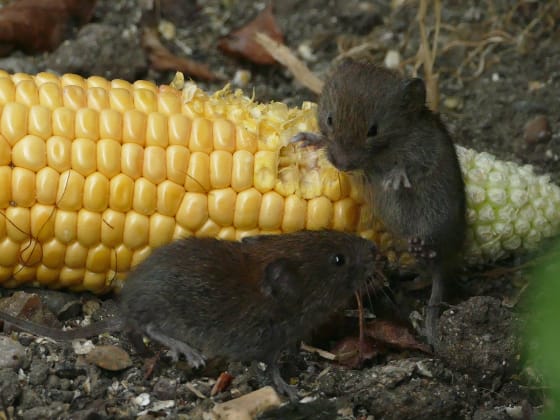
A field vole photographed by Michael Thorley in his East Mersea garden near Meeting Lane.

The field voles seem to love feeding on maize - and there's a whole field of ripening maize beside Michael's garden.

A male speckled bush cricket was found by Steve Entwistle on Friday 14th in the kitchen in his Empress Drive house.

Saturday, 15 August 2020

KITE FLY-PAST

A red kite provided a close fly-past as it headed down the Strood channel alongside the seawall on Thursday 13th. The bird appeared to have just crossed over the Strood causeway and was flying down-channel. After passing by me it then headed across the channel over to Ray Island where it kept on going.

The red kite was a well marked bird with a nice orangey brown forked tail. This is the ninth red kite to have been seen this spring and summer flying over the Strood fields / channel area.

The two wheatears were still in the same locations beside the Strood seawall on Thursday as they had been a couple of days previously. One in a weedy corner of a field near the Strood Hill, and then this individual perched on a post in the mud nearer the SW end of the seawall.

Along the channel at low tide were a greenshank, 70+ black-tailed godwits, dunlin and 20 golden plover.

Three willow warblers were feeding in the birch trees of the Feldy View field on Thursday morning.
Three willow warblers were also seen in the tit flock in the Firs Chase garden on Thursday, also a sparrowhawk seen passing over.

A couple of common blue butterflies were feeding on the lavender clumps in Feldy View on Thursday.

At Maydays farm on Thursday evening, Martin Cock reported three green sandpipers, common sandpiper, 140 golden plover and ten yellow wagtails.


On Wednesday 12th the brood of six tufted ducklings was resting in the Cudmore Grove dyke. A pochard and three little egrets were on the park pond and a buzzard flew over the grazing fields. Near the Golfhouse were four yellow wagtails and a southern migrant hawker by the dyke. A common blue and brown argus were flying beside the park dyke.

On the nearby mudflats were a Mediterranean gull, six black-tailed godwits while in the Colne were 20 common terns and two common seals.
A swift and fifty house martins were flying around the bus turning circle area.

There has been reduced red squirrel activity at the nut feeder in the Firs Chase garden during the recent heatwave. This one was seen feeding on a monkey nut on Thursday early evening - once some of the day's heat had eased off. Most of the daily visits have been early morning.

Wednesday, 12 August 2020

SUMMER HEATWAVE

Two wheatears were seen beside the Strood seawall on a hot Tuesday 11th. This individual hopped along the seawall path dodging the walkers if they got too close. The second wheatear was in a weedy corner of a field near the bottom of the Strood Hill.
Also along the seawall were seen a couple of corn buntings, the large flock of 200 house sparrows, yellow wagtail, 400+ starlings on Strood Hill, two greenshank, three common terns, 80 black-tailed godwits and ten grey plover.
A marsh harrier circled high over the Firs Chase caravan site then drifted towards the Hard, while in Feldy View two willow warblers and a lesser whitethroat were present. Two southern migrant hawkers were along the Strood dyke.

On Monday 10th along the Strood channel seawall, a hobby flew over the fields and made a half-hearted lunge at the feeding flock of 200+ house sparrows in the hedge, before continuing over to Ray Island. Also seen were a common buzzard, greenshank, avocet, 70+ black-tailed godwits and two common terns. Ten southern migrant hawker dragonflies were along the Strood dyke.

At Maydays farm on Monday, Martin Cock reported the highlights among many more waders now present along the Pyefleet channel included common sandpiper, four knot, three greenshank and 100+ grey plover, also cuckoo, sedge warbler and reed warbler.

A pied flycatcher made a surprise appearance in Steve Entwistle's garden in Empress Drive on Sunday 9th. Whilst trying to photograph a dragonfly in the garden, a pied flycatcher landed close-by in a birch tree, then onto a shed roof and then into another birch tree.

After just a couple of minutes, the pied flycatcher disappeared into neighbouring gardens and was not seen again. Steve passed these photos on, taken from the back of his camera of the bird. It is a great bird to see on the Island and even more special to find one in your own garden - as Steve did!
Also in the garden were a willow warbler, a chiffchaff and a house martin flying over.

A short walk near the Firs Chase caravan site on a very hot Sunday produced fifty redshank and 25 black-tailed godwits as well as two southern migrant hawker dragonflies by the Strood dyke.


A common tern perched on a marker beacon along the Strood channel on Saturday 8th, one of six birds seen. Also along the channel were two greenshank, ringed plover, 20 golden plover, two whimbrel, 200+ redshank and five Mediterannean gulls. In the fields were two wheatears, corn bunting, 150+ house sparrows and two kestrels while a willow warbler was in Feldy View and another also in the Firs Chase garden later on.

A male ruddy darter rested on some reeds along the Strood dyke on Saturday, also four southern migrant hawkers seen in two different dyke sections.

At East Mersea two little terns, common sandpiper and green sandpiper were seen by Martin Cock on Saturday morning near the Oyster Fishery.

A pair of goldfinch found the heat too much to do anything other than sunbathe on Friday 7th in the Firs Chase garden. This male laid down on the gravel on the driveway for a couple of minutes.

Nearby the female goldfinch also laid down on its side on the driveway in the mid afternoon baking heat. Most of the other birds like the blackbirds, song thrush, robin and dunnocks usually sunbathe on their bellies with their wings spread either side - not on their sides like these goldfinches!

Along the Strood on Friday 7th a wheatear was in a field near the bottom of the Strood Hill- first seen by Jenny Harvey earlier in the morning. Two buzzards, two common terns, three Mediterranean gulls, two greenshank, 60 black-tailed godwits and ten grey plover were also seen as was a common seal in the Strood channel. A willow warbler was seen in Feldy View while a brown argus was noted along the Strood seawall.


This male ruddy darter was photographed by Michael Thorley in his East Mersea garden.

The ruddy darter was watched as it rested in the ground before taking off.

Also in Michael's garden was this male speckled bush cricket he photographed on a rose bush.

David Nicholls found this Box moth inside his house in Queen Ann Road on Friday 7th. This is a recent colonist to the Island and has quickly established itself. Unfortunately the caterpillars eat the leaves of box bushes leaving them stripped bare sometimes.
Also noted by David was an oak bush cricket and a yellow shell moth inside his house.

Most of the swifts departed from the Queen Ann area on the 29th / 30th July with just a few remaining. There was a screeching party of eight swifts low over the house on the 4th August but no swifts have been seen by David in that area since then.
Andy Field still has a late brood of swifts chicks still being reared in the nestbox on his High Street North house. A sparrowhawk was seen to hover briefly close to the swift box on Friday.

Thursday, 6 August 2020

STROOD GODWITS

There was a nice variety of waders along the Strood Channel on a hot Thursday 6th with at least fifty black-tailed godwits still sporting their breeding colours. Other waders of interest included 3 greenshank, 10 knot, 50 grey plover, a whimbrel and avocet, also 3 Mediterranean gulls and four common terns along the channel.
A marsh harrier headed down channel, a buzzard and three kestrels were over the fields where 200 house sparrows were in the central ditch. A lesser whitethroat and willow warbler were seen by Feldy View.
A willow warbler was seen in the Firs Chase garden in the company of a large 30+ mixed tit flock, while two willow warblers were seen in Martin Cock's garden in the Coverts.

On Thursday afternoon Steve Entwistle saw 3 southern migrant hawkers near the Oyster Fishery in East Mersea - first seen by Andy Field the day before. Also three common blue butterflies and a small copper.

Andy Field discovered the first southern migrant hawkers to be seen on the Island on Wednesday 5th in the borrowdyke just to the east of the Colchester Oyster Fishery building in East Mersea.

Also known as the blue-eyed hawker, the male's bright blue eyes and abdomen and largely blue sides to the thorax are the main features separating it from the commoner migrant hawker. It has been breeding in Essex for the last ten years.

Also seen in the that part of the Pyefleet by Andy were 280 black-tailed godwits including the first colour-ringed bird (LOY-OLO), little tern, 2 common terns while 2 or 3 young sparrowhawk juveniles were calling from Fishponds Wood.

Lots of butterflies were seen on the wing along the East Mersea footpath between Shop Lane and Meeting Lane on Wednesday 5th including this brown argus one of two seen. Two purple hairstreaks were seen high up in the oaks.

A tatty small heath was feeding on a fleabane flower, as was a small copper while a common blue was also on the wing. Other butterflies seen included lots of gatekeepers, meadow browns, red admiral, speckled wood, comma, small white and large white.

A willow warbler was calling from a field hedgerow, as were two yellowhammers on Wednesday.

First visit on Tuesday 4th to the East Mersea boating lake for almost two months, there were a few birds on the flooded marsh beside the lake. A common sandpiper was of note, also 16 redshank, turnstone and a pair of oystercatchers were the only birds present, while four yellow wagtails were seen flying about nearby.

At the Youth Camp on Tuesday a 210+ gull roost on the field during high tide included among the mainly black-headed gulls, 30 Mediterranean gulls( three pictured above, near and the left) and 20+ common gulls.

The young sparrowhawk family was still being noisy in the copse at the bottom of Cross Lane, while a willow warbler was calling in Waldegraves holiday park.

At Maydays farm on Tuesday afternoon, Martin Cock reported a common sandpiper, green sandpiper,  four yellowhammer, golden plover and grey plover and four buzzards, while a willow warbler was in his West Mersea garden.

On Monday 3rd along the Strood seawall were seen a greenshank, first golden plover flock of 20 birds, also 30 grey plover, whimbrel, 200 house sparrows while two willow warblers were in Feldy View.
Between Cudmore Grove and Reeveshall on Monday Martin Cock saw 2 grey plover, 190 black-tailed godwits, 25 avocets, snipe, 3 little terns, many lesser whitethroats and common whitethroats, willow warbler, 2 chiffchaff and 3 young sparrowhawk chicks in Fishponds Wood, also a muntjac deer.

A whinchat was perched on a bush in the central ditch by the Strood on Sunday 2nd. In the nearby bushes were 200+ house sparrows, while common whitethroat and a few linnets were also seen, A hobby and common buzzard were seen, also two whimbrel, first common gull of the autumn and yellow wagtail.
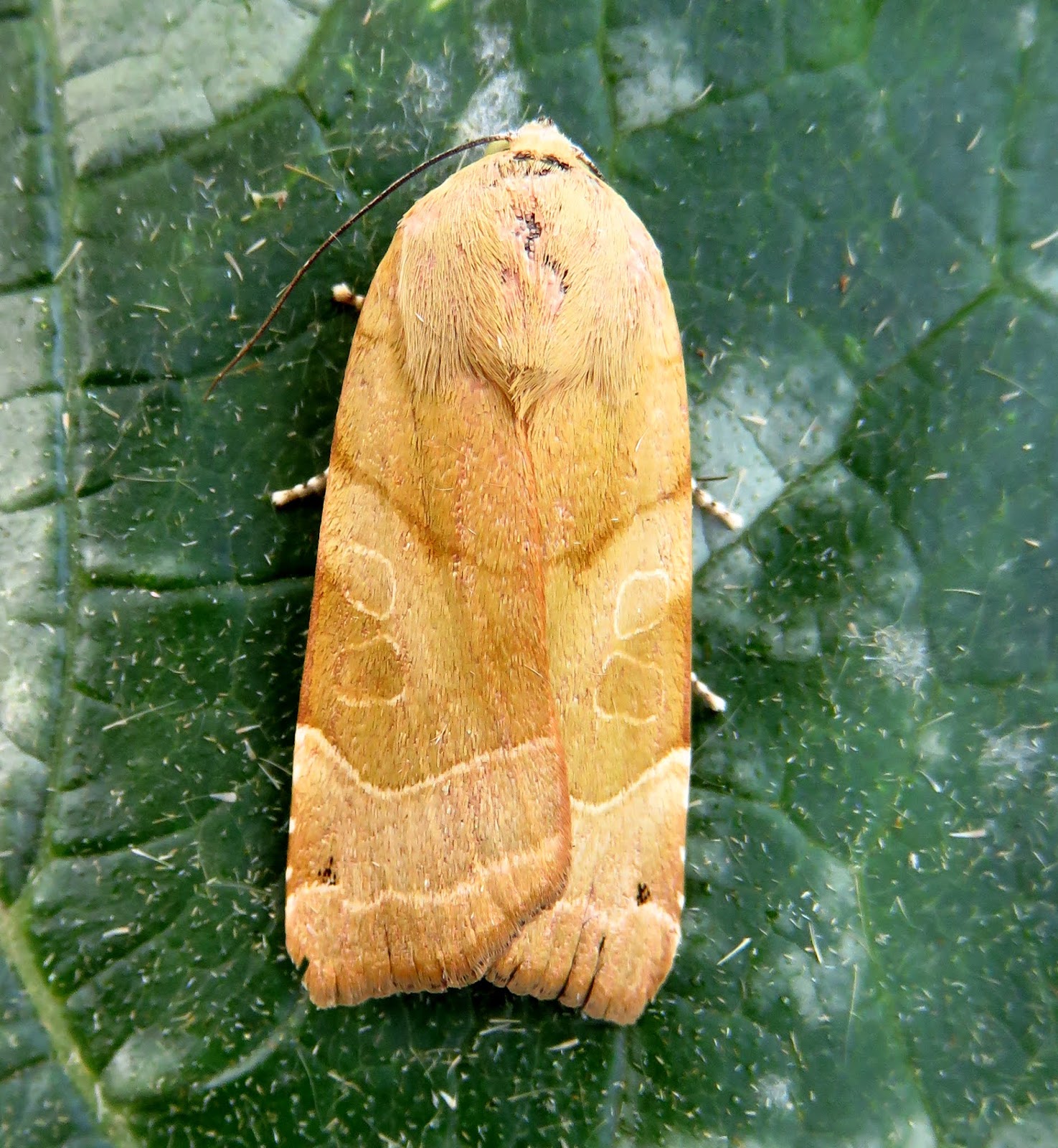
On Saturday 1st along the Strood were three greenshank, six black-tailed godwits, whimbrel, 5+ Mediterranean gulls and 200+ house sparrows. By the Glebe were 20 swifts, 20 house martins and 10 goldfinches.also a six spot burnet moth flying about.
There was the unusual sighting by Martin Cock of a turnstone seen feeding beside Firs Road near High St North turning on Saturday afternoon.

Just off the Island on the other side of the Strood, a turtle dove was seen perched on wires on Saturday by Jonathan Bustard.

By the Dabchicks on Friday 31st a male marsh harrier crossed over the boat moorings and headed over to the Strood fields, also ten turnstones resting on the boats.
Ian Black along the Strood seawall on Friday reported four greenshank, common buzzard, and three yellow wagtails.

This female speckled bush cricket was photographed by Michael Thorley among his strawberry plants in his East Mersea garden near Meeting Lane on Thursday.

A male speckled bush cricket was also seen by Michael among the strawberry plants.

A male oak bush cricket was in Steve Entwistle's upstairs bathroom on Thursday.

Friday, 31 July 2020

JULY MOTHS

Several interesting moths were trapped in the Firs Chase back garden during ten nights in the second half of July. Numbers recorded seemed lower than expected considering how hot it had been.
The most notable moth was this plumed fan-foot on the 30th, which although slowly spreading in Essex, is still a scarce moth. Another plumed fan-foot was also recorded a week later.

Just one drinker moth was noted during the summer with one on the 26th. They are more common in grassland areas.

The large oak eggar is a widespread moth, this one seen on 17th July.

The festoon started to become a regular sight across the county a few years ago, this one on the 16th July was the only one this summer here.

Several fen wainscots were seen during the summer, this one on the 17th.

A couple of dusky sallows were recorded. It is more numerous at the country park at East Mersea where there is plenty of grassland.

Just two broad-bordered yellow underwings were noted in the second half of July. It seemed a poor month for the various species of yellow underwings.

Other moth species of interest in the garden during the second half of July included toadflax brocade, gypsy moth, lots of tree-lichen beauties, pine hawkmoth, elephant hawkmoth and several box moths.

Thursday, 30 July 2020

SWALLOW FAMILY

A family of swallows including this juvenile, perched on wires beside the Feldy View field on Thursday 30th.

The swallow family with three juveniles rested on the wires for a few minutes in between flying around the field and nearby caravan site.
Also in Feldy View were a couple of willow warblers feeding in the birch trees, one of the birds sang briefly. Another willow warbler was heard singing from trees by the Nothe, behind the Dabchicks sailing club.
Two lesser whitethroats were near the Firs Chase caravan site, a young sparrowhawk was calling from the Lane, while 20 turnstone were roosting on boats near the Hard.

A brood of seven tufted ducklings were being led into the water in the dyke at Cudmore Grove CP by their mother on Wednesday 29th.
A garden warbler was seen in the bushes near the bird hide at the park along with a willow warbler and a mix of ten other warblers such as whitethroats, lesser whitethroats and blackcaps.
Offshore the summering eider was spotted swimming out of the Colne, 30 golden plover were on the mud as were at least eight black-tailed godwits and two Mediterranean gulls.

In the Firs Chase garden on Wednesday a wood warbler was seen briefly feeding with a long-tailed tit flock and also two willow warblers. The flock quickly moved into neighbouring gardens and the wood warbler was not seen again. The young sparrowhawk was calling loudly near Firs Chase while late in the afternoon a feeding flock of 100+ swifts seemed to be high overhead after ants.

Near Meeting Lane on Wednesday a little owl, yellow wagtail, 3 house martins, 4 swallows, willow warbler/ chiffchaff and five goldfinches were seen by Michael Thorley in his garden.

On Tuesday 28th Martin Cock reported near Meeting Lane plenty of warblers in the hedgerows and also a brown argus butterfly.
Also on Tuesday morning a willow warbler was quietly singing in Feldy View and two common blue butterflies were seen, while along the nearby Strood channel was a roost of 22 Mediterranean gulls, also two greenshank, 200+ redshank, turnstone, grey plover, three sand martins and 20 swifts.
Two common buzzards were circling separately over the East Mersea road on Tuesday afternoon.

A passage of 150+ swifts was noted heading west off the Island on Monday 27th, along the Strood were a greenshank, 25 black-tailed godwits, three whimbrel and a house martin.
Ian Black saw a very vocal green woodpecker escape the attention of a pursuing sparrowhawk along The Lane on Monday.

At Maydays on Sunday 26th two peregrines circled together over the Pyefleet, also a hobby, two marsh harriers and a common buzzard seen. Along the Pyefleet were three greenshank, whimbrel, bar-tailed godwit, ten black-tailed godwits, grey plover, shelduck family with five ducklings, great crested grebe and a common seal. Six sand martins, two yellowhammers and two yellow wagtails were also seen but there was no sign of the turtle dove at Haycocks Yard.

The turtle dove first seen by Jack Hoy a fortnight earlier and twice subsequently, was seen again on Saturday 26th in Haycocks Yard. It had been feeding on the ground before flying up to the roof of a nearby workshop unit. A willow warbler was calling from bushes near Haycocks Yard.
A greenshank and whimbrel were near the top end of the Pyefleet Channel near Bower Hall, also a brown hare on the saltmarsh and two yellowhammers in the hedgerows. Ten Mediterranean gulls were roosting near the Strood causeway.
A smart wheatear was seen by Ian Black on a wet Saturday along the Strood seawall, also three yellow wagtails and two sedge warblers.

On Friday 24th four common buzzards and two juvenile marsh harriers were seen along the Strood seawall. Along the channel were five greenshank, three whimbrel, twelve black-tailed godwits, turnstone, three dunlin, five common terns and four sand martins.
From the Firs Chase garden on Friday, a common buzzard drifted west off the Island, five Mediterranean gulls circled in the air after ants with the black-headed gulls, also the noisy young sparrowhawk. A noisy young sparrowhawk was seen by Ian Black in Mersea Avenue following an adult bird.

Saturday, 25 July 2020

SEA SWALLOWS

Five common terns, also known as sea swallows, were feeding along the Strood Channel on Thursday 23rd.

This particular common tern spent a few minutes checking the water beside the seawall sluice and made several attempts to dive down into the water after fish. A couple of noisy juvenile common terns were following their parents around.

Four greenshank, three whimbrel, four dunlin were amongst the large number of redshank and curlew in the channel as the tide came in. Also a little grebe was in the channel and 16 little egrets were noted roosting along the saltings.
A hobby passed over the seawall and crossed over to Ray Island, four common buzzards were seen in the air while a juvenile marsh harrier flew south-west over the Ray saltings. A corn bunting had earlier been heard singing by the Strood fields.

A female ruddy darter was resting on a stick in the sunshine at Feldy View on Thursday.

At East Mersea two common sandpipers were seen near the Oyster Fishery on Thursday by Martin Cock.

The first returning willow warbler of the autumn was found in the hedgeline near the Shop Lane seawall on Wednesday 22nd. This is the earliest one on the Island over the last ten year period at least. Another willow warbler was also found on Wednesday at Maydays farm by Martin Cock, while Michael Thorley also reported two willow warblers in his East Mersea garden on Wednesday.
A willow warbler / chiffchaff was seen in Ian Black's West Mersea garden while one was also seen by Sarah Thorley on Tuesday in her East Mersea garden.

Also seen on Wednesday, 20 avocets feeding in the Pyefleet near Shop Lane, 25+ swallows resting on a barn roof, a yellowhammer and two green woodpeckers near Fishponds Wood.

Later on Wednesday a great white egret was seen in the Strood Channel by Ian Black feeding on the saltmarsh edge and then flew onto Ray Island, also seen were two yellow wagtails and four common terns.

A mallard with nine ducklings in tow were seen at Waldegraves Holiday park on Tuesday 21st. Forty-five mallard were seen by the various lakes while offshore fifty common terns rested on the shingle island and three Mediterranean gulls were near the beach. At least two noisy juvenile sparrowhawks were flying around a small copse near the beach end of Cross Lane.

A turtle dove was seen again at Maydays farm by Jack Hoy on Tuesday morning - the third sighting in the area over the last fortnight.

A gatekeeper was resting on a lavender bush in Feldy View on Monday 20th. Amongst the various meadow browns, skippers and whites were two brown argus butterflies.

A peregrine flew over the Dabchicks on Monday morning heading over to Salcott Channel, also two separate common buzzards seen over the Hard area drifting west and a male marsh harrier and two more common buzzards were seen by the Strood channel.
Along the Strood channel were a greenshank, common tern, two whimbrel, Mediterranean gull and on the fields were three grey herons and a yellow wagtail.

Richard Brown watched a great white egret on Monday fly from Langenhoe ranges up the Pyefleet channel towards the Strood.
A hobby was seen over the High Street by Ian Black on Monday.

At East Mersea on Monday 20th the first clouded yellow butterfly of the year on the Island was photographed by Andy Field beside the seawall near the Oyster Fishery. Also seen in the area were a female eider near Langenhoe Point, common tern, cuckoo, three marsh harriers, sparrowhawk, ten avocets and forty black-tailed godwits.

Martin Cock also walked the same section of seawall between the Golfhouse and the Oyster Fishery on Monday and reported eight little terns, six common terns, six golden plover, four turnstone, whimbrel, 60 black-tailed godwits, 25 avocets and two young kestrels on the seawall. A grey squirrel was seen in a wood near the Oyster Fishery.